TRENDING

Wednesday, 21 October 2026
----------------------
10 Jumada Al-Awwal 1448 AH
Paris will see counter‑terrorism troops alongside police as France braces for a second wave of protests. The move reveals deep political calculations and a looming human toll.
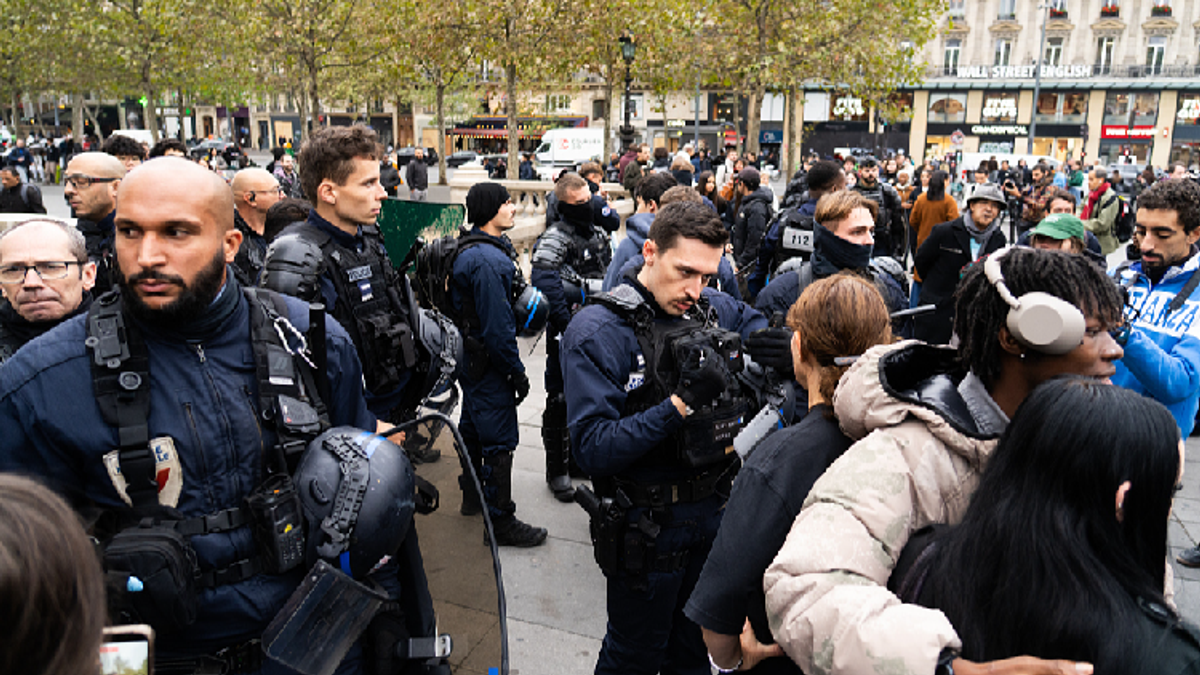
France announced on October 21 that counter‑terrorism troops will be deployed alongside police and gendarmes for demonstrations slated on October 24. Interior Minister Laurent Nunez framed the decision as a correction of the “static” police response that failed to contain the violent riots of October 17, which saw looting in Paris, Marseille, Lyon and dozens of other cities.
The French government faces a classic dilemma: appear strong enough to maintain order while avoiding the perception of a heavy‑handed state. Prime Minister Sebastien Lecornu positioned the deployment as a temporary, “massive” measure to restore confidence after intelligence lapses and a botched police leave schedule. By invoking national security language, the executive sidesteps direct blame for the weekend’s chaos and redirects scrutiny toward external threats.
France’s counter‑terrorism forces have benefited from post‑2015 budget expansions, creating a cadre of highly trained units with equipment suited for urban control. Deploying them to civil unrest repurposes existing resources without requiring new legislative approval, allowing the state to leverage a well‑funded apparatus while keeping the defense budget insulated from protest‑related spending debates.
Within the European Union, France is expected to uphold democratic norms, yet the move mirrors a broader trend of Western states normalizing military involvement in policing. By framing the troops as a “static security” layer, the government signals to allies that it can contain disorder without resorting to emergency powers that would trigger EU scrutiny. This balances domestic legitimacy with external diplomatic expectations.
French law traditionally separates military and police roles, but the 2021 security law already blurred those lines by permitting armed forces to assist civil authorities under “exceptional circumstances.” The current deployment pushes that precedent further, effectively redefining the doctrine of internal security and setting a template for future crises.
Targeted curfews have been imposed in several neighborhoods, some restricting movement for anyone under 18. Residents report disrupted schooling, loss of income for hourly workers, and heightened anxiety as armed troops patrol streets that were once ordinary commuter routes.
Official figures cite the destruction of at least 3,000 retail outlets during the October 17 riots. Many shop owners, already reeling from inflation and supply chain strains, now face insurance battles and the prospect of permanent closure, eroding local economies and community cohesion.
Authorities have assigned 200 investigators to track down individuals involved in the violence. Early arrests include a suspect linked to an arson at a historic town hall in Limoges, identified as part of an ultra‑left group. Legal experts warn that the expanded military presence could lead to broader charges, longer pre‑trial detentions, and a chilling effect on legitimate dissent.
Official statements emphasize “restoring order” and “preventing further looting,” but they downplay the role of socioeconomic grievances that fueled the October 17 protests—rising living costs, pension reforms, and perceived erosion of workers’ rights. By focusing on security, the state sidesteps a deeper policy debate that could threaten its political capital.
Large retailers and multinational chains suffered significant losses during the looting. Their lobbying power likely influences the push for a militarized response, as a swift, forceful crackdown reassures investors and protects supply‑chain continuity. This commercial pressure is rarely mentioned in parliamentary hearings.
State‑affiliated media have highlighted images of disciplined troops, while independent outlets report on the growing resentment among youth subjected to curfews and surveillance. The divergent narratives shape public opinion: one that sees the deployment as necessary, another that views it as an intimidation tactic.
- Legal challenges: Civil liberties groups are expected to file complaints against the use of military forces for domestic policing. Court rulings could set precedents for future deployments.
- Union and student mobilization: With November 5 earmarked for another nationwide protest, watch how unions negotiate with the government and whether they adopt alternative tactics to avoid a militarized response.
- International reaction: EU institutions may issue statements on the compatibility of France’s actions with European democratic standards, influencing future funding and cooperation.
- Long‑term security doctrine: The outcome of the parliamentary inquiry will reveal whether France institutionalizes the military‑police hybrid model, reshaping the balance between civil liberties and state security for years to come.
The government says the counter‑terrorism units can provide static security that police lack, aiming to prevent a repeat of the October 17 riots while avoiding a full emergency declaration.
Civil liberties groups argue the move blurs the line between military and police, potentially violating French law and EU standards, which could lead to court challenges and new legislative limits.
Source referenced: CGTN
This brief was synthesized by our Editorial Engine and reviewed by The Ground Narrative team.