TRENDING

Wednesday, 21 October 2026
----------------------
10 Jumada Al-Awwal 1448 AH
Two supertankers erupted in the Strait of Hormuz after striking mines, a stark reminder of the volatile contest between Iran, Saudi Arabia and the Houthis. The blasts threaten global oil supplies while ordinary workers and coastal communities bear the hidden toll.
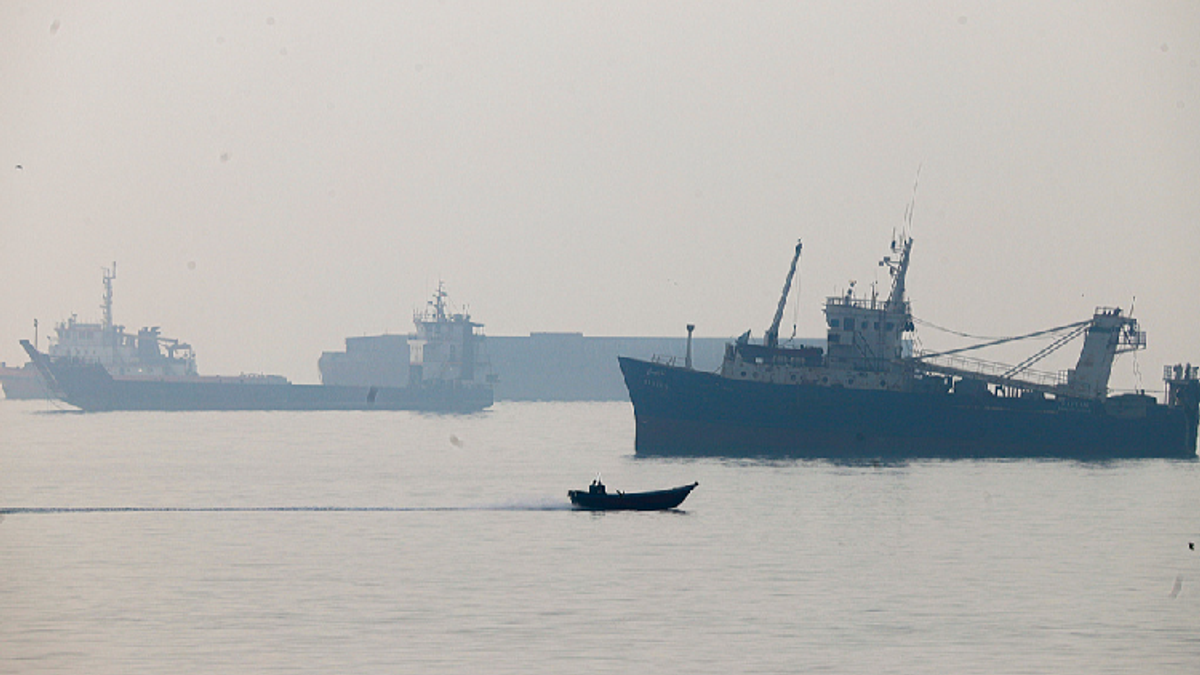
Two supertankers carrying more than two million barrels of crude each detonated after hitting naval mines in the Strait of Hormuz on October 18, 2026. Iran's Islamic Revolutionary Guard Corps (IRGC) navy said the vessels had turned off GPS and radar, attempting an "unauthorized" route, and that the explosions ignited massive fires in their engine rooms. The IRGC announced the waterway was closed to any ship that does not obey its regulations, warning of further consequences for vessels relying on the "terrorist US military."
Iran has long used asymmetric tools—mines, small fast attack craft, and missile‑laden speedboats—to compensate for its conventional naval inferiority. By laying mines in the narrow Hormuz channel, Tehran can threaten the $100‑plus‑billion‑a‑day flow of oil without deploying a blue‑water fleet. The recent detonations raise the perceived cost of non‑compliance for commercial shippers, nudging them toward Tehran‑approved corridors that Iran can monitor and tax.
The Saudi Arabia‑led coalition and Yemen's Houthi movement have been locked in a proxy war since 2015. Each side seeks to control or disrupt maritime routes that feed their war economies. The Houthis have increasingly targeted Saudi‑linked vessels, while Riyadh has stepped up aerial strikes on Houthi launch sites. The spillover into the Hormuz corridor reflects a broader calculus: by pressuring Iran’s maritime chokepoint, the Saudis hope to force Tehran to curb Houthi support.
Washington maintains a carrier strike group in the Arabian Sea, most recently the USS George H.W. Bush, to reassure allies and keep sea lanes open. Simultaneously, Israeli officials have discussed limited strikes against Iranian assets, signaling a willingness to act if Tehran escalates. Both powers benefit from a narrative that frames Iran as the primary destabilizer, justifying continued military presence and arms sales to Gulf states.
The twin explosions sent tanker freight rates to record highs and spiked insurance premiums for vessels transiting the Gulf. Traders in London and Singapore recalibrated risk models, pushing spot oil prices above $90 per barrel. Energy‑dependent economies—from India to the EU—face higher import bills, while oil‑producing nations in the Gulf anticipate windfall revenues if supply tightens.
The crews of the two tankers—mostly Filipino and Indian nationals—were forced into emergency evacuations amid raging fires. While official casualty figures remain vague, survivors report burns, inhalation injuries, and the loss of comrades. Their families, often living in low‑income neighborhoods back home, now confront medical bills and uncertain compensation.
A spill of even a fraction of the two million barrels could devastate fragile mangrove ecosystems along Iran’s southern coast and the UAE’s Fujairah shoreline. Residents who depend on fishing and tourism risk losing livelihoods as oil slicks choke marine life and contaminate beaches, a pattern repeated after past Gulf incidents.
Higher freight costs translate into increased prices for gasoline, diesel, and consumer goods across the Middle East and South Asia. Workers in Saudi petrochemical plants and Iranian refineries face wage pressures as companies scramble to absorb rising input costs, potentially triggering layoffs or reduced overtime.
Official IRGC statements emphasize “illegal” navigation and the need to protect national sovereignty, omitting any acknowledgment of the environmental fallout or the human toll on multinational crews. By framing the incidents as defensive actions against "terrorist" vessels, Tehran sidesteps responsibility for collateral damage.
While publicly condemning the explosions, Saudi Arabia and the United Arab Emirates have quietly welcomed higher oil prices, which boost state budgets reliant on hydrocarbon revenue. Their diplomatic outreach to Western capitals stresses stability, yet they simultaneously lobby for relaxed sanctions that would allow them to increase production.
U.S. and Israeli officials dominate headlines with talk of carrier deployments and potential strikes, relegating the stories of injured seafarers and threatened ecosystems to footnotes. This narrative serves to justify continued defense spending and to keep public attention on a distant adversary rather than on the immediate human suffering.
- Mine deployment patterns: Satellite imagery and open‑source maritime tracking will reveal whether Iran expands its minefield network, signaling a longer‑term strategy to monetize the strait.
- Diplomatic overtures: Look for back‑channel talks between Tehran and Riyadh, possibly mediated by China or Russia, that could lead to a limited de‑mining agreement or a new fee regime for transiting vessels.
- Market signals: Persistent spikes in tanker freight rates and insurance premiums will indicate whether the industry adapts by rerouting around the Gulf, which could shift trade flows toward alternative routes like the Suez Canal or the Cape of Good Hope.
- Humanitarian response: Monitoring aid pledges for affected seafarers and coastal clean‑up operations will reveal which governments and NGOs are willing to shoulder the indirect costs of the power play.
- Military posturing: The presence of the USS George H.W. Bush and any Israeli air‑strike drills in the region will be barometers of how quickly the situation could escalate from economic disruption to kinetic conflict.
Mines let Iran threaten a high‑value shipping lane without a large navy, raising the cost of non‑compliant transits and creating leverage over global oil markets.
The loss of two supertankers and the threat of further incidents push freight rates and insurance premiums up, which in turn lifts spot oil prices as traders price in supply risk.
Even a partial oil spill can damage mangroves, fisheries, and tourism along Iran, the UAE, and Saudi coasts, jeopardizing livelihoods for thousands of residents.
Editor's Note: Analysis based on publicly available reports and expert commentary; details on casualty numbers remain limited.
Source referenced: CGTN
This brief was synthesized by our Editorial Engine and reviewed by The Ground Narrative team.