TRENDING

Wednesday, 21 October 2026
----------------------
10 Jumada Al-Awwal 1448 AH
Japanese Prime Minister Sanae Takaichi's recent offerings to the Yasukuni Shrine have ignited a familiar firestorm of diplomatic condemnation from neighboring nations. This act, often dismissed as a private gesture, is a potent symbol of Japan's ongoing struggle with its wartime past and its future role in a rapidly shifting global order.
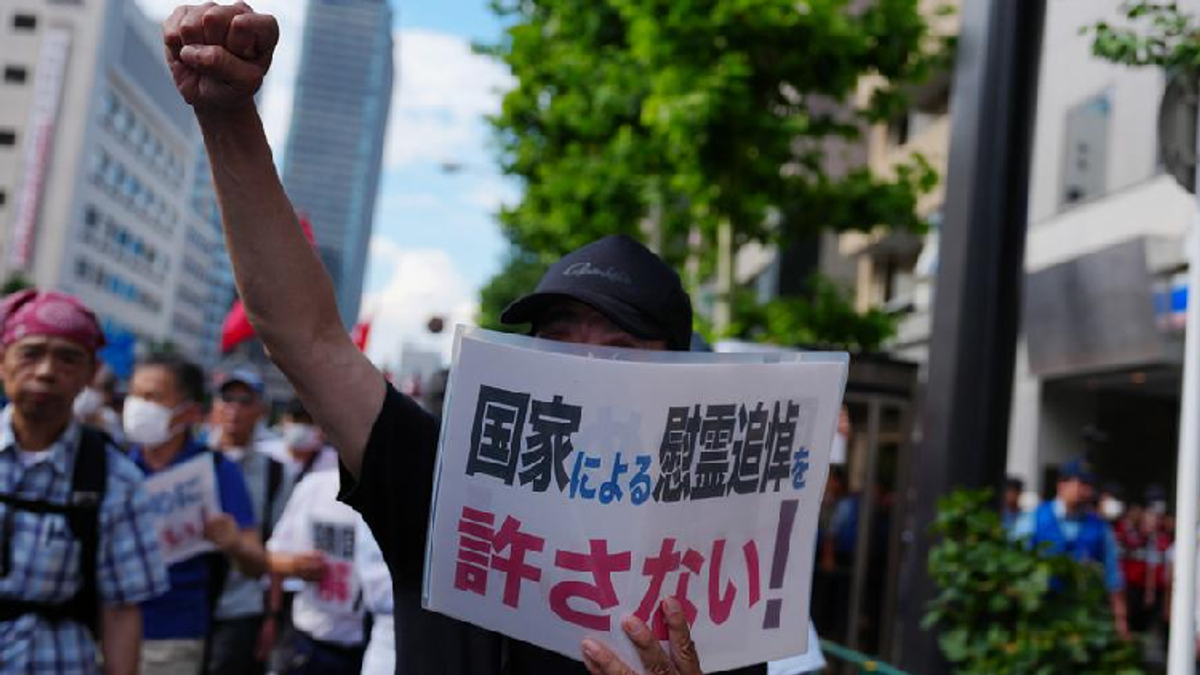
Japanese Prime Minister Sanae Takaichi recently sent a monetary offering, known as "tamagushi," to the controversial Yasukuni Shrine during its three-day autumn festival. This followed an earlier offering of a potted plant, "masakaki," sent under her official title as prime minister. Concurrently, several other high-ranking Japanese officials, including Land Minister Tatsunori Ibayashi, Liberal Democratic Party (LDP) election chief Yasutoshi Nishimura, and a cross-party group of lawmakers, either visited the shrine or sent offerings. These actions immediately drew sharp condemnation from China and South Korea, who view the shrine as a symbol of Japan's past militarism and wartime aggression, particularly due to its enshrinement of 14 convicted Class-A war criminals from World War II.
The recurring controversy surrounding the Yasukuni Shrine is far more than a simple act of remembrance; it is a meticulously calculated political maneuver deeply embedded in the mechanics of domestic power, regional geopolitics, and historical narrative control. For Prime Minister Takaichi and her conservative allies, these offerings serve multiple strategic purposes, both at home and abroad.
At its core, the gesture targets Japan's powerful right-wing political base. By honoring the war dead at Yasukuni, Takaichi signals her alignment with nationalist sentiments that advocate for a more assertive Japan, one less constrained by its postwar pacifist identity. This move consolidates support within the ruling Liberal Democratic Party (LDP) and among conservative voters, who often feel that Japan has been unfairly burdened by historical guilt. A key objective for this faction is the revision of Article 9 of Japan's constitution, often referred to as the "Peace Constitution," which renounces war and prohibits the maintenance of military forces. While Japan maintains a robust Self-Defense Force, a constitutional amendment would formally allow for a conventional military, a significant step towards what some see as a "normalized" nation. The offerings, therefore, are not just about the past, but about laying the groundwork for a future Japan with increased defense spending and a more prominent military role on the global stage.
Regionally, Japan faces a complex security environment marked by China's rapid military expansion, North Korea's nuclear provocations, and the lingering threat of Russia's influence. In this context, the drive for remilitarization is presented domestically as a necessary response to contemporary threats. The Yasukuni offerings, while diplomatically provocative, can be seen as a way for Japan to test the limits of regional tolerance and gradually ease military constraints. By adopting a relatively restrained form of offering (monetary or potted plants, rather than personal visits by the PM), Takaichi attempts to avoid an immediate, full-blown diplomatic crisis, while still sending a clear message about Japan's evolving stance on its past and future. This delicate balancing act seeks to project strength and resolve to its adversaries, while managing the inevitable backlash from China and South Korea.
The United States, Japan's primary security guarantor, plays a nuanced role in this dynamic. While historically advocating for Japan's pacifist constitution, the US has increasingly encouraged Japan to take on a larger security role in the Indo-Pacific, particularly as a counterweight to China's growing power. This creates a strategic ambiguity: the US needs a militarily capable Japan, but also one that doesn't destabilize the region through historical revisionism. The Yasukuni offerings, therefore, put the US in a difficult position, forcing it to weigh its strategic interests against the concerns of its other key allies, South Korea in particular. The US often issues mild statements of concern, but rarely takes strong action, implicitly allowing Japan to pursue its remilitarization agenda within certain bounds.
While the Yasukuni Shrine controversy is often framed in terms of high-level diplomacy and political maneuvering, its deepest impact is felt by the millions whose lives were irrevocably scarred by Japan's wartime actions. The human cost is borne not just by the direct victims but also by the ongoing fracturing of regional trust and the perpetuation of historical grievances across generations.
For the people of China, South Korea, and other Southeast Asian nations, the Yasukuni Shrine is not merely a historical site; it is a raw, open wound. Generations have grown up with stories of brutal occupation, forced labor, sexual slavery, and massacres. When a Japanese leader pays homage at a shrine that honors those convicted of orchestrating these atrocities, it is perceived as a direct insult, a denial of suffering, and a glorification of the very acts that caused immense pain. This act reopens old wounds, fueling resentment and making genuine reconciliation incredibly difficult. It tells the victims and their descendants that their suffering is being dismissed, their history distorted, and the perpetrators implicitly exonerated. This emotional toll is immense, impacting cross-cultural understanding and perpetuating a cycle of distrust.
Even within Japan, the Yasukuni issue is deeply divisive. While a segment of the population supports the nationalist narrative, many Japanese citizens, particularly younger generations, are uncomfortable with the shrine's association with militarism and its negative impact on international relations. They seek a more honest reckoning with Japan's wartime past and a future built on peace and reconciliation. The political focus on Yasukuni distracts from domestic issues and forces Japanese society to constantly grapple with a contentious historical narrative, rather than moving towards a unified vision for the future. It creates an internal schism, where the pursuit of national pride by some comes at the expense of national unity and regional harmony.
Beyond the emotional and political, there are tangible economic and social costs. Heightened tensions can disrupt trade relations, deter tourism, and complicate regional cooperation on critical issues like climate change or pandemic response. Businesses in China and South Korea may face public pressure to reduce engagement with Japanese counterparts, while Japanese companies operating in these countries might encounter increased scrutiny or boycotts. These diplomatic spats, rooted in historical memory, ripple through the daily lives of ordinary citizens, affecting their livelihoods and opportunities for cultural exchange. The cost of unresolved history is paid in missed opportunities for collaboration and mutual prosperity.
What powerful actors often downplay or omit in their official statements and public narratives are the deeper, more complex motivations and the long-term strategic calculations that underpin the Yasukuni Shrine controversy. This isn't just about a simple act of remembrance; it's about a carefully constructed political project.
Governments and official statements from Japan often frame the offerings as personal acts of mourning or cultural tradition, attempting to depoliticize them. However, the consistent timing of these offerings with major festivals, often by prominent figures, reveals a deliberate strategy. What is often unstated is that these acts are incremental steps in a multi-decade campaign to normalize a more robust Japanese military and ultimately revise Article 9 of the constitution. By repeatedly pushing the boundaries of what is acceptable, the LDP and its allies aim to gradually desensitize both the Japanese public and international observers to the idea of a militarily assertive Japan. The offerings are not isolated incidents but part of a slow, steady erosion of the postwar pacifist consensus, designed to make fundamental constitutional change seem less radical when it eventually comes.
While public discourse often focuses on historical grievances, an unspoken driver behind Japan's remilitarization push is the shifting global economic landscape. Japan, once an undisputed economic powerhouse, now faces intense competition, particularly from China. As global supply chains are reconfigured and economic blocs emerge, a strong military is increasingly seen by some within Japan's leadership as essential to protecting its economic interests, securing vital sea lanes, and projecting influence in a competitive world. The economic benefits of a stable, secure region, where Japan can assert its interests, are a powerful, yet often unacknowledged, motivator for its defense buildup and the associated nationalist rhetoric.
The United States, while publicly urging reconciliation, often downplays its own role in implicitly enabling Japan's remilitarization. The US strategic pivot to Asia, aimed at containing China's influence, relies heavily on strong alliances with countries like Japan. A militarily stronger Japan that can share the burden of regional security is highly desirable for Washington. Therefore, despite the diplomatic discomfort, the US often offers only pro forma condemnations of Yasukuni visits, effectively giving Japan a long leash to pursue its defense buildup and historical reinterpretation. The unspoken truth is that the US prioritizes its strategic competition with China over the historical sensitivities of its allies in Seoul and Beijing, accepting the regional friction as a necessary cost for a more robust security architecture.
The Yasukuni Shrine offerings are not a conclusion but a recurring indicator of deeper currents. To understand where East Asia is headed, observers must look beyond the immediate diplomatic spat and focus on the structural shifts that these events signify.
First, watch for further incremental steps towards constitutional revision in Japan. This will manifest through increased public debate, the formation of new political alliances, and potentially, attempts to hold referendums or parliamentary votes on amending Article 9. Any significant movement on this front would fundamentally alter Japan's security posture and regional dynamics.
Second, pay close attention to Japan's defense spending and military capabilities. Observe whether the current trajectory of increased budgets and advanced weapons acquisition accelerates. This will signal the seriousness of Japan's intent to become a more independent and capable military power, potentially shifting the balance of power in the East China Sea and beyond.
Third, monitor the responses from China and South Korea. Beyond diplomatic condemnations, look for concrete actions such as increased military exercises, economic countermeasures, or intensified public diplomacy campaigns aimed at shaping international opinion. The severity of their reactions will indicate how much they perceive Japan's actions as a direct threat to their security and historical narratives.
Finally, observe the United States' evolving stance. While the US will continue to balance its alliances, any shift towards a more explicit endorsement or condemnation of Japan's remilitarization efforts will be highly significant. The degree to which Washington is willing to tolerate regional friction for its strategic objectives will define the future of the US-Japan alliance and East Asian security. The Yasukuni controversy is a barometer for these larger geopolitical tides.
Source referenced: CGTN
This brief was synthesized by our Editorial Engine and reviewed by The Ground Narrative team.