TRENDING

Tuesday, 20 October 2026
----------------------
9 Jumada Al-Awwal 1448 AH
Israel's upcoming election is unlikely to produce a clear winner, leaving the nation in a political stalemate. This deep division has significant consequences for its citizens and regional stability.
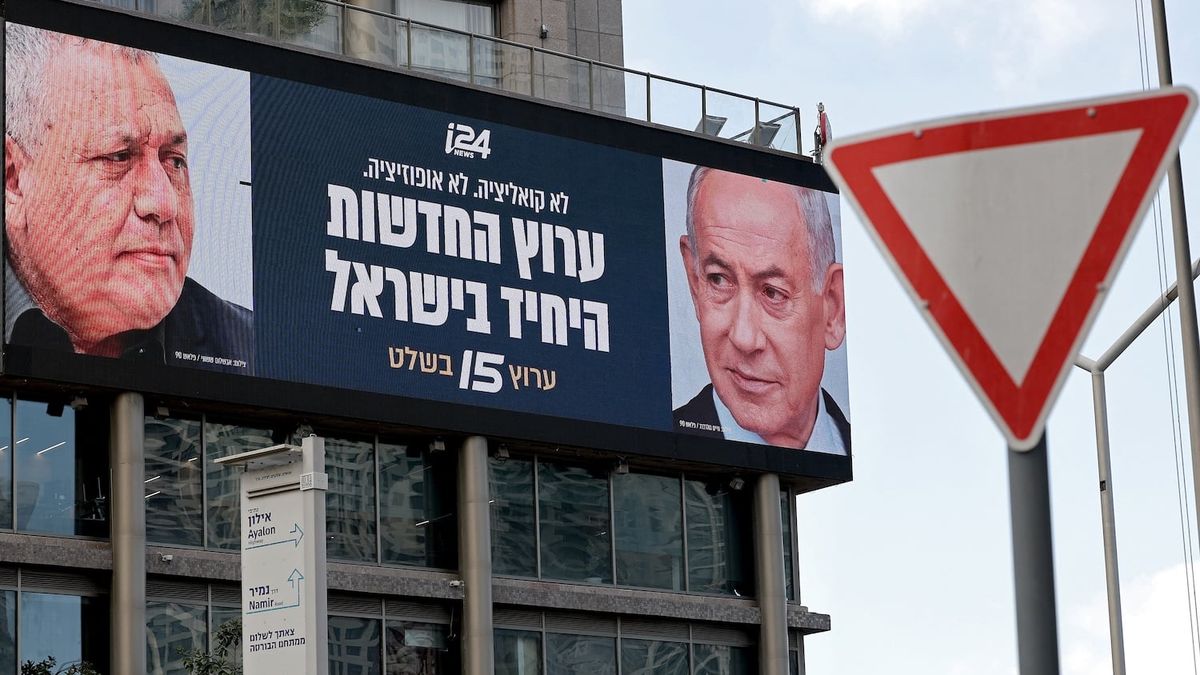
On October 27, 2026, Israel is set to hold a legislative election that, according to pre-poll surveys, is unlikely to produce a clear winner. Neither the bloc led by incumbent Prime Minister Benjamin Netanyahu and his religious and far-right allies nor the opposition coalition, primarily united by a desire to remove him, is projected to secure the 61 seats needed for a parliamentary majority. This deadlock places the power to form a government in the hands of two Arab-led parties, whose inclusion remains a contentious issue for many in the anti-Netanyahu camp, raising the specter of continued political instability.
The current electoral landscape in Israel is less about policy differences and more about a deeply entrenched struggle for power and the very identity of the state. At its core, the election is a referendum on Benjamin Netanyahu's leadership, which has steered the country towards what critics describe as illiberalism and insularity over the past four years. For Netanyahu, remaining in office is not merely about political ambition; it is widely understood to be a shield against potential criminal conviction, lending an existential urgency to his campaign. This personal stake fuels a willingness to consider extreme measures, from initiating military conflicts with Iran or supporting the Saudi campaign against the Houthis to potentially interfering with the election process itself through organized chaos at polling stations or challenging results. Such actions, while seemingly implausible for a democratic leader, are framed by his supporters as necessary for national security, leveraging the public's heightened anxiety following the October 7, 2023 attacks.
The anti-Netanyahu bloc, spearheaded by figures like Gadi Eisenkot, faces a different set of power challenges. Their primary unifying factor is opposition to the current prime minister, but this unity fractures when it comes to forming a viable government. Despite the United Arab List and the Ra'am party indicating a readiness to support an anti-Netanyahu government—a precedent set in 2021 with the Naftali Bennett administration—several key members of the opposition bloc have ruled out their inclusion. This reluctance stems from a combination of ideological discomfort, a desire to appeal to a broader Jewish electorate, and the lingering impact of Netanyahu's relentless campaign to brand Israel's Arab minority as disloyal, especially in the wake of October 7. Excluding these parties, however, leaves the anti-Netanyahu bloc short of a majority, forcing them into the difficult choice of either a weak minority government or a grand "national unity" coalition that President Isaac Herzog prefers but seems unlikely given the profound polarization.
The power of the Arab-led parties is thus paradoxical: they hold the numerical key to a majority but are simultaneously marginalized by the dominant political discourse. Their ability to leverage this position is severely curtailed by the political cost other parties perceive in associating with them. This dynamic reinforces a system where a significant portion of the electorate's voice is systematically excluded from direct governance, even when it could be decisive. The political survival of many Israeli politicians, particularly on the center-right, often hinges on maintaining a distance from Arab parties, regardless of the practical implications for stable governance.
Beyond the immediate electoral math, deeper power structures are at play. The influence of extremist settlers, for instance, is not solely dependent on government backing. Their ideological fervor and the tacit support they often receive from elements within the military and security forces on the ground in the West Bank mean they can continue anti-Palestinian violence regardless of who is in power. Similarly, the ultra-Orthodox (Haredim) community represents a powerful, cohesive voting bloc determined to resist any attempts to conscript their young men into the military, a long-standing point of contention that any future government must navigate. These are not merely political issues but deeply embedded societal power dynamics that exert immense pressure on any governing coalition, regardless of its composition. The recent endorsement of Netanyahu by former U.S. President Donald Trump also highlights the enduring, albeit sometimes subtle, external influences on Israeli domestic politics, particularly from its most powerful ally.
The ongoing political stalemate in Israel, exacerbated by the upcoming election's likely inconclusive outcome, exacts a heavy toll on its citizens and the broader region. The most immediate cost is the perpetual state of political instability, which has seen the country cycle through multiple elections in recent years. This constant campaigning and the inability to form stable, long-term governments prevent decisive action on critical domestic issues, from economic reforms to social welfare programs. Citizens grow weary of the political infighting, leading to disillusionment with democratic institutions and a sense that their votes do not translate into effective governance.
For Palestinians, particularly those in the West Bank and Gaza, the human cost is profoundly direct and often violent. A government unable to assert clear authority or one beholden to far-right elements means a continuation, and potentially an escalation, of settler violence. The raw intelligence indicates that even an Eisenkot government, while promising to crack down on settler outposts, would face "strong resistance" from ideologically driven settlers who often operate with impunity. This translates into daily fear for Palestinian communities, loss of land, destruction of property, and a constant threat to their physical safety. The lack of a stable Israeli government also stalls any meaningful progress on Gaza reconstruction or broader peace initiatives, leaving millions in a cycle of poverty and despair. The absence of a clear mandate makes it easier for extremist elements to dictate policy on the ground, further entrenching the occupation and human rights abuses.
Within Israel, the human cost manifests as deepening societal fractures. The judicial overhaul legislation proposed by Netanyahu's government, which threatened to undermine democratic norms, remains a flashpoint. An inconclusive election means this fundamental debate over the balance of power between the judiciary and the executive will continue to fester, eroding public trust in institutions. The trauma of October 7 and the subsequent revelations of security failings demand a thorough, independent inquiry, but a weak or deadlocked government may be unable or unwilling to conduct one effectively, leaving victims and the public without answers or accountability. The demonization of Israel's Arab minority, a tactic frequently employed by Netanyahu, further tears at the social fabric, creating an environment of suspicion and division that makes genuine coexistence harder to achieve. For young ultra-Orthodox men, the ongoing struggle over military conscription continues to be a source of tension, pitting religious communities against the secular majority and the state.
Globally, Israel's plummeting international standing, a direct consequence of its aggressive military posture and settlement expansion, affects its citizens through diplomatic isolation and potential economic repercussions. While an Eisenkot government might seek to mend ties, the deep political divisions at home make a consistent foreign policy difficult to sustain. This instability deters foreign investment, impacts trade relations, and makes it harder for Israel to navigate complex regional challenges, ultimately affecting the economic well-being and security of its populace.
In the cacophony of election rhetoric and political maneuvering, several critical narratives are either deliberately downplayed, omitted, or reframed by powerful actors to serve their own interests. Understanding these omissions is crucial for grasping the true mechanics of power at play.
The most significant untold story is the extent to which Prime Minister Netanyahu's personal legal jeopardy dictates national policy and election strategy. While official statements and his allies frame his actions as solely driven by Israel's security needs, the raw intelligence suggests a leader potentially willing to "risk a war to postpone the election" or "create chaos at the polls" to avoid a criminal conviction. This conflation of personal survival with national interest is a powerful rhetorical tool that allows him to mobilize his base and justify extreme measures. The public is presented with a narrative of a "Great Warrior Prime Minister" defending the nation, rather than a politician fighting for his own freedom, obscuring the potentially devastating consequences of such desperation for the lives of ordinary citizens and regional stability.
Another profound omission is the systemic nature of the political exclusion faced by Israel's Arab-led parties. While the anti-Netanyahu bloc's reluctance to include them is often framed as a pragmatic political calculation or a response to "national security concerns" post-October 7, it masks a deeper, structural issue within Israeli democracy. These parties represent a significant portion of the electorate, yet their ability to influence government formation is consistently undermined by a political culture that marginalizes them. The narrative that their inclusion would be "unthinkable" or "treasonous" effectively neutralizes their legitimate democratic power, ensuring that even when they hold the balance of power, their policy priorities and the needs of their constituents are largely ignored. This is not merely a tactical choice but a reflection of a power dynamic that privileges a particular ethno-religious identity in governance, regardless of democratic principles of representation.
President Isaac Herzog's call for a "national unity" government, while seemingly appealing for stability, often downplays the fundamental ideological chasm that divides Israeli society. Such a government, if formed, would likely be a fragile alliance of convenience, papering over deep disagreements on issues like judicial reform, the future of the West Bank, and the role of religion in state. Powerful actors benefit from this narrative of unity because it avoids confronting the uncomfortable truth of a nation deeply fractured on its core values. A unity government might offer a temporary respite from elections, but without genuine consensus on these foundational issues, it risks becoming an ineffective, gridlocked administration that merely postpones, rather than resolves, the underlying conflicts. The "unity" often comes at the cost of clear policy direction and accountability, leaving citizens to wonder who is truly in charge and what vision guides the nation.
Finally, the official discourse often understates the autonomous power of extremist factions, particularly the settler movement and elements within the ultra-Orthodox community. While these groups are often associated with particular political parties, their influence extends beyond electoral outcomes. The raw intelligence points to settlers continuing their violence "even without government backing" and having "the support of many of the Israeli soldiers on the ground responsible for policing them." This reveals a parallel power structure where ideological zeal, combined with tacit state support, can operate with relative impunity, regardless of the formal government. Similarly, the ultra-Orthodox community's determination to resist conscription highlights a powerful, organized resistance to state authority on a key national issue. These realities are often downplayed or framed as fringe issues, when in fact they represent significant, often unchecked, power centers that can dictate events on the ground and challenge the authority of any elected government.
As October 27 approaches and the post-election negotiations begin, several critical indicators will reveal the true trajectory of Israel's political future and its human cost.
First, observe Prime Minister Netanyahu's actions in the immediate run-up to the election. Any sudden escalation of military activity, particularly involving Iran or the Houthis, or reports of organized disruptions at polling stations, would signal a desperate attempt to manipulate the outcome or delay the inevitable. Such moves would have profound regional consequences and test the resilience of Israel's democratic institutions.
Second, pay close attention to the post-election coalition negotiations. The key question will be whether any faction within the anti-Netanyahu bloc breaks ranks to form a government that includes the Arab-led parties. If Gadi Eisenkot or another leader opts for a minority government, its stability and its ability to enact promised reforms—such as reversing the judicial overhaul or establishing an inquiry into October 7—will be paramount. The longevity of such a government will be a critical test of Israel's capacity for pragmatic governance amidst deep division.
Third, monitor the judicial and legislative landscape. Should a new government attempt to pass a law barring individuals under criminal indictment from serving as prime minister, it would be a direct challenge to Netanyahu's political future and a significant step towards strengthening democratic norms. Conversely, if such efforts are blocked or overturned, it would signal the continued vulnerability of the legal system to political interference.
Finally, keep a close watch on the ground in the West Bank. Any changes in government policy regarding settler outposts and violence, and crucially, the response of the Israeli military and police to these actions, will directly impact Palestinian lives and the broader prospects for regional stability. The actions of extremist settlers, regardless of the government's official stance, will be a barometer of the state's true control over its own territory and its commitment to international law. The international community's response, particularly from the United States and the European Union, to a potentially unstable or aggressive Israeli government will also shape the diplomatic and economic pressures on the new administration.
Neither of the two main political blocs is projected to win an outright parliamentary majority. The balance of power rests with Arab-led parties, but many opposition factions are unwilling to include them in a coalition.
A hung parliament could lead to prolonged political instability, another round of elections, or the formation of a weak minority government. This uncertainty impacts policy-making, judicial reforms, and regional relations.
Reports suggest Prime Minister Netanyahu, facing criminal charges, might resort to extreme tactics to retain power, including potentially initiating a conflict or challenging the election results.
Source referenced: FOREIGNPOLICY
This brief was synthesized by our Editorial Engine and reviewed by The Ground Narrative team.