TRENDING

Tuesday, 20 October 2026
----------------------
9 Jumada Al-Awwal 1448 AH
China has launched a major international initiative, M-CHAIN, focused on cross-border scientific cooperation for mountain hazard risk governance. While framed as a response to climate change, this move carries significant geopolitical weight for Beijing.
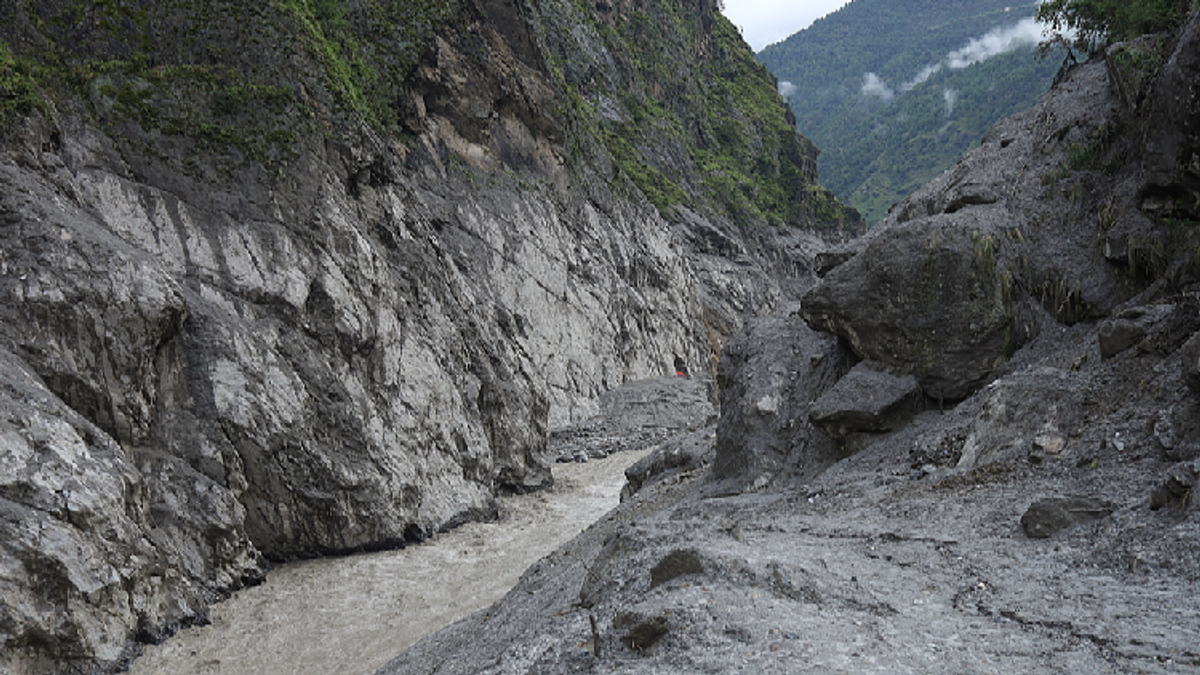
On October 18, 2026, China officially launched the Global Partnership for Mountain Chain Hazards with Intelligent Early Warning and Risk Governance (M-CHAIN) at Chengdu University of Technology. This initiative, endorsed by the United Nations International Decade of Sciences for Sustainable Development (IDSSD), marks the first China-led international mega-science program in geohazards under the IDSSD. Bringing together over 100 experts from more than 20 countries and international organizations like UNESCO and ICIMOD, M-CHAIN aims to enhance scientific cooperation to address increasingly complex and cascading mountain hazards, particularly in regions like the Himalaya – Qinghai-Xizang Plateau, the Alps, and the Andes. The initiative was spurred by recent devastating cross-border events, including a significant glacier collapse near the China-Nepal border in August 2026, and earlier glacial lake outburst floods affecting India and Nepal.
China's leadership of the M-CHAIN initiative is a multifaceted exercise in soft power and strategic influence, extending far beyond pure scientific endeavor. By positioning itself at the forefront of global mountain hazard governance, Beijing is actively shaping the international agenda on a critical issue exacerbated by climate change. This move allows China to project an image of a responsible global actor, committed to addressing shared environmental challenges, while simultaneously advancing its long-term strategic interests.
A key power dynamic at play is the control over data and technology. M-CHAIN's core objective is to establish an
M-CHAIN, or the Global Partnership for Mountain Chain Hazards with Intelligent Early Warning and Risk Governance, is a China-led international initiative launched in October 2026. Endorsed by the UN, it aims to foster scientific cooperation to understand and manage complex, cascading mountain hazards globally, particularly in regions like the Himalayas.
China's leadership positions it as a responsible global actor addressing climate change, while also advancing its strategic interests. It gains influence through controlling data and technology, deepens regional diplomatic ties, and boosts its scientific and technological capabilities in a critical domain.
Accelerated warming in the Himalayas causes rapid glacier retreat, permafrost degradation, and glacier destabilization. Combined with more frequent extreme precipitation, this leads to interconnected hazards like landslides, debris flows, ice-rock avalanches, and glacial lake outburst floods, impacting downstream communities and infrastructure.
Editor's Note: Analysis interprets a scientific initiative through a geopolitical lens, consistent with The Ground Narrative's doctrine. Facts are derived from raw intelligence, implications are analytical.
Source referenced: CGTN
This brief was synthesized by our Editorial Engine and reviewed by The Ground Narrative team.