TRENDING

Tuesday, 20 October 2026
----------------------
9 Jumada Al-Awwal 1448 AH
A high-profile meeting between Chinese Premier Li Qiang and Uzbek President Shavkat Mirziyoyev has solidified Beijing's intent to push forward with a critical rail link across Central Asia. This project is far more than just infrastructure; it represents a profound realignment of power and influence in a region long considered Russia's backyard.
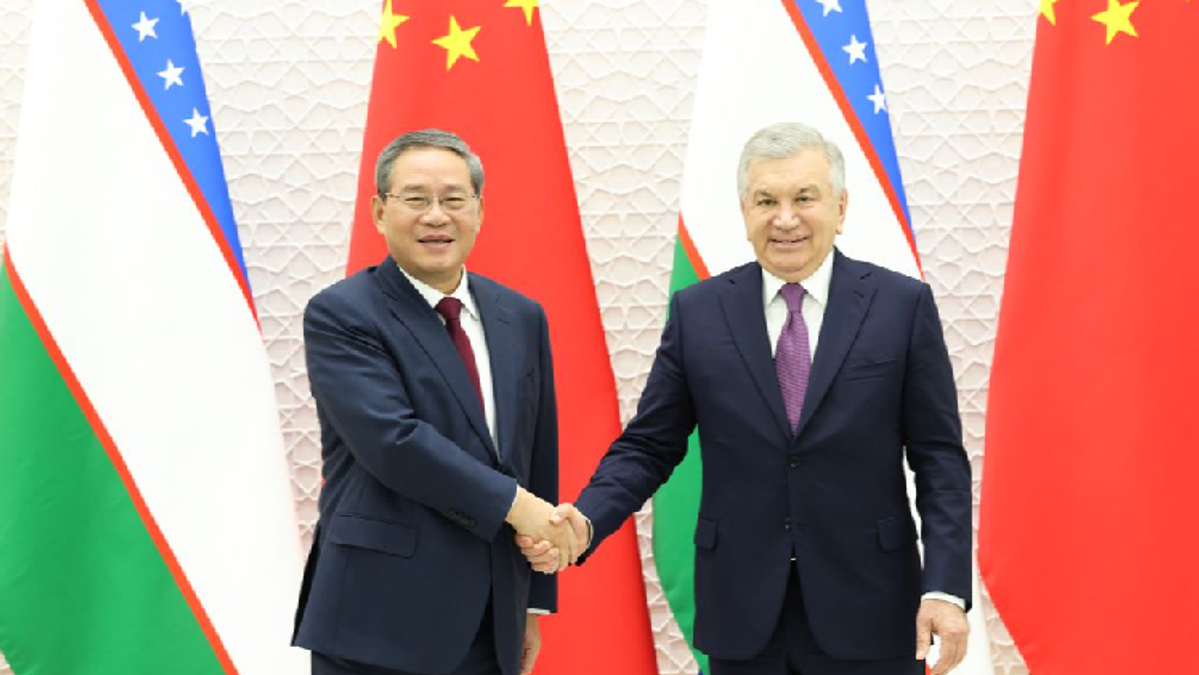
Chinese Premier Li Qiang met with Uzbek President Shavkat Mirziyoyev in Tashkent, Uzbekistan, where Premier Li affirmed China's readiness to ensure the "high-quality implementation" of the long-anticipated China-Kyrgyzstan-Uzbekistan (CKU) railway project. The meeting underscored Beijing's broad commitment to expanding economic ties, strategic communication, and cooperation in areas ranging from energy and finance to artificial intelligence and cultural exchange, with Uzbekistan reciprocating with strong support for China's core interests and global initiatives.
The proposed CKU railway is not merely a transportation artery; it is a strategic bypass, an economic lifeline, and a geopolitical statement. For China, its completion represents a critical missing link in its ambitious Belt and Road Initiative (BRI), offering a direct southern corridor to Europe and the Middle East that significantly reduces reliance on existing routes, particularly those traversing Russia.
Beijing's push for the CKU railway is driven by multiple interlocking objectives. Economically, it promises to open new markets for Chinese goods and provide more efficient access to the vast natural resources of Central Asia, including energy and minerals. Strategically, the railway diversifies China's supply chains, making them less vulnerable to disruptions and geopolitical pressures on its northern land routes or maritime choke points. In a "complex and turbulent international landscape," as Premier Li noted, secure and diversified trade routes are paramount.
More profoundly, the CKU railway marks a significant expansion of China's geopolitical influence into a region historically dominated by Russia. By investing heavily in infrastructure and fostering deep economic ties, Beijing is quietly, yet firmly, reshaping the regional order. This project allows China to project soft power through economic development, offering an alternative to Moscow's security-first approach. The emphasis on cooperation in emerging technologies like artificial intelligence and green economy also positions China as a forward-looking partner, appealing to Central Asian nations seeking modernization.
For Uzbekistan, the railway is a transformative opportunity. As a doubly landlocked nation, improved connectivity is vital for its economic growth and diversification. The CKU railway promises to reduce transit times and costs for Uzbek exports, opening direct access to Chinese markets and, crucially, to global markets via China's eastern ports. This lessens Uzbekistan's economic dependence on Russia and provides leverage in its foreign policy. President Mirziyoyev's enthusiastic embrace of the project and his declaration of a "golden age" in Uzbekistan-China relations reflect this desire for economic uplift and strategic autonomy.
Kyrgyzstan's role in this project is pivotal and historically complex. The "K" in CKU has long been the most challenging segment, plagued by political instability, financial hurdles, and, implicitly, Russian pressure. Its mountainous terrain presents significant engineering challenges, driving up costs. For Kyrgyzstan, the railway offers a potential economic boon, connecting its nascent economy more directly to the global trade network. However, its smaller economy also makes it more vulnerable to the financial implications of such a massive undertaking, raising questions about its ability to manage the associated debt and ensure equitable benefits for its population.
While the grand narratives of geopolitical shifts and economic opportunities dominate official statements, the human implications of such massive infrastructure projects often remain in the shadows. The CKU railway, like many large-scale BRI projects, carries potential costs for the very populations it purports to serve.
For Kyrgyzstan and Uzbekistan, the primary human cost could manifest as unsustainable debt. Chinese financing for BRI projects often comes with substantial loans, and smaller economies can struggle to repay them, potentially leading to increased financial dependence on Beijing. This can translate into austerity measures, reduced public services, or the ceding of strategic assets, directly impacting the livelihoods and well-being of ordinary citizens who bear the burden of national debt.
The construction of a railway through diverse and often sensitive ecosystems, particularly the mountainous regions of Kyrgyzstan, poses significant environmental risks. Deforestation, habitat destruction, and changes to water resources can disrupt local communities dependent on these natural environments for their sustenance and traditional ways of life. Furthermore, large infrastructure projects often involve land acquisition, potentially displacing local populations or altering agricultural practices without adequate compensation or consultation, leading to social unrest and economic hardship for those directly affected.
While the railway promises jobs, the reality on the ground can be different. Chinese companies often bring their own labor force, limiting opportunities for local employment and skill transfer. This can lead to resentment and a perception that the projects primarily benefit foreign entities rather than local communities. Small businesses and local industries might also struggle to compete with the influx of Chinese goods and services that often accompany improved connectivity, potentially stifling local economic development rather than stimulating it.
The official narrative surrounding the CKU railway emphasizes mutual benefit, economic cooperation, and regional stability. However, beneath this veneer lies a deeper, more complex story of shifting power dynamics, strategic maneuvering, and the subtle weaponization of diplomatic language.
The most significant untold story is the quiet but undeniable erosion of Russia's historical dominance in Central Asia. For decades, Moscow has viewed the region as its strategic backyard, a buffer zone, and a critical economic partner. The CKU railway directly challenges this hegemony by providing a viable alternative to Russian-controlled transit routes. With Russia preoccupied by its conflict in Ukraine and facing extensive Western sanctions, China has seized the opportunity to accelerate its influence, filling the emerging power vacuum. The project is a clear signal that Central Asia's future is increasingly oriented eastward, away from its traditional northern gravitational pull.
Premier Li's emphasis on "high-quality implementation" is a subtle but important rhetorical shift. It serves as an implicit acknowledgment of past criticisms leveled against some BRI projects, which have been accused of lacking transparency, employing environmentally questionable practices, and leading to debt distress. By stressing "high quality," Beijing aims to project an image of responsible development, addressing concerns without explicitly admitting past shortcomings. This is a public relations strategy designed to reassure partners and counter Western narratives about China's development model.
Uzbekistan's commitment to combating the "three evil forces" of terrorism, separatism, and extremism, in lockstep with China, is a critical piece of the untold story. While ostensibly about security, this terminology is often used by Beijing to justify its repressive policies in Xinjiang against Uyghur and other Turkic Muslim minorities. By aligning with this rhetoric, Central Asian states risk legitimizing China's human rights abuses and potentially limiting their own citizens' freedoms, particularly those who might share ethnic or religious ties with populations in Xinjiang. This cooperation on security matters can lead to increased surveillance, restrictions on religious practice, and a chilling effect on dissent within Central Asian societies.
The proposed establishment of cultural centers in each other's countries, while seemingly innocuous, is part of a broader strategy of cultural and political penetration. These centers facilitate the spread of Chinese language, culture, and narratives, fostering closer ties that extend beyond mere economic transactions. This deepens China's soft power, shaping public opinion and creating a more favorable environment for Beijing's long-term strategic objectives in the region.
As the China-Kyrgyzstan-Uzbekistan railway project moves forward, several key indicators will reveal the true trajectory of power in Central Asia and the broader implications for its people.
First, closely monitor the actual pace and financing mechanisms of the railway's construction. Delays, cost overruns, or opaque loan agreements will signal potential future challenges for Kyrgyzstan and Uzbekistan, particularly regarding debt sustainability. The transparency of these deals will be a critical measure of China's "high-quality" commitment.
Second, observe Russia's reaction. While Moscow may not openly condemn the project, its responses — whether through diplomatic pressure, economic incentives, or security cooperation with other regional actors — will indicate the extent of its discomfort with China's expanding footprint. Any attempts by Russia to reassert its influence or create alternative regional blocs will be telling.
Third, pay attention to the social and environmental impacts on the ground. Reports from local communities, environmental watchdog groups, and independent media will offer a more accurate picture of the human cost, including potential displacements, labor practices, and ecological damage, contrasting with official pronouncements of progress.
Finally, watch for any shifts in the internal political dynamics of Kyrgyzstan and Uzbekistan. Increased economic dependence on China could lead to subtle changes in domestic policy, particularly concerning human rights and freedom of expression, especially if linked to the "three evil forces" rhetoric. The long-term implications for the sovereignty and strategic autonomy of these Central Asian nations will be crucial to understand. This railway is not just about connecting cities; it is about connecting destinies under a new geopolitical order. The world will be watching to see if this new path leads to shared prosperity or deeper dependencies. It is a testament to the changing global order, where economic might increasingly dictates geopolitical leverage. The world will be watching to see if this new path leads to shared prosperity or deeper dependencies.
The CKU railway is a proposed rail link designed to connect China's western regions with Uzbekistan, passing through Kyrgyzstan. It is a key component of China's Belt and Road Initiative, aiming to create a direct southern land corridor for trade between China, Central Asia, and potentially Europe.
For China, the CKU railway offers a crucial alternative trade route, diversifying its supply chains and reducing reliance on existing routes, particularly those through Russia. It also expands China's economic and geopolitical influence in Central Asia, providing access to resources and new markets.
Potential human costs include the risk of unsustainable debt from Chinese loans, environmental damage from construction, and social disruption due to land acquisition or labor practices. There are also concerns about increased economic dependence on China and potential impacts on human rights linked to security cooperation.
Editor's Note: Analysis treats the raw intelligence dated October 2026 as a current event for geopolitical analysis.
Source referenced: CGTN
This brief was synthesized by our Editorial Engine and reviewed by The Ground Narrative team.