TRENDING

Monday, 19 October 2026
----------------------
8 Jumada Al-Awwal 1448 AH
A new space race is unfolding between China and the United States, far from public view but with profound implications for life on Earth. This silent competition for orbital dominance and lunar real estate carries significant human costs and hidden agendas.
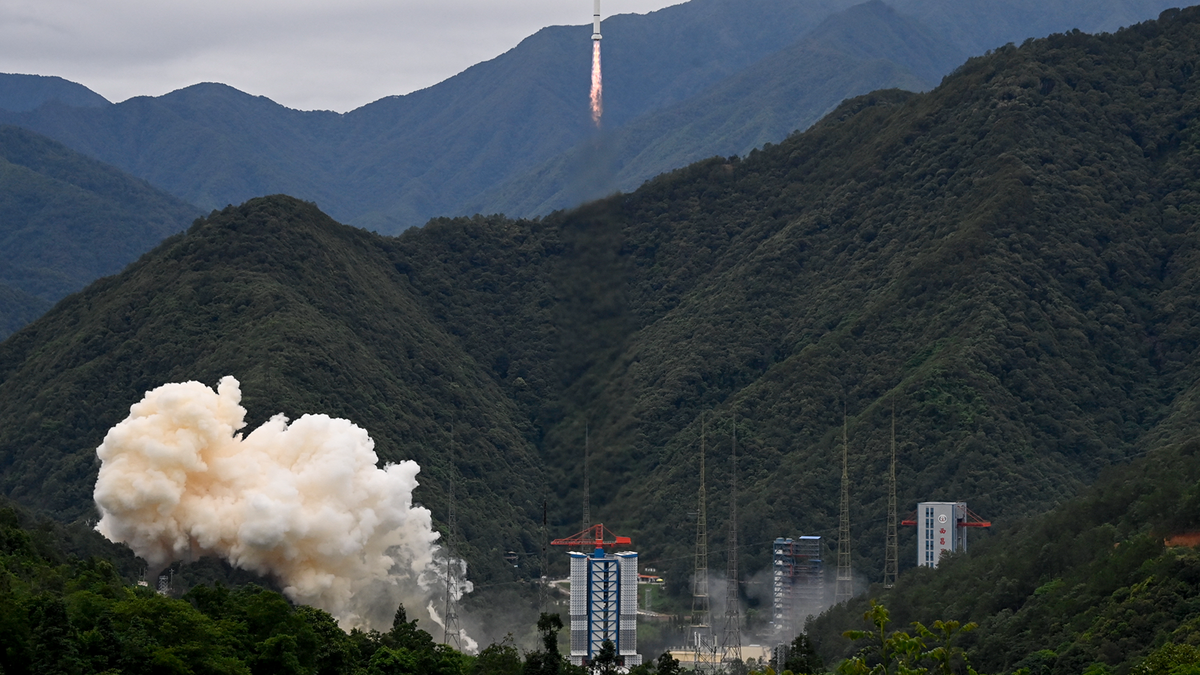
A silent but intense space race is accelerating between China and the United States, transforming Earth's orbit and beyond into a new frontier of competition. China has rapidly advanced its space program, achieving peer status or surpassing the US in critical areas such as positioning, navigation, and timing (PNT), remote sensing, and anti-satellite capabilities. Beijing's state-backed approach, coupled with a burgeoning commercial sector, is challenging Washington's long-held dominance, particularly in reusable rocket technology and the expansion of its Tiangong space station, even as the International Space Station (ISS) faces retirement. This escalating rivalry extends to the moon, where both nations are vying to establish permanent outposts, creating a high-stakes, largely unregulated environment with systemic challenges for global stability.
The current China US space competition is driven by distinct strategic philosophies and national ambitions, each seeking to secure a decisive advantage in a domain increasingly vital for both economic prosperity and national security. At its core, this is a contest for control over the infrastructure that underpins modern life, from communication to defense.
China's approach is characterized by a vertically integrated, state-led model. Its space industry, dominated by military-directed state-owned companies, benefits from extensive state support and encouragement for over 500 commercial players. This structure allows for rapid scaling and manufacturing speed, treating space competition holistically, much like its successful strategy in electric vehicles. Beijing's BeiDou system, with 56 satellites across three orbits, offers a more diversified and resilient global PNT service than the US GPS system. China's advancements in remote sensing, including visible, radar, and hyperspectral imaging, are due to ambitious constellation layouts and a focus on broad, resilient coverage. Furthermore, China's progress in anti-satellite (ASAT) capabilities, including ground-based missiles, directed energy weapons, jammers, and on-orbit robotic arms, signals a clear intent to deny adversaries access to space if necessary. The successful controlled recoveries of LandSpace's Zhuque-3 rocket and a Long March-10B carrier rocket demonstrate China's rapid closing of the gap in reusable launch technology, a critical bottleneck previously dominated by the US. The expansion of its Tiangong space station, now conducting experiments with 17 countries and set to double in size, further boosts China's global standing and industry growth.
Conversely, the United States relies heavily on its vibrant private space sector, which commands 65 percent of the global launch market and 69 percent of satellite production. Companies like SpaceX are at the forefront of innovation, demonstrated by the Falcon-9 and Starship programs, driving down launch costs and increasing frequency. Washington aims to leverage this commercial prowess to maintain its lead in satellites in orbit, LEO broadband capabilities, and space situational awareness (SSA). The US still boasts ten times more satellites in orbit than China and robust SSA systems, including the Space Surveillance Network, which tracks over 47,000 pieces of space debris. However, China's rising launch cadence and advancements are challenging this superiority. The US strategy, outlined in a 2025 executive order, emphasizes
Source referenced: FOREIGNPOLICY
This brief was synthesized by our Editorial Engine and reviewed by The Ground Narrative team.


