TRENDING

Wednesday, 21 October 2026
----------------------
10 Jumada Al-Awwal 1448 AH
President Trump unveiled an $8 billion aid plan for American farmers amid soaring diesel and fertilizer prices caused by the Iran war. The move is a high‑stakes bid to lock in rural votes ahead of the 2026 midterms.
President Trump took the stage at a Kansas rally on October 20, 2026 and announced an $8 billion, one‑time aid package for U.S. farmers. The funds are framed as a relief from soaring diesel and fertilizer costs that have been driven up by the ongoing Iran war and disruptions in the Strait of Hormuz. The package, delivered through the USDA, promises direct payments to producers and a temporary shield against market volatility, while the administration touts it as a sign of Republican commitment to rural America.
Midterm elections are a litmus test for any president’s party, and rural voters have traditionally been a reliable Republican bloc. With several Senate seats in red‑state heartlands now within a few percentage points, the U.S. political calculus hinges on squeezing every possible advantage. By timing the aid announcement just weeks before Election Day, the administration hopes to convert economic gratitude into ballot boxes, a classic patron‑client strategy that dates back to the New Deal era.
The Iran war has choked the flow of oil through the Strait of Hormuz, pushing global diesel prices above $5 per gallon. American farm equipment, which consumes roughly 30 % of national diesel, feels the pinch most acutely. The aid package does not address the root cause—geopolitical supply constraints—but merely patches the symptom with cash transfers, allowing farmers to keep operating while the broader energy market remains volatile.
Trump’s first term saw a trade war with China that eroded export markets for soybeans and corn. Subsequent tariffs and retaliatory measures left many Midwestern farms scrambling for new buyers. The current aid adds to a cumulative $55 billion in federal farm support for 2026, a figure that now represents about 30 % of net farm income. This deepening dependency reshapes the farmer‑government relationship, turning a sector once celebrated for its independence into a de‑facto extension of federal fiscal policy.
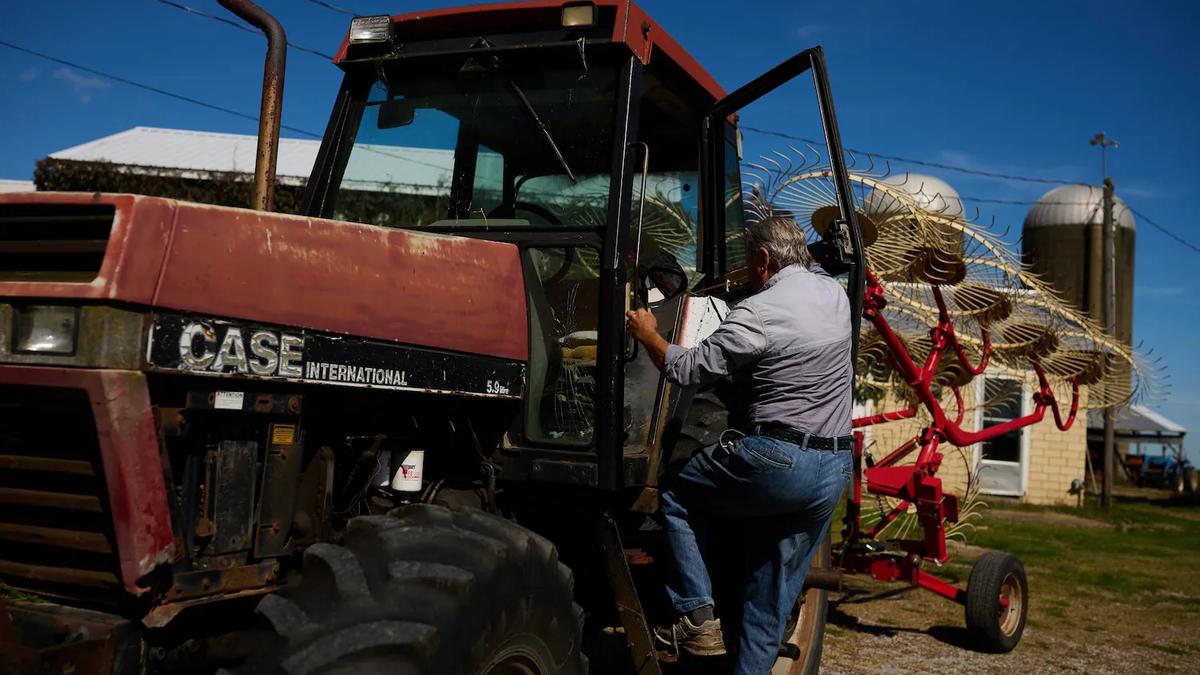
For a 77‑year‑old farmer like Joe Logan of Ohio, the $8 billion translates into a modest check that may cover a single season’s diesel bill. Yet the underlying debt burden—over $600 billion nationwide—continues to climb, with many farms operating at negative cash flow. One‑time payments do little to reverse a trend of rising bankruptcies, leaving families vulnerable to the next price spike.
Beyond the farm gate, rural towns depend on agricultural spending to sustain schools, hospitals, and local businesses. When input costs rise, profit margins shrink, leading to layoffs and reduced community investment. The temporary infusion of federal cash can prop up local economies for a few months, but without a durable solution to energy and fertilizer price volatility, the broader socioeconomic fabric remains under strain.
Higher production costs often force growers to cut back on labor or automate more aggressively. Migrant workers, who already face precarious legal status and limited bargaining power, bear the brunt of any workforce reductions. The aid package does not address labor standards, leaving a hidden human toll that is invisible in headline figures.
Official statements focus on diesel and fertilizer, but the Iran war also inflates insurance premiums for shipping, raises the cost of imported agricultural inputs, and fuels geopolitical uncertainty that depresses commodity futures. By framing the crisis solely as a market glitch, policymakers sidestep the larger question of why the United States is entangled in a distant conflict that ripples through the domestic food system.
Large agribusiness firms stand to gain from any federal infusion that stabilizes commodity prices. Their lobbying power helped shape the aid’s design, ensuring that payments flow through existing USDA channels that already favor big producers. Smallholders receive a fraction of the total, while corporate giants can leverage the cash to lock in favorable contracts and expand market share.
The aid does nothing to curb the environmental damage caused by intensified fertilizer use, which drives nitrogen runoff and dead zones in the Gulf of Mexico. By treating the problem as purely economic, the administration avoids confronting the long‑term ecological costs that will ultimately affect water quality, public health, and climate resilience in farming regions.
- Congressional action: The $8 billion package still requires Senate approval. Delays or amendments could reshape its distribution and signal the strength of Republican unity ahead of the midterms.
- Diesel price trajectory: If the Iran war escalates or new sanctions hit oil‑exporting nations, diesel could surge again, testing the durability of the one‑time aid.
- Farm debt trends: Monitoring bankruptcy filings and credit‑line extensions will reveal whether the cash infusion merely postpones a deeper financial crisis.
- Rural voting patterns: Early precinct returns in Kansas, Texas, and Iowa will indicate whether the aid translates into a measurable swing toward Republican candidates.
- Policy shifts: Any move to import Russian diesel or to renegotiate fertilizer trade agreements will expose the administration’s willingness to address the structural supply issues that the aid sidesteps.
Staying alert to these indicators will help ordinary citizens see beyond the headline‑grabbing check and understand how power, profit, and policy intersect on the American heartland.
The USDA distributes the funds through existing payment programs, which historically allocate a larger share to big producers. Small farms receive a modest portion, often less than 10 % of the total.
No. The payments are a one‑time subsidy that helps cover current costs but does not affect the underlying global oil market, which remains driven by the Iran war and broader supply constraints.
Source referenced: FOREIGNPOLICY
This brief was synthesized by our Editorial Engine and reviewed by The Ground Narrative team.