TRENDING

Wednesday, 14 October 2026
----------------------
3 Jumada Al-Awwal 1448 AH
Ukrainian drone strikes on the Sea of Azov have halted shipping, disrupting a key wheat export route and exacerbating Russia's fuel crisis, sending shockwaves through global grain and fuel markets.
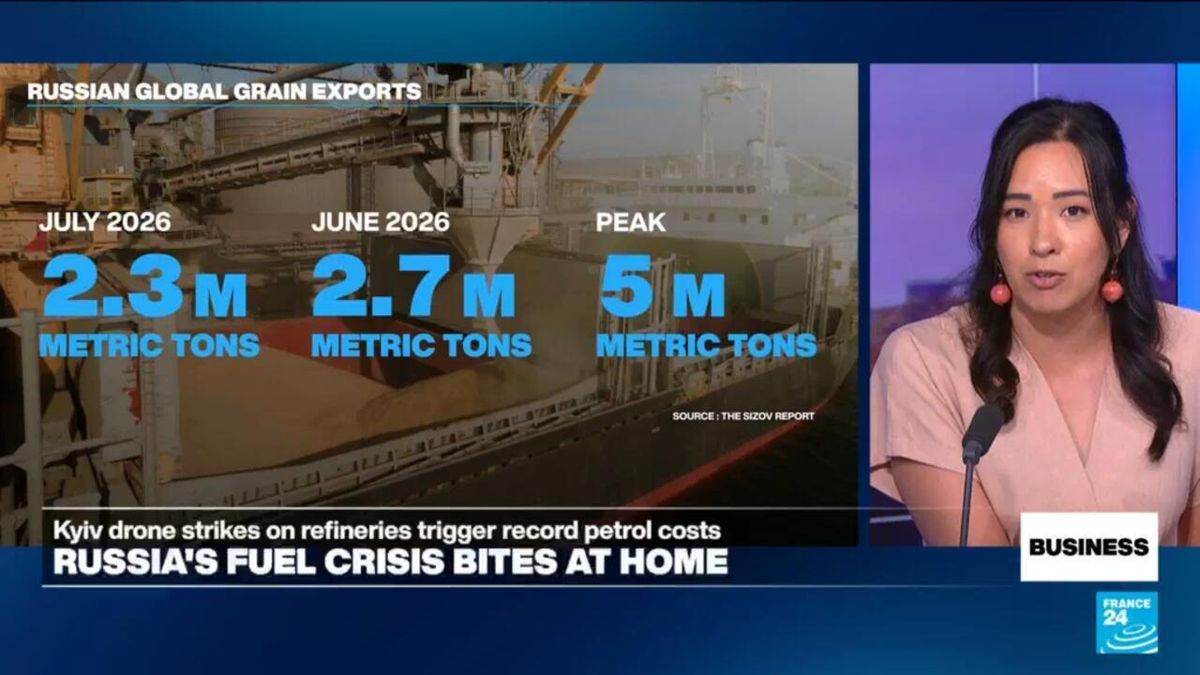
The recent Ukrainian drone strikes on the Sea of Azov have brought shipping to a near standstill, disrupting a critical corridor that carries up to a quarter of Russia's wheat exports. This development has sent tremors through global grain and fuel markets, highlighting the escalating tensions between Ukraine and Russia.
The Ukrainian strikes can be seen as a strategic move to disrupt Russia's economy and limit its ability to export wheat, a crucial commodity for the global market. By targeting the Sea of Azov, Ukraine is leveraging its military capabilities to exert pressure on Russia's economy, which is already reeling from international sanctions.
The Sea of Azov has long been a contested region, with Ukraine and Russia vying for control. The recent strikes can be seen as a continuation of this historical rivalry, with Ukraine seeking to assert its dominance over the region and limit Russia's economic influence.
The disruption of shipping on the Sea of Azov has significant regional implications, particularly for the global grain market. Ukraine is a major wheat producer, and the disruption of its exports is likely to lead to shortages and price increases in the global market. This, in turn, could have far-reaching consequences for food security and economic stability in regions that rely heavily on imported wheat.
The long-term consequences of the Ukrainian strikes on the Sea of Azov are uncertain, but they are likely to be significant. The disruption of shipping and the exacerbation of Russia's fuel crisis could lead to a further escalation of tensions between Ukraine and Russia, potentially drawing in other regional players and exacerbating the conflict.
The Ukrainian strikes on the Sea of Azov matter because they highlight the escalating tensions between Ukraine and Russia and the potential for further conflict in the region. The disruption of shipping and the exacerbation of Russia's fuel crisis also have significant implications for global grain and fuel markets, potentially leading to shortages and price increases.
Editor's Note: The long-term consequences of the Ukrainian strikes on the Sea of Azov are uncertain, but they are likely to be significant.
Source referenced: FRANCE24
This brief was synthesized by our Editorial Engine and reviewed by The Ground Narrative team.


