TRENDING

Monday, 5 October 2026
----------------------
24 Rabi' Al-Thani 1448 AH
Ukraine's top commander, Oleksandr Syrskyi, reveals preparations for a possible new Russian attack from the north, aiming to stretch Ukrainian forces rather than capture Kyiv. He also notes a decline in overall Russian frontline activity and deems a Belarusian direct involvement unlikely.
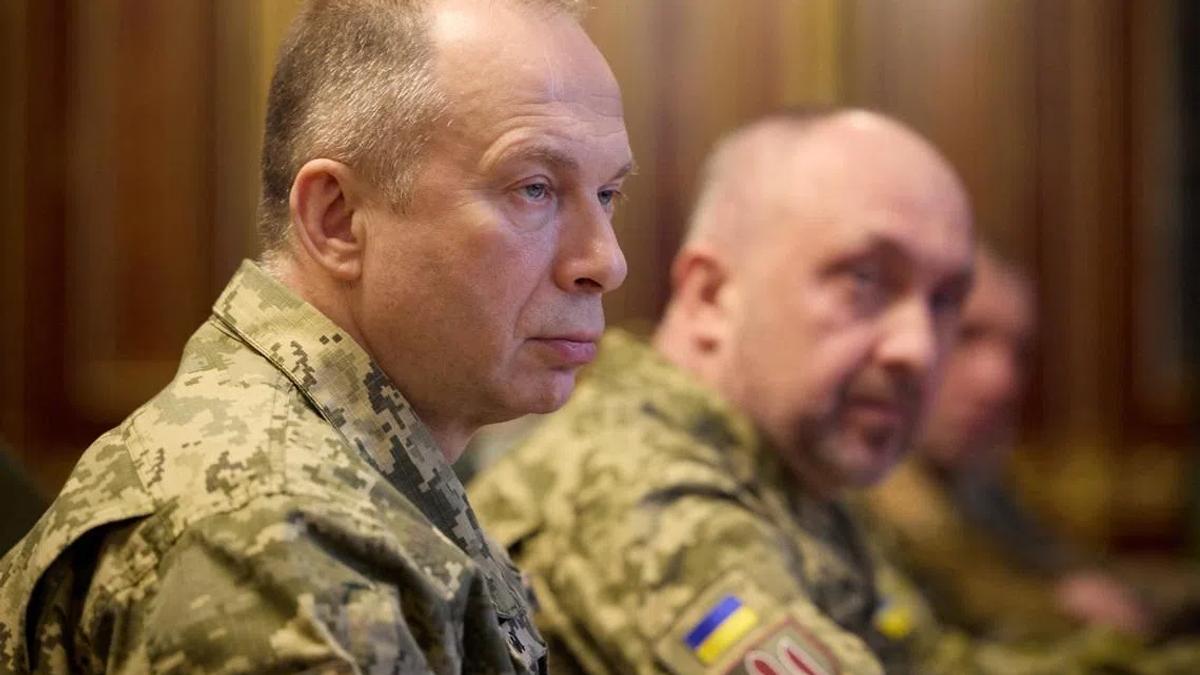
Ukrainian Commander-in-Chief Colonel General Oleksandr Syrskyi has indicated that Ukrainian forces are actively preparing for a potential new Russian offensive from the north, specifically from Russia's Bryansk region. This strategic assessment, shared in a recent interview, highlights an evolving dynamic in the ongoing conflict, suggesting a shift in potential Russian objectives for any northern thrust compared to the initial invasion.
The primary motivation behind such a potential Russian operation, according to Syrskyi, would not be a renewed attempt to capture the capital, Kyiv, as was unsuccessfully attempted in February 2022. Instead, the objective is assessed to be the seizure of territory within Ukraine's Chernihiv region. Critically, this move would aim to "stretch the front and deprive us of reserves," a classic military maneuver designed to force Ukraine to redeploy troops from other critical sectors along the extensive 1,250-kilometer front line. By opening a new, albeit secondary, axis of advance, Russia could seek to dilute Ukrainian defensive capabilities in more heavily contested areas, such as the Donbas or southern regions, potentially creating vulnerabilities for Russian breakthroughs. This strategy aligns with an attritional approach, seeking to exhaust Ukrainian resources and manpower over time.
Concurrently, Syrskyi downplayed the likelihood of a direct Russian attack originating from neighboring Belarus. This assessment comes despite weeks of Ukrainian allegations that Moscow has been pressuring its ally to assume a more active combat role. Belarusian President Alexander Lukashenko has historically walked a fine line, providing logistical support and allowing Russian forces to use Belarusian territory as a staging ground during the initial invasion, but largely refraining from committing Belarusian troops directly to combat operations in Ukraine. Syrskyi's current view suggests that, in light of recent events and Ukrainian President Volodymyr Zelenskiy's direct warnings to Minsk, the Belarusian leadership is unlikely to risk the significant domestic and international repercussions that would accompany direct military involvement. Zelenskiy had previously issued an ultimatum to Belarus regarding the dismantling of relay stations allegedly used to attack Ukraine, subsequently claiming their deactivation. This diplomatic pressure likely contributes to Minsk's continued reluctance to escalate its involvement.
The potential for a new northern front emerges amidst broader shifts in the intensity of combat operations. Syrskyi noted a discernible decline in Russian frontline activity, estimating a 30% reduction, which he attributed to the exhaustion of Russian troops. This observation, if accurate, could indicate a period of regrouping, resupply, or a strategic pause by Russian forces. However, it could also precede a concentrated effort in a new direction, such as the anticipated northern offensive. Simultaneously, Ukrainian forces have continued their campaign of long-range strikes against Russian targets, particularly those linked to the oil industry. These strikes aim to degrade Russia's logistical capabilities, disrupt its war economy, and reduce its capacity to sustain large-scale offensive operations. The interplay between reduced Russian ground activity and sustained Ukrainian long-range strikes suggests a complex and evolving battlefield, where both sides are seeking to exploit perceived weaknesses and conserve or project force strategically.
From a geopolitical perspective, a renewed Russian push from the north, even with limited territorial objectives, would significantly complicate Ukraine's defense planning and resource allocation. It would necessitate a careful balancing act for Kyiv, requiring the deployment of sufficient forces to deter or repel an attack without critically weakening other vital sectors. For international partners, such a development would underscore the persistent and multi-faceted nature of the threat Ukraine faces, potentially reinforcing calls for continued and enhanced military aid, particularly in air defense and long-range precision systems. The ongoing reluctance of Belarus to commit its forces directly, despite its close ties with Moscow, also highlights the limits of Russian influence and the complex calculations of regional actors in the face of a protracted conflict.
This situation underscores the enduring strategic challenges for Ukraine, which must maintain vigilance across a vast front while adapting to Russia's evolving tactical approaches. The potential northern offensive, while not aimed at Kyiv, represents a significant attempt to manipulate Ukrainian force posture and create new pressures, demanding a robust and adaptable defensive response.
Source referenced: STRAITSTIMES
This brief was synthesized by our Editorial Engine and reviewed by The Ground Narrative team.


