TRENDING

Sunday, 25 October 2026
----------------------
14 Jumada Al-Awwal 1448 AH
Thousands took to the streets across Turkey after the government jailed reporters and seized opposition broadcaster Halk TV. The rallies reveal a widening gap between state power and ordinary citizens demanding a free press.
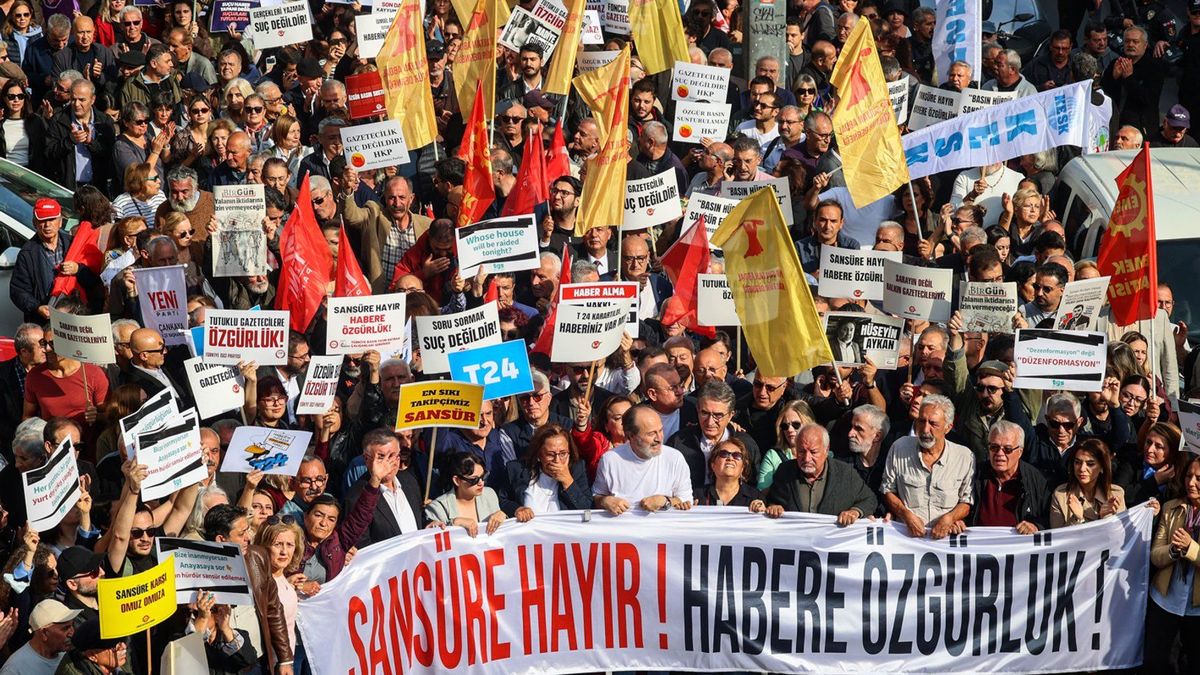
Thousands of citizens gathered in cities from Istanbul to Ankara on 25 October 2026 to protest the recent wave of journalist arrests and the forced shutdown of independent media outlets. Turkey’s interior ministry confirmed the detention of at least twelve reporters and the seizure of the opposition broadcaster Halk TV, while several news websites were blocked overnight. Officials denied any political motive, insisting the actions were part of a broader fight against “terrorist propaganda” and illegal financing.
The crackdown cannot be read simply as a law‑enforcement operation; it is a calculated move in a larger contest for political survival. President Erdogan faces dwindling support ahead of the 2027 parliamentary elections, and a media narrative hostile to his administration threatens to erode the patronage networks that keep his coalition intact. By silencing critical voices, the state aims to preserve a monopoly over information, a tool that shapes public perception of the economy, foreign policy, and security threats.
- Incentives: Controlling the media reduces the risk of investigative reporting that could expose corruption in construction contracts, energy deals, and the sizable public‑sector payroll tied to electoral favors.
- Political survival: A hostile press amplifies dissent in a country where regional governors rely on central subsidies; limiting dissent helps the ruling Justice and Development Party (AKP) maintain its grip on provincial power brokers.
- Economic trade‑offs: While foreign investors watch press freedom indices, the government balances short‑term political gain against long‑term reputational costs. The seizure of Halk TV, a channel with a sizable regional audience, also redirects advertising revenue toward state‑aligned outlets, reinforcing a loyal media ecosystem.
- Military doctrine and alliance math: Turkey’s NATO membership obliges it to uphold democratic standards, yet the leadership has increasingly leveraged nationalist rhetoric to justify internal security measures. By framing journalists as “terrorist sympathizers,” the state sidesteps potential scrutiny from allies while consolidating domestic control.
The arrested reporters face criminal charges that carry up to ten years in prison, loss of professional licenses, and social stigma. Their families endure financial strain as breadwinners are detained, and many fear reprisals if they speak out.
Viewers of Halk TV, especially in the Kurdish‑populated southeast, lose a platform that previously aired cultural programs and local news in Kurdish dialects. The shutdown curtails community dialogue and reinforces a homogenized national narrative that marginalizes minority concerns.
Local businesses that relied on affordable ad slots on independent stations now confront higher rates on state‑aligned channels, squeezing profit margins. The ripple effect reaches vendors, freelancers, and media‑production crews who lose contracts.
The visible suppression of dissent fuels cynicism among university students and civil‑society groups. When streets become the only outlet for expression, the social contract between citizens and the state frays, raising the risk of broader unrest.
Western capitals, including the United States and European Union, have issued muted statements calling for “respect for press freedom,” but they stop short of concrete actions such as sanctions or conditional aid. The Turkish government frames these remarks as external interference, using them to rally nationalist sentiment at home.
Official statistics on media‑sector employment and advertising revenue have been delayed, obscuring the true scale of job losses caused by the shutdowns. By withholding this data, the state avoids public debate over the economic fallout of its security narrative.
While news websites are blocked, many journalists have migrated to encrypted messaging apps and diaspora‑hosted servers. The government’s focus on traditional broadcast overlooks the growing influence of these digital channels, which remain harder to regulate but are increasingly vital for information flow.
- Legal proceedings: The outcome of the journalists’ trials will set a precedent for future media repression. Harsh sentences could embolden further crackdowns; acquittals might signal a tactical retreat.
- Election dynamics: As the 2027 parliamentary race approaches, monitor how the AKP leverages the narrative of “national security” against opposition parties that champion press freedom.
- International response: Watch for any shift from diplomatic statements to tangible measures, such as conditional funding for Turkish NGOs or EU‑led monitoring missions.
- Digital resistance: The resilience of independent journalists on encrypted platforms could inspire new forms of citizen journalism, challenging the state’s monopoly on information.
- Public mobilization: Continued street protests, especially in university towns, will indicate whether the current outcry remains a flashpoint or evolves into a sustained movement for democratic reforms.
The government says the arrests target individuals linked to terrorist propaganda and illegal financing, but analysts view them as a move to silence criticism ahead of upcoming elections.
Halk TV provided regional news and cultural programming, especially in Kurdish‑majority areas. Its closure limits community voices, reduces media diversity, and pushes audiences toward state‑aligned channels.
Western governments have issued diplomatic calls for press freedom, but concrete actions like sanctions remain unlikely. Future responses could depend on the severity of legal outcomes and the proximity of elections.
Source referenced: ALJAZEERA
This brief was synthesized by our Editorial Engine and reviewed by The Ground Narrative team.