TRENDING

Sunday, 25 October 2026
----------------------
14 Jumada Al-Awwal 1448 AH
A new episode of CGTN’s documentary follows the Karakoram Highway from the high mountain pass to the Arabian Sea, exposing how the China‑Pakistan Economic Corridor is reshaping trade routes and everyday lives. The series reveals who gains, who loses, and what the road hides from public view.
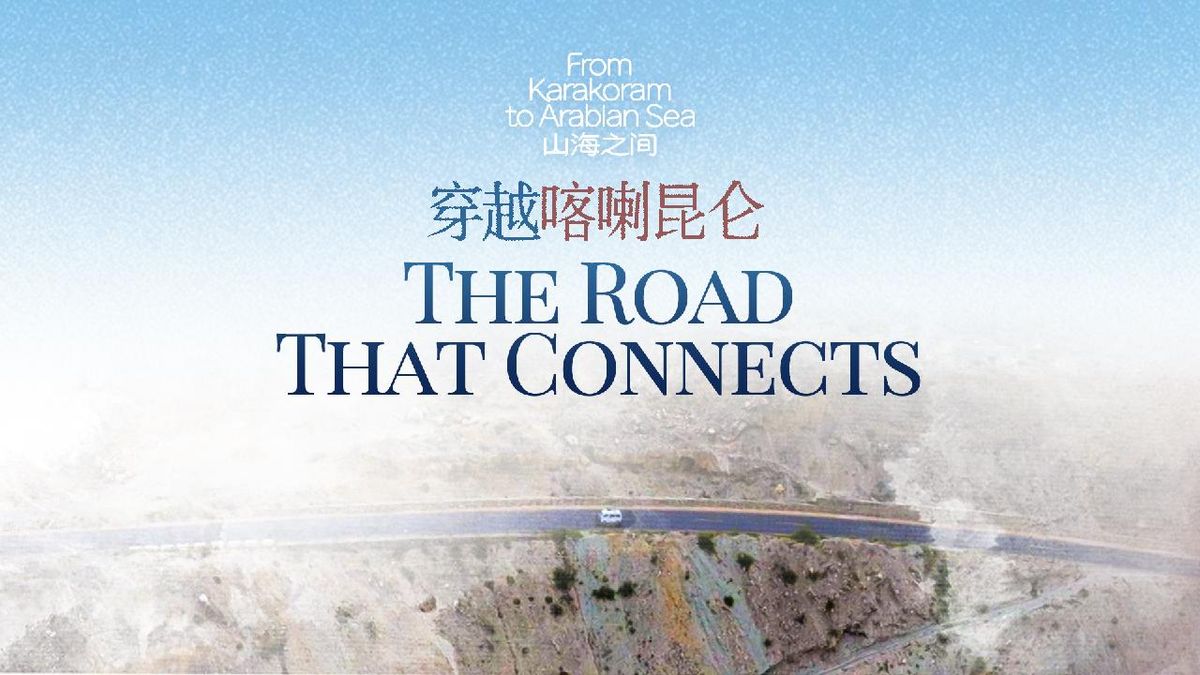
The latest CGTN documentary episode traces the Karakoram Highway from the Khunjerab Pass on the China‑Pakistan border down to the bustling ports of the Arabian Sea. Over a dozen days, the film showcases newly built bridges, dry‑port facilities at Sost, and bustling markets in Hunza, presenting the route as a lifeline that links remote mountain villages to global supply chains. The series is the first in a twelve‑part series that aims to map the physical and social landscape of the China‑Pakistan Economic Corridor (CPEC).
While the camera focuses on gleaming infrastructure, the underlying narrative is that the road is delivering “opportunity” and “development” to a region long isolated by geography and conflict. The episode ends with a panoramic view of trucks descending the highway toward the Arabian Sea, suggesting a seamless flow of goods from the interior to the world market.
CPEC is not merely a collection of roads and ports; it is a strategic investment that serves multiple state and corporate interests. For China, the corridor offers a land‑based alternative to the vulnerable maritime routes that pass through the South China Sea, reducing exposure to potential naval blockades. By securing a direct overland link to the Arabian Sea, Beijing can move energy imports, raw materials, and manufactured goods with fewer chokepoints.
For Pakistan, the promise of infrastructure is tied to political survival. Successive governments have leveraged CPEC to showcase development achievements, especially in the northern provinces where insurgent groups have historically challenged state authority. The influx of Chinese construction firms creates a patronage network that can be mobilized during elections, while the debt financing structure—largely sovereign loans from Chinese banks—binds Pakistan’s fiscal policy to Beijing’s strategic timetable.
Economic trade‑offs are evident in the financing model. The majority of the highway upgrades are funded through concessional loans that carry interest rates below market levels, but they also require Pakistan to allocate future export revenues, particularly from the Gwadar port, to service the debt. This creates a dependency loop: the more the corridor is used, the higher the repayment burden, which can constrain Pakistan’s budgetary flexibility for other social programs.
Military doctrine plays a subtle role as well. The highway runs parallel to the Line of Actual Control with India, and its rapid construction enhances the logistical capacity of both Chinese and Pakistani forces. Joint exercises and the presence of Chinese security contractors at key construction sites embed a military dimension that is rarely highlighted in public statements.
In the Hunza valley, families have been relocated to make way for widened lanes and new bridges. While compensation packages are offered, many residents report that the payments do not cover the loss of agricultural land that has been cultivated for generations. The shift from terraced farming to a transport corridor also disrupts local water management, increasing the risk of landslides during monsoon seasons.
Chinese firms bring in thousands of workers from across the border, often housed in temporary camps that lack adequate sanitation and medical facilities. Local laborers hired for ancillary jobs—such as loading trucks or maintaining roadside stalls—work long hours for wages that are a fraction of what their Chinese counterparts earn. The disparity fuels resentment and occasional protests that are quickly suppressed by local police.
The highway cuts through fragile alpine ecosystems. Construction has accelerated glacier melt by exposing ice to soot and debris, while increased traffic contributes to air and noise pollution in previously quiet mountain towns. Downstream communities report reduced water flow for irrigation, threatening food security for households that rely on subsistence farming.
Official statements from both governments emphasize the “win‑win” nature of CPEC, but they downplay the growing debt burden. Independent analysts estimate that Pakistan’s external debt to China now exceeds 30% of its GDP, a figure that is rarely mentioned in state media. The lack of transparent accounting makes it difficult for citizens to assess the long‑term fiscal impact.
Chinese officials often frame the corridor as a peace‑building project that stabilizes the border region. However, the presence of security personnel and surveillance equipment along the highway is rarely discussed. Local activists argue that the security apparatus is used to monitor dissent, especially in areas where ethnic minorities demand greater autonomy.
The CGTN series itself is a form of soft power, highlighting success stories while omitting footage of protests, stalled projects, or cost overruns. Independent journalists have reported that several bridge projects have been delayed due to funding shortfalls, yet these setbacks are absent from the official narrative.
The next phases of CPEC will focus on expanding the Gwadar port and linking it to the inland rail network. Observers should monitor: (1) the terms of new loan agreements and any revisions to repayment schedules; (2) the frequency of joint military drills near the highway, which could signal a shift from economic to strategic use; and (3) grassroots responses in northern districts, especially any organized resistance to land acquisition. These indicators will reveal whether the corridor remains a conduit for development or becomes a lever of geopolitical leverage.
Stakeholders—from local farmers to regional policymakers—will need to track how the promised economic benefits translate into real wages, affordable services, and environmental safeguards. The road may physically connect the Karakoram to the Arabian Sea, but its true impact will be measured in the lives it reshapes and the power it consolidates.
The CPEC is a collection of infrastructure projects, including highways, ports, and energy plants, financed largely by Chinese loans to improve trade links between China and Pakistan.
It brings jobs and better road access but also causes displacement, environmental strain, and wage gaps between Chinese and local workers.
Rising debt could limit Pakistan’s fiscal flexibility, forcing future export revenues to service loans and potentially giving China leverage over economic policy.
Source referenced: CGTN
This brief was synthesized by our Editorial Engine and reviewed by The Ground Narrative team.