TRENDING

Thursday, 15 October 2026
----------------------
4 Jumada Al-Awwal 1448 AH
President Donald Trump has issued a stark warning, threatening to 'completely decimate' Iran if it attempts to assassinate him, following intelligence reports and public calls for revenge at a high-profile funeral. This declaration marks a significant escalation in US-Iran relations, jeopardizing a fragile ceasefire and raising fears of broader regional conflict.
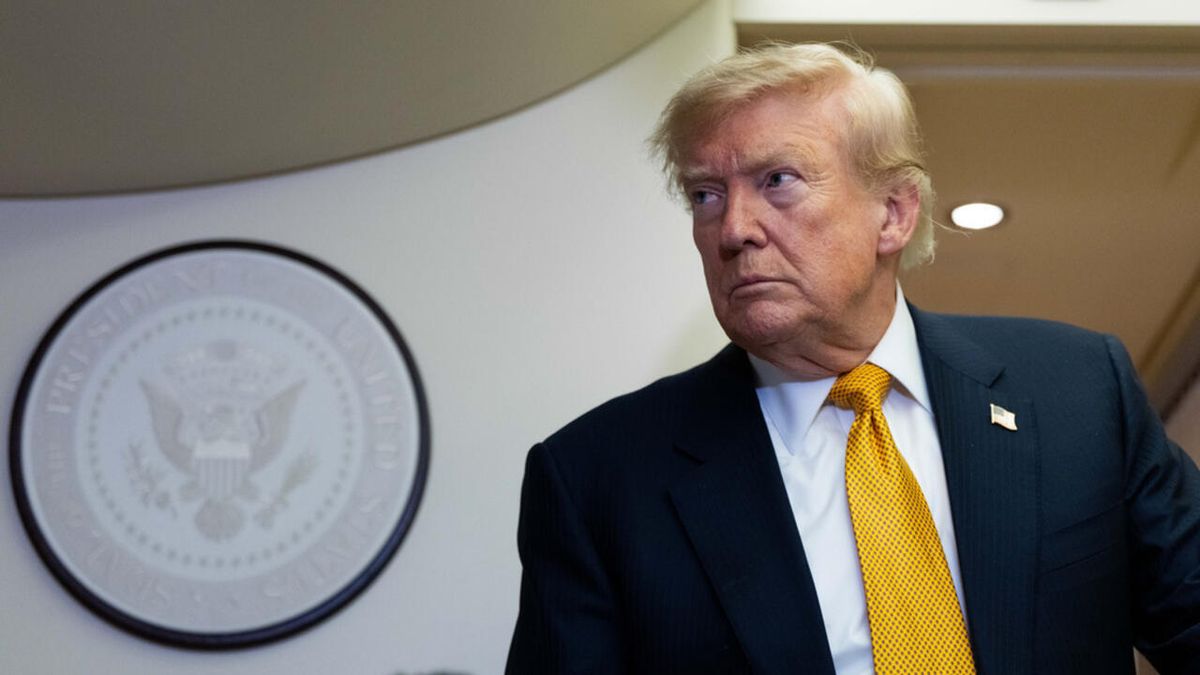
Relations between the United States and Iran have plummeted to a new and dangerous low following a direct threat from President Donald Trump. On Friday, July 11, 2026, President Trump declared that the U.S. would "completely decimate" Iran should it attempt or succeed in assassinating the sitting American president. This pronouncement, made via his social media platform Truth Social, explicitly stated that "Orders have already been given, and the US Military is ready, willing, and able, for a one year period of time, subject to extension, to completely decimate and destroy all areas of Iran." He further claimed that "1000 Missiles are Locked and Loaded and aimed at the Islamic Republic of Iran, with thousands of more to immediately follow."
This severe warning from Washington comes amidst a backdrop of heightened tensions and specific intelligence. Earlier in the week, U.S. media reported that Israel had shared intelligence with the United States regarding a new and "specific" plan by Iran to assassinate President Trump. This intelligence appears to have been a critical catalyst for the President's public threat. The timing also coincides with the funeral of Iran's former Supreme Leader, Ali Khamenei, which took place on Thursday, July 10, 2026, over four months after his death in an airstrike. Reports from the funeral indicated open calls for President Trump's killing, further fueling the perception of an active threat from Tehran.
The alleged assassination plot and the public rhetoric at Khamenei's funeral are viewed by the U.S. administration as direct provocations, demanding an unequivocal response. The U.S. stance suggests that any such attempt would cross a red line, triggering a devastating military retaliation. The specificity of Trump's threat, including the mention of military readiness and a one-year operational window, underscores the gravity with which these allegations are being treated by Washington.
President Trump's latest remarks also signal the effective termination of a shaky ceasefire agreement between the U.S. and Iran. Just days prior, an exchange of fire between the two nations had already rocked the fragile truce, which aimed to de-escalate months of conflict and prevent a return to full-scale regional war. While President Trump insisted the truce was over, he also indicated an openness to further negotiations. However, Iran has pushed back, insisting it had "kept its word" on the ceasefire, highlighting a significant disconnect in how both sides perceive the current state of their agreement.
Amidst this escalating rhetoric, diplomatic channels are reportedly working to avert a wider conflict. Qatari negotiators were in Iran, meeting with Iranian officials in an effort to de-escalate tensions and create conditions for broader negotiations to continue. These talks were reportedly conducted in coordination with the United States, indicating a parallel, albeit precarious, diplomatic track attempting to manage the crisis while public threats intensify.
The implications of President Trump's threat are profound and far-reaching. The explicit warning of "decimation" moves beyond traditional deterrence, suggesting a willingness to engage in large-scale military action against Iran. Such an action would undoubtedly trigger a catastrophic regional conflict, drawing in various actors and destabilizing the entire Middle East. The Strait of Hormuz, a critical global oil chokepoint, would likely become a flashpoint, impacting global energy markets and international trade.
For Iran, the threats come at a sensitive time, following the death of its long-serving Supreme Leader. The succession process and internal power dynamics could be influenced by external pressures, potentially leading to a hardening of stances or unpredictable responses. The reported explosion in the eastern part of Tehran province, though unexplained, adds to the atmosphere of uncertainty and potential internal instability within Iran amidst these external threats.
Israel's role in providing intelligence underscores the deep-seated strategic alignment between Washington and Jerusalem regarding Iran. This intelligence sharing highlights a coordinated effort to counter perceived Iranian threats, but also risks entangling allies in a potential conflict. The current situation demands careful diplomatic maneuvering to prevent miscalculation and unintended escalation, as the rhetoric from both sides pushes the region closer to the brink of a devastating confrontation.
The immediate future of US-Iran relations hangs precariously. The stark contrast between President Trump's aggressive public threats and the quiet diplomatic efforts by Qatar illustrates the complex and contradictory nature of the current crisis. The international community watches with apprehension, as the potential for a return to full-scale regional war looms large. The challenge for all parties involved will be to find a path towards de-escalation that addresses security concerns without triggering a military conflict with potentially devastating global consequences.
Source referenced: FRANCE24
This brief was synthesized by our Editorial Engine and reviewed by The Ground Narrative team.