TRENDING

Friday, 23 October 2026
----------------------
12 Jumada Al-Awwal 1448 AH
President Donald Trump attended the rescheduled White House Correspondents’ Association Dinner, three months after an alleged assassination attempt disrupted the original event. The gathering served as a symbolic demonstration of democratic resilience and the continuation of institutional norms despite threats of political violence.
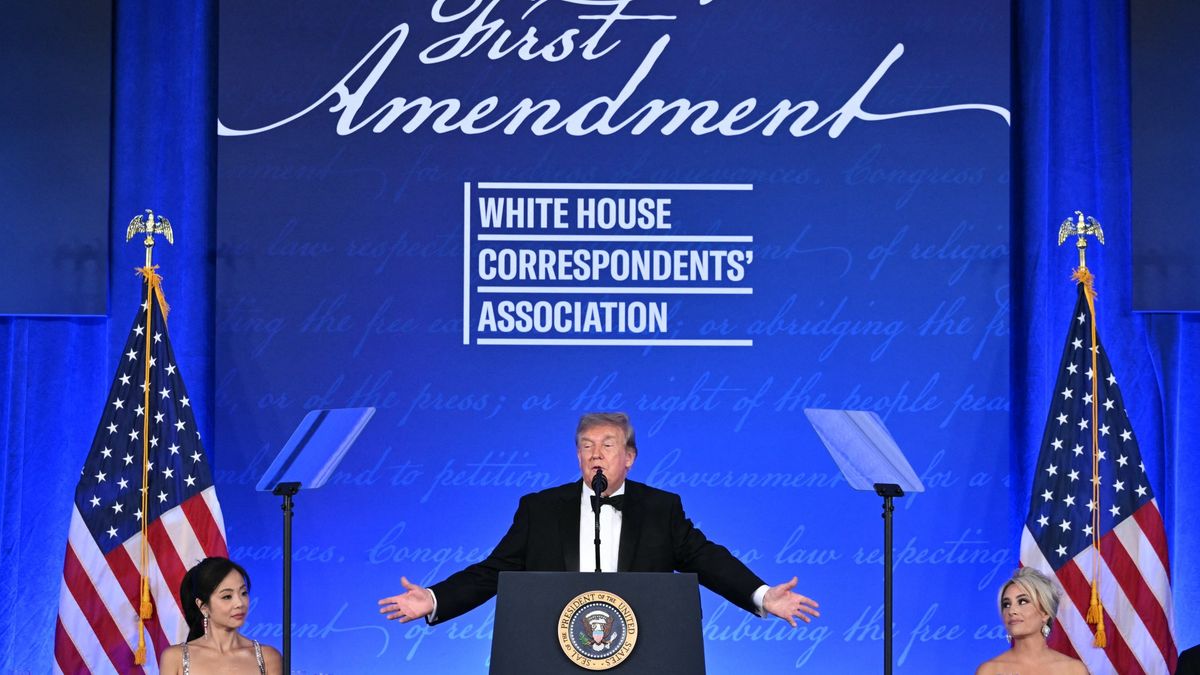
United States President Donald Trump returned to the White House Correspondents’ Association (WHCA) Dinner on July 24, 2026, an event that had been abruptly derailed three months prior by an alleged assassination attempt. The rescheduled gala, held at the Waldorf Astoria in Washington, D.C., marked a significant moment for both the presidency and the American press, symbolizing a defiant continuation of democratic traditions in the face of political violence.
The original event in April 2026 was disrupted when an alleged gunman, Cole Tomas Allen, attempted to storm the proceedings at the Washington Hilton, armed with firearms and knives. Prosecutors accuse Allen of shooting and injuring a Secret Service officer before being apprehended. President Trump characterized the incident as “an assault on our democracy itself,” highlighting the gravity of the threat to the nation's political stability and the safety of its leaders. The swift rescheduling and the President's attendance underscore a collective resolve to not be intimidated by such acts.
Historically, the White House Correspondents’ Dinner serves as a unique platform for the President to engage with the press corps, often through humor, and to underscore the importance of a free press in a democratic society. President Trump's relationship with the media has been notably contentious, marked by his initial refusal to attend the dinner during his first term, labeling it “dead.” His decision to attend the rescheduled event, therefore, represents a notable shift, signaling a willingness to participate in a tradition he once scorned, especially after a direct threat to his life and the event itself.
Weijia Jiang, President of the WHCA, articulated the sentiment of resilience, stating, “Tonight our message is this: We are back. We will not be intimidated. We refuse to let an act of violence have the final word.” This declaration reinforces the institutional commitment to upholding democratic processes and the role of journalism, even amidst heightened security concerns and a deeply polarized political environment. The smaller guest list of 700, compared to the original gathering, suggests a more controlled and perhaps more somber atmosphere, yet one still determined to proceed.
President Trump's address at the dinner was characteristic of his public persona, blending traditional remarks with pointed political jabs and humor. He quipped about a potential “third time” in office, a facetious remark that nonetheless plays into ongoing national discussions about presidential term limits and democratic norms. More significantly, his speech included direct rebukes of political opponents, such as calling Democratic California Governor Gavin Newsom “newscum” and questioning Congresswoman Ilhan Omar’s intelligence. He also made a controversial remark, referring to top Democratic Senator Chuck Schumer as “Palestinian” as an insult, a comment that could resonate beyond domestic politics given the sensitive geopolitical context of the Middle East and the weaponization of identity in political discourse.
His characterization of journalists as suffering from “Trump derangement syndrome” further illustrates the persistent tension between his administration and the media. While the dinner is traditionally a moment for lighthearted banter, Trump's remarks underscore the deep divisions within American politics and the ongoing struggle for a constructive relationship between the executive branch and the press. The alleged assassination attempt, coupled with the President's rhetoric, highlights the volatile nature of contemporary American political discourse and the potential for such rhetoric to be perceived as either galvanizing or inflammatory.
The alleged assassination attempt on a sitting U.S. President is a grave domestic security incident with significant implications for national stability. It underscores the persistent threat of political extremism and the challenges faced by security agencies in protecting high-profile figures. The incident and the subsequent response—including the President's public acknowledgment of his aides' “bravery” and the WHCA's defiant stance—serve as a powerful message against those who seek to disrupt democratic functions through violence.
Globally, the stability of American democracy and the security of its leaders are closely watched. An attack of this nature, even if thwarted, can influence international perceptions of U.S. internal cohesion and resilience. The continuation of the WHCA Dinner, despite the threat, sends a message of institutional strength and a refusal to yield to fear. However, the underlying political polarization and the nature of presidential rhetoric continue to pose challenges to national unity and the health of democratic institutions, both domestically and in how the U.S. is viewed on the world stage.
Source referenced: ALJAZEERA
This brief was synthesized by our Editorial Engine and reviewed by The Ground Narrative team.