TRENDING

Friday, 23 October 2026
----------------------
12 Jumada Al-Awwal 1448 AH
A fresh clash between the United States and Iran threatens to choke the Strait of Hormuz, testing emergency oil stocks worldwide. The analysis reveals who profits, who suffers, and what signals will shape the next weeks.
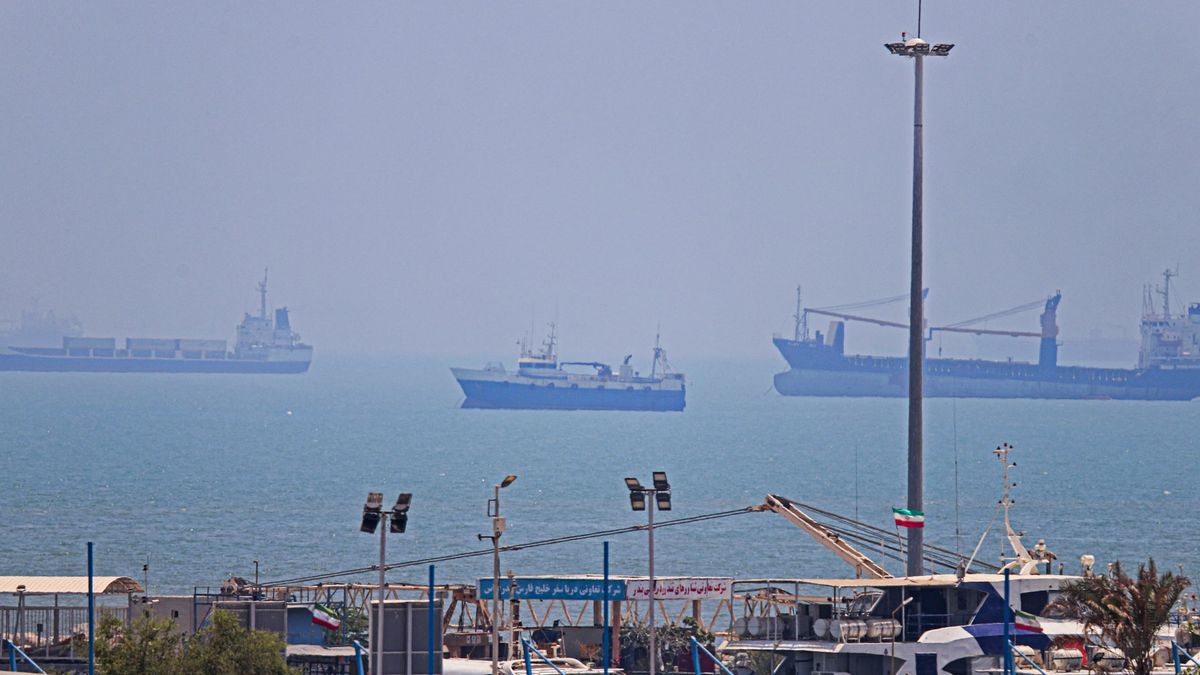
The United States and Iran have entered a renewed phase of armed confrontation, with the Islamic Revolutionary Guard Corps reporting multiple tanker attacks in the Strait of Hormuz. At the same time, Houthi forces in Yemen have intensified strikes on vessels transiting Bab al‑Mandeb, prompting oil benchmarks to climb toward five‑month highs.
Both capitals are using oil as a lever of coercion. Washington seeks to pressure Tehran by threatening a disruption of the world’s most vital maritime chokepoint, while Tehran aims to demonstrate that any attempt to isolate it will exact a costly price on global energy markets. The calculus is amplified by domestic audiences: U.S. politicians can rally nationalist sentiment by portraying a firm stance against Iranian aggression, and Iranian hard‑liners can claim victory when oil prices surge.
The International Energy Agency (IEA) coordinates emergency stockpiles that member states must hold for at least 90 days of net imports. Since the war began in February, the IEA’s 32 members released a record 400 million barrels, draining the Strategic Petroleum Reserve (SPR) to its lowest level since 1982. The SPR now sits at roughly 283 million barrels, most of which are lent rather than sold and must be returned with interest, limiting the speed of further releases.
European allies are caught between two imperatives. On one hand, they rely on Gulf crude to keep their economies humming; on the other, they must hedge against a prolonged shutdown of Hormuz, which carries about 20 % of global oil flow. Germany’s decision to hold back a portion of its reserves for a national emergency illustrates the tension between collective European solidarity and national political survival.
Major oil majors—ExxonMobil, Chevron, Shell—have posted record earnings as crude prices hover above $110 per barrel. Their balance sheets benefit directly from any supply shock, creating a structural incentive to lobby for a limited, controlled escalation rather than a full‑scale closure that would destabilize markets beyond profitable volatility.
Countries such as India, Pakistan, and South Korea maintain the thinnest emergency buffers. India’s strategic reserves cover only eight days of imports, meaning a sudden shortfall forces the nation to turn to distant West African supplies, a journey that adds 25‑28 days of transit time and raises freight costs dramatically. The immediate impact is higher gasoline and diesel prices for millions of commuters and small‑scale traders.
Even as oil prices climb, the workers who load, unload, and maintain the pipelines and ports see their livelihoods jeopardized. Strikes on Saudi Arabia’s East‑West Pipeline have already disrupted the flow of crude to the Red Sea, leaving dockworkers without wages and local economies dependent on steady oil traffic facing sudden revenue loss.
Higher diesel costs ripple through supply chains, inflating the price of food, medicine, and everyday goods. In low‑income neighborhoods across Europe and North America, households already stretched by inflation will allocate a larger share of their budget to energy, squeezing discretionary spending and deepening inequality.
While governments issue statements about “energy security” and “national interest,” they rarely disclose the scale of profit spikes for the world’s biggest oil producers. Quarterly reports from ExxonMobil and Chevron show earnings up by more than 30 % compared with the same period last year, yet public discourse frames the price surge as an unavoidable consequence of war, not a profit engine.
The focus on reserve releases and price spikes obscures the environmental toll of accelerated extraction and transport. Faster turnover of strategic stocks often means tapping older, higher‑sulfur crude that burns more polluting emissions. Moreover, increased tanker traffic through alternative routes raises the risk of spills in the Red Sea and the Indian Ocean, a risk rarely quantified in official briefings.
Western outlets tend to highlight the strategic maneuvering of the United States and Iran, while coverage of how rising diesel prices affect a commuter in Delhi or a farmer in rural Kenya is limited to brief anecdotes. This framing sustains a narrative where the conflict is a high‑level chess game, not a crisis that erodes food security for billions.
The IEA’s emergency pool sits at roughly 400 million usable barrels, but the logistics of moving oil from the SPR, Japanese depots, and European stockpiles differ. Japan can mobilize its reserves within weeks, whereas the United States stages releases over a three‑month horizon. Monitoring the timing of each country’s drawdown will indicate how quickly the market can absorb a shock.
Attacks on Saudi Arabia’s East‑West Pipeline and the ongoing Houthi blockade of Bab al‑Mandeb are early warning signs. Satellite imagery and open‑source tracking of vessel movements will reveal whether these disruptions are isolated incidents or part of a coordinated effort to keep Gulf oil off the global market.
Both Washington and Tehran have historically used oil as a bargaining chip in cease‑fire negotiations. Any sudden de‑escalation—such as a limited cease‑fire or a UN‑mediated corridor for tanker traffic—could instantly calm markets. Conversely, rhetoric about “total closure” from either side should be read as a pressure tactic rather than an operational plan.
Higher prices make North‑American shale, West African fields, and even Russian exports more competitive. Watch for announcements of new drilling permits, export contracts, or shifts in refinery configurations that prioritize diesel‑rich crude grades. These moves will redistribute profits away from Gulf producers toward a broader set of actors.
By keeping an eye on these variables, ordinary citizens can gauge whether the next price jump is a temporary blip or the prelude to a longer‑term squeeze that will reshape daily life across continents.
Analysts estimate that the usable global emergency stockpile—about 400 million barrels—would be exhausted in a few weeks if the full shortfall of roughly 9 million barrels per day had to be covered entirely from reserves.
Asian importers with thin buffers, especially **India** and **Pakistan**, face the sharpest impact because their strategic reserves cover only days of import and alternative supplies are far away.
Yes. Major majors such as **ExxonMobil**, **Chevron**, and **Shell** have reported record quarterly earnings driven by the price surge, turning the crisis into a profit windfall.
Editor's Note: Analysis based on publicly available data and expert commentary up to October 2026.
Source referenced: ALJAZEERA
This brief was synthesized by our Editorial Engine and reviewed by The Ground Narrative team.


