TRENDING

Friday, 23 October 2026
----------------------
12 Jumada Al-Awwal 1448 AH
Israeli police detained ten suspects after violent attacks on a U.S. photojournalist and European diplomats during an olive‑harvest mission in the West Bank. The arrests expose the tangled web of settler politics, diplomatic pressure, and everyday Palestinian hardship.
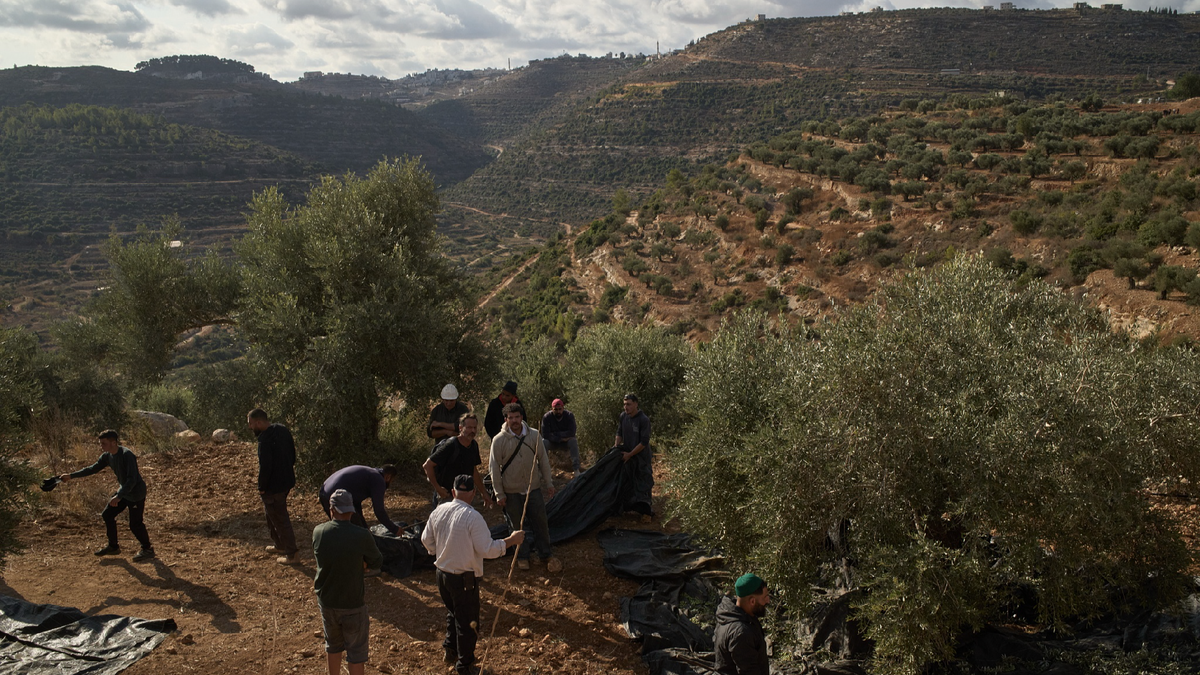
Israeli police announced on Monday that ten suspects were taken into custody as part of "Operation Olive Leaf," a joint effort with the Israeli Security Agency (Shin Bet) and the Israel Defense Forces. The arrests follow separate assaults on Heidi Levine, a *Washington Post* photojournalist covering a Palestinian olive harvest, and a delegation of European diplomats who were inspecting the same village, Taybeh, in the occupied West Bank. Local media identified the suspects as Israeli settlers, and police said evidence was seized at several outposts during the operation.
The incident sits at the intersection of three powerful currents that shape Israeli policy. First, the settler movement wields considerable influence over coalition politics; parties that champion settlement expansion often secure key ministerial portfolios, allowing them to protect outpost networks from legal scrutiny. Second, the security establishment—embodied by Shin Bet and the IDF—balances the need to project control over the occupied territories with the diplomatic fallout of settler‑related violence. Third, external actors, especially the United States and the European Union, maintain a delicate diplomatic dance: they condemn attacks on their citizens while avoiding direct challenges to Israel’s settlement agenda, which remains a cornerstone of domestic political legitimacy.
Operation Olive Leaf illustrates how these forces converge. By framing the arrests as a security operation rather than a political statement, the Israeli government can signal responsiveness to foreign pressure without alienating the settler bloc that underpins its parliamentary majority. The joint police‑military approach also reinforces the narrative that any violence in the West Bank is a security issue, not a political one, allowing the state to retain monopoly over the use of force while sidestepping broader debates about the legality of settlements.
The olive harvest is more than a seasonal activity; it is a cultural and economic lifeline for villages like Taybeh. When settlers block access to groves, families lose weeks of income, face food insecurity, and endure psychological trauma. The presence of armed police during the arrests does little to restore the disrupted harvest; the damage to trees and the lingering threat of future intimidation continue to erode livelihoods.
Heidi Levine represents a growing cohort of reporters who risk detention, equipment seizure, and physical assault to document life under occupation. The attack on her underscores the precarious environment for foreign media, which in turn limits global awareness of daily realities on the ground. When journalists are targeted, the flow of independent information narrows, leaving the public reliant on official narratives.
The European delegation, tasked with monitoring human‑rights conditions, faced a direct assault that jeopardized their ability to operate freely. Beyond the immediate physical danger, such incidents chill diplomatic engagement, prompting embassies to reconsider field visits and potentially scaling back on‑the‑ground reporting. This creates a feedback loop where fewer eyes on the situation can embolden further settler aggression.
Official statements from Israel have emphasized the “law‑enforcement” nature of the arrests, deliberately avoiding language that acknowledges a broader pattern of settler‑initiated violence. By isolating the incidents as the work of a few rogue individuals, the government sidesteps scrutiny of settlement policy and the systemic incentives that reward outpost expansion.
Both Israeli and international outlets have largely reported the arrests as a discrete security operation, with limited analysis of the underlying power dynamics. The focus on the arrests themselves distracts from the chronic reality of olive‑harvest disruptions, which occur weekly yet receive scant coverage. This framing narrows public perception to a single event rather than a sustained campaign of intimidation.
While the U.S. and European foreign ministries issued brief condemnations, they stopped short of linking the attacks to the broader settlement enterprise. By keeping the language generic—"unacceptable violence against journalists and diplomats"—they preserve diplomatic channels with Jerusalem while avoiding a direct challenge to the settlement agenda that fuels the very attacks.
The next few months will reveal whether the arrests signal a genuine shift or a tactical pause. Key indicators include: (1) the outcome of any judicial proceedings against the ten suspects and whether they result in substantive penalties; (2) the stance of Israeli coalition partners ahead of the upcoming national elections, where settlement policy is likely to be a decisive campaign issue; (3) any escalation in U.S. or EU diplomatic pressure, such as the deployment of additional monitoring teams or the conditioning of aid on settlement restraint; and (4) the response of Palestinian civil‑society groups, which may organize larger-scale protests if olive‑harvest access remains blocked. Observers should track statements from Shin Bet, parliamentary debates on settlement funding, and the frequency of future incidents involving journalists and foreign officials in the West Bank. These signals will help gauge whether the arrests are an isolated law‑enforcement act or the beginning of a broader recalibration of power in a contested landscape.
Local media and police statements linked the arrests to Israeli settlers based on evidence seized at outposts and the pattern of recent attacks on Palestinians during olive harvests.
Operation Olive Leaf is a joint police‑military initiative by Israeli police, **Shin Bet**, and the IDF aimed at curbing settler‑related violence in the **West Bank**, particularly around agricultural activities.
If security concerns persist, foreign embassies may limit on‑the‑ground missions, reducing direct monitoring of human‑rights conditions and potentially emboldening further settler aggression.
Source referenced: CGTN
This brief was synthesized by our Editorial Engine and reviewed by The Ground Narrative team.