TRENDING

Friday, 23 October 2026
----------------------
12 Jumada Al-Awwal 1448 AH
Hundreds of Ethiopians, primarily women and children, have crossed into Kenya, fleeing intense fighting in the border town of Moyale. The conflict erupted between forces from Ethiopia's Oromia and Somali regional states, triggered by a dispute over a regional flag.
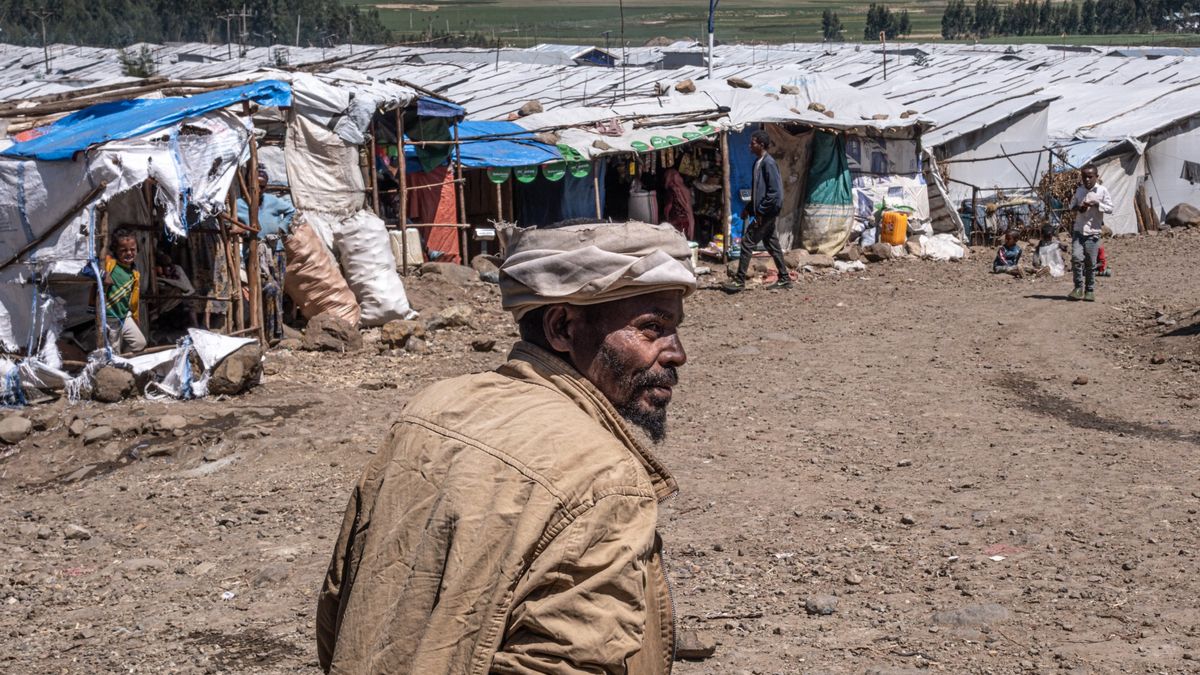
Hundreds of Ethiopians, predominantly women and children, have sought refuge in Kenya, crossing through various entry points in the border town of Moyale. This exodus follows a sudden escalation of fighting between forces loyal to Ethiopia's Oromia and Somali regional states. Reports indicate the immediate trigger for the violence was a public dispute over the raising of the Somali Regional State's flag, leading to gunfire and chaotic scenes that forced residents to flee for their lives.
Ethiopia operates under a system of ethnic federalism, a political architecture designed to grant significant autonomy to its diverse ethnic groups. While intended to foster unity through self-governance, this structure often becomes a crucible for competition over resources, administrative boundaries, and political influence. The clash in Moyale between Oromia and Somali regional forces is a stark manifestation of these inherent tensions, far removed from the more widely reported conflict in the northern Tigray region.
At the heart of this particular flashpoint lies a long-standing and often volatile dispute over the administrative demarcation between the Oromia and Somali regions. These borders, drawn and redrawn over decades, cut across traditional grazing lands, water sources, and ethnic communities, making them highly contested. For regional leaders, control over territory translates directly into political power, access to resources, and the ability to project authority over their perceived ethnic constituents. The act of raising a regional flag in a disputed area is not merely symbolic; it is a direct assertion of sovereignty and a challenge to the opposing region's claims.
The Ethiopian federal government in Addis Ababa faces an immense challenge in asserting its authority across these deeply entrenched regional fault lines. Prime Minister Abiy Ahmed's administration has been largely preoccupied with stabilizing the aftermath of the Tigray war and navigating a complex national dialogue. This preoccupation, coupled with the constitutional autonomy granted to regional states, can create a vacuum of federal oversight in border zones. Regional forces, often well-armed and locally loyal, can act with a degree of independence, escalating local disputes into full-blown conflicts without immediate federal intervention.
Furthermore, the economic incentives are significant. Control over fertile lands, trade routes, and potential mineral resources fuels the political will to contest these borders. For local strongmen and regional political elites, the narrative of protecting ethnic kin and ancestral lands is a powerful tool for mobilization, ensuring their political survival and consolidating their power base. The federal government's struggle to mediate or enforce lasting peace agreements between these powerful regional entities highlights the fragile balance of power within the Ethiopian state itself. Kenya, as a neighboring state, finds itself caught in the humanitarian fallout, forced to respond to an internal Ethiopian crisis that directly impacts its own border security and resource allocation.
The immediate and most devastating consequence of the renewed fighting in Moyale is borne by the hundreds of Ethiopian civilians, particularly women and children, who have been forced to abandon their homes and livelihoods to seek safety in Kenya. These individuals are not combatants; they are families caught in the crossfire of political and territorial disputes that are largely beyond their control. Their flight across the border represents a profound disruption of life, marked by fear, uncertainty, and the loss of everything familiar.
Upon arrival in Kenya, these displaced populations face immediate challenges. The Kenya Red Cross has begun setting up temporary shelters and distributing essential items like cereal and porridge flour, but the scale of need is still being assessed. These hundreds of individuals join a growing number of internally displaced persons (IDPs) within Ethiopia itself, a country already grappling with multiple humanitarian crises. Women and children are particularly vulnerable to exploitation, disease, and psychological trauma in displacement settings. The suddenness of their flight means many arrive with little to no possessions, relying entirely on humanitarian aid for survival.
The influx of refugees places an immediate strain on Kenya's border communities and resources. While Kenya has a long history of hosting refugees, each new wave presents logistical and security challenges. The town of Moyale, which straddles the Ethiopian-Kenyan border, is a vital economic hub. Disruptions caused by conflict on the Ethiopian side directly impact cross-border trade, local markets, and the social fabric of the entire region. The fear of violence spilling over into Kenyan territory is a constant concern for authorities and residents alike.
This incident in Moyale is not isolated; it is another tragic chapter in a broader pattern of internal displacement and conflict that has plagued Ethiopia for years. From the devastating war in Tigray to ongoing clashes in Oromia and other regions, civilians are repeatedly forced from their homes. This creates a cycle of instability, where communities struggle to rebuild before being uprooted again. The long-term human cost includes lost educational opportunities for children, chronic food insecurity, the breakdown of community structures, and deep-seated grievances that can fuel future conflicts. The human toll extends far beyond the immediate violence, impacting generations and hindering any prospects for sustainable development and peace in the affected regions.
What is often downplayed or omitted in official narratives surrounding conflicts like the one in Moyale is the systemic nature of Ethiopia's internal fragmentation and the underlying motivations of powerful actors. Governments, both federal and regional, tend to frame these clashes as localized incidents or
Hundreds of Ethiopians, primarily women and children, are crossing into Kenya from the border town of Moyale to escape fighting between forces from Ethiopia's Oromia and Somali regional states. The conflict reportedly escalated after a dispute over raising a regional flag.
The conflict stems from long-standing disputes over administrative boundaries, resource control like grazing land and water, and ethnic identity within Ethiopia's complex federal system. These tensions are often exacerbated by political mobilization.
While geographically separate, the Oromia-Somali conflict highlights the broader challenges to stability within Ethiopia's federal structure, where regional autonomy often clashes with federal authority. It underscores that internal conflicts extend beyond the well-publicized Tigray war.
Editor's Note: Analysis relies on established knowledge of Ethiopia's ethnic federalism and internal conflicts, interpreting raw intelligence within this geopolitical context.
Source referenced: ALJAZEERA
This brief was synthesized by our Editorial Engine and reviewed by The Ground Narrative team.