TRENDING

Monday, 5 October 2026
----------------------
24 Rabi' Al-Thani 1448 AH
With U.S. midterm elections passed, the political constraints on President Trump's Iran strategy may lift, raising the specter of intensified military and economic pressure. This potential escalation carries significant human and global economic costs, often downplayed in official narratives.
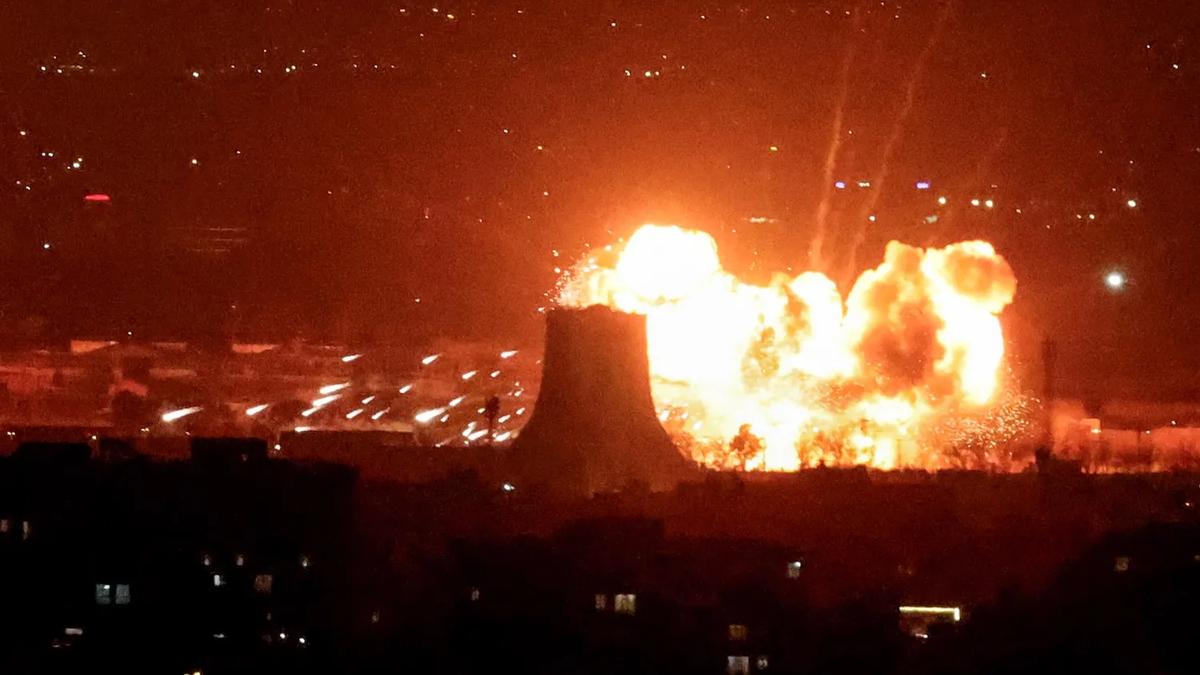
Following the U.S. midterm elections, there is a strong indication that President Donald Trump may move to intensify actions against Iran. Previously, the risk of surging global energy prices and domestic political backlash acted as a brake on overt conflict. This led to a brief diplomatic overture and a Memorandum of Understanding (MOU) that ultimately collapsed, pushing Washington back to economic pressure. However, with the electoral cycle behind him, the White House may now perceive a reduced political cost for more aggressive measures, potentially viewing an energy crisis as an acceptable price for what it defines as 'victory' against Tehran.
At its core, the current standoff is a test of wills, with both the United States and Iran attempting to outlast the other's economic pain. For Washington, the calculus shifts from domestic political survival to a perceived need to secure a legacy-defining win. Pressure from hawkish elements within the U.S., Israel, and Gulf partners to 'finish the job' adds to this momentum. Potential escalation options range from more intense military strikes against Iranian military and energy infrastructure, to high-risk special forces operations targeting highly enriched uranium stockpiles or critical oil terminals like Kharg Island. Arming opposition groups is also on the table, as is a 'go for broke' economic strategy involving aggressive sanctions against Chinese entities still trading with Iran, or even the politically toxic option of ground troops.
Iran, for its part, has demonstrated resilience. Its ability to disperse and hide munitions has allowed it to maintain a counterstrike capability, particularly against vulnerable Gulf states. Crucially, China continues to provide an economic lifeline, purchasing Iranian oil and hosting financial deposits, thereby blunting the full force of U.S. sanctions. This complex interplay means that any U.S. escalation, while designed to impose pain on Iran, also carries inherent risks of reciprocal economic and military costs for the U.S., its allies, and the global economy.
The most immediate and severe consequences of any escalation will fall on ordinary people. Global consumers stand to bear the brunt of any significant energy price spikes, particularly if the White House decides an energy crisis is an 'acceptable price' for defeating Iran. This would translate into higher costs for transportation, heating, and goods worldwide, impacting household budgets and potentially triggering broader economic instability. Citizens in Gulf states face the terrifying prospect of becoming collateral damage, as Iran has historically focused its retaliation on its regional neighbors. Their energy infrastructure, vital to the global economy, could become targets, disrupting livelihoods and regional stability.
Within Iran, the population is already under significant economic duress from sanctions. Further military strikes would inevitably lead to civilian casualties and infrastructure damage. Should the U.S. and its allies arm opposition groups, the risk of a protracted and bloody civil war—potentially far worse than the Syrian conflict—becomes a very real and devastating possibility, leading to massive refugee flows and regional destabilization. Even a 'successful' special forces operation or ground invasion would involve significant U.S. casualties, a human cost often abstracted in strategic discussions.
What is often downplayed or omitted in official statements is the profound uncertainty and potential for unintended consequences inherent in *all* escalation scenarios. The U.S. narrative often frames potential actions as leading to a clear 'victory' or 'finale,' yet the intelligence suggests that none of the options are likely to deliver the desired outcome of a compliant or overthrown Iranian regime without massive, unpredictable costs. The idea that Iran's position will simply 'soften' after midterms may be more a reflection of Washington's internal political desires than Tehran's strategic reality.
Furthermore, the profound global economic risk of targeting China's financial and refining institutions for their trade with Iran is an 'elephant in the room.' While a U.S. Treasury Secretary acknowledged that such a move could 'blow up the global financial system,' the pressure to escalate against Iran could override this critical warning. The potential for a messy, bloody civil war in Iran, with regional and international refugee crises, is also a consequence that powerful actors are likely to minimize, preferring to focus on the perceived benefits of regime change or nuclear disarmament.
Readers should closely watch President Trump's post-midterm rhetoric and actions concerning Iran. Any shift from economic pressure to kinetic military action will be a critical indicator. Pay attention to global energy markets and the price of oil; a sudden spike could signal a significant escalation or Iranian retaliation. Observe China's diplomatic and economic responses to any increased U.S. pressure regarding its trade with Iran, as this will determine the effectiveness of a 'go for broke' economic strategy. Finally, monitor the stability of Gulf states and any signs of increased Iranian proxy activity or direct strikes, which would indicate a dangerous widening of the conflict's human and economic footprint.
Source referenced: FOREIGNPOLICY
This brief was synthesized by our Editorial Engine and reviewed by The Ground Narrative team.