TRENDING

Friday, 16 October 2026
----------------------
5 Jumada Al-Awwal 1448 AH
US President Donald Trump's recent allegations of Chinese interference in the 2020 election, including the theft of voter data, are widely dismissed by US analysts and intelligence. Despite the gravity of the claims, experts believe they are unlikely to derail the critical September summit between the US and China, highlighting a pragmatic approach to bilateral relations amidst domestic political objectives.
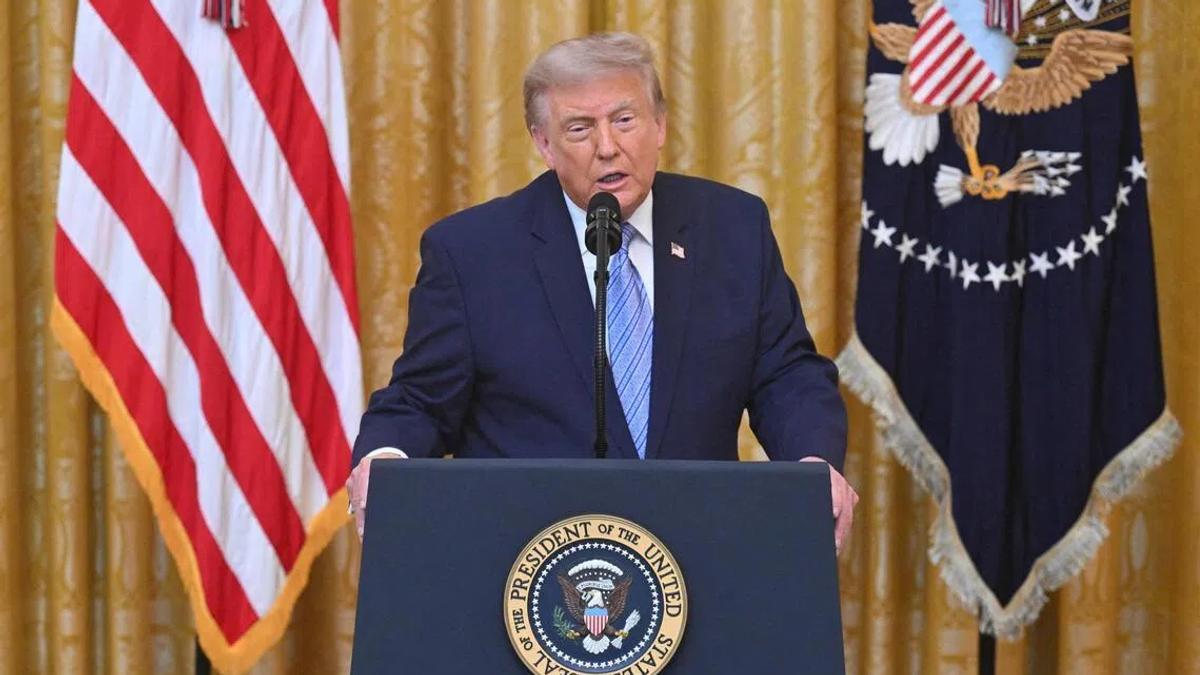
On July 16, 2026, US President Donald Trump delivered a primetime address alleging that China had acquired information on 220 million American voters and attempted to meddle in the 2020 US election. Describing it as "the largest compromise of election data in history," Trump claimed these efforts were deliberately concealed from him by "rogue bureaucrats." He further asserted that his administration had identified 278,000 non-citizens on voter rolls and highlighted vulnerabilities in voting machines and counting systems.
These claims, however, have been largely dismissed by a broad spectrum of US analysts, intelligence officials, and political figures. Numerous previous investigations, including those by courts and Trump's own Justice and Homeland Security departments, found no evidence of widespread fraud, voting-machine tampering, or foreign interference in the 2020 election. Senator Mark Warner, a member of the Senate Intelligence Committee, explicitly stated that intelligence agencies unanimously agreed China did not attempt to change a single vote in 2020. While newly declassified intelligence documents on the White House website mentioned Beijing's efforts at influence, including "overt messaging, nascent online covert influence capabilities," key sections remained redacted, making it difficult to assess the scope or success of such attempts. Experts like Dennis Wilder, a former senior director for East Asia at the National Security Council, noted that the White House released no information to substantiate the specific claims of voter data theft or widespread election compromise.
Despite the serious nature of election interference allegations, US analysts widely believe these claims are unlikely to significantly disrupt the carefully managed US-China relationship or derail the upcoming September summit between President Trump and Chinese President Xi Jinping. The Chinese embassy in Washington D.C. has unequivocally denied any interference in US elections, stating China "has never and will never interfere."
Experts emphasize China's pragmatic approach to international relations. Dennis Wilder noted that the Chinese are "utterly pragmatic" and are unlikely to take Trump's claims seriously enough to jeopardize broader strategic objectives. Beijing's primary focus in its relationship with Washington remains on critical issues such as Taiwan. As long as the Trump administration maintains a restrained stance on arms sales to the self-ruled island, which China considers its own territory, Beijing is expected to overlook such rhetoric. Yun Sun, an expert on US-China relations, suggested that if the speech is merely a singular political maneuver, Beijing is unlikely to let it disrupt the state visit. However, she cautioned that any subsequent punitive actions against China could introduce greater uncertainty into bilateral relations.
This situation underscores the "dual-track" nature of contemporary US-China relations, characterized by a tough public tone alongside pragmatic diplomacy behind closed doors. While such accusations undoubtedly raise the political cost of engagement, both Washington and Beijing recognize the strategic value of maintaining dialogue, particularly on complex issues like trade, technology, and regional security. The allegations also reinforce a bipartisan narrative in Washington that strategic competition with China extends beyond traditional domains into the integrity of democratic institutions.
President Trump's address appears to be deeply rooted in domestic political strategy, particularly ahead of the November 3 midterm elections where the Republican Party faces the risk of losing its congressional majority. The claims were framed as justifications for passing the stalled SAVE America Act, a legislative package aimed at electoral reforms. Key provisions of this act, such as requiring photo identification and proof of citizenship to vote, are popular among Republicans. However, the bill's proposal to end universal mail-in voting faces opposition, particularly from rural constituencies that rely on mail ballots.
Beyond immediate legislative goals, analysts like Joseph Morris, a political science professor, suggest that Trump's rhetoric could be a pre-emptive strategy. Should Republicans perform poorly in the midterms, these claims could serve to prime the population for potential allegations of election interference, cheating, or fraud. However, Morris predicted that outside of his base, such messages would largely fall on deaf ears, given the widespread skepticism regarding the 2020 election claims. John Fortier, an expert on the US election system, reiterated that the system is robust, with voting machines largely disconnected from the internet and backed by paper ballots, mitigating risks of widespread compromise.
The address also highlighted the deep fissures between the president and the press. Major American TV networks, including NBC and ABC, notably refused to broadcast Trump's speech live, citing concerns about airing potentially false claims about the election. Trump lashed out at the media, suggesting these networks should lose their broadcast licenses. While some argue that refusing to air a presidential address contributes to political polarization, others contend that news organizations have a responsibility to determine newsworthiness and avoid disseminating unsubstantiated claims. This incident further illustrates the challenges of media impartiality and public trust in a highly polarized political environment.
President Trump's allegations of Chinese election interference represent a significant domestic political maneuver, aimed at galvanizing his base and advancing specific legislative agendas. While the claims themselves lack broad corroboration from intelligence and expert communities, their geopolitical impact on the immediate US-China relationship appears limited, largely due to both nations' pragmatic pursuit of strategic interests. The episode underscores the complex interplay between domestic political imperatives and international diplomacy, reinforcing existing narratives of strategic competition with China while simultaneously highlighting the persistent challenges of political polarization and media trust within the United States.
Source referenced: STRAITSTIMES
This brief was synthesized by our Editorial Engine and reviewed by The Ground Narrative team.


