TRENDING

Friday, 16 October 2026
----------------------
5 Jumada Al-Awwal 1448 AH
US President Donald Trump's announcement of a ceasefire between Israel and Hezbollah, amidst ongoing US-Iran talks, has sparked a fragile calm in the region. However, the underlying tensions and competing interests threaten to derail the fragile peace.
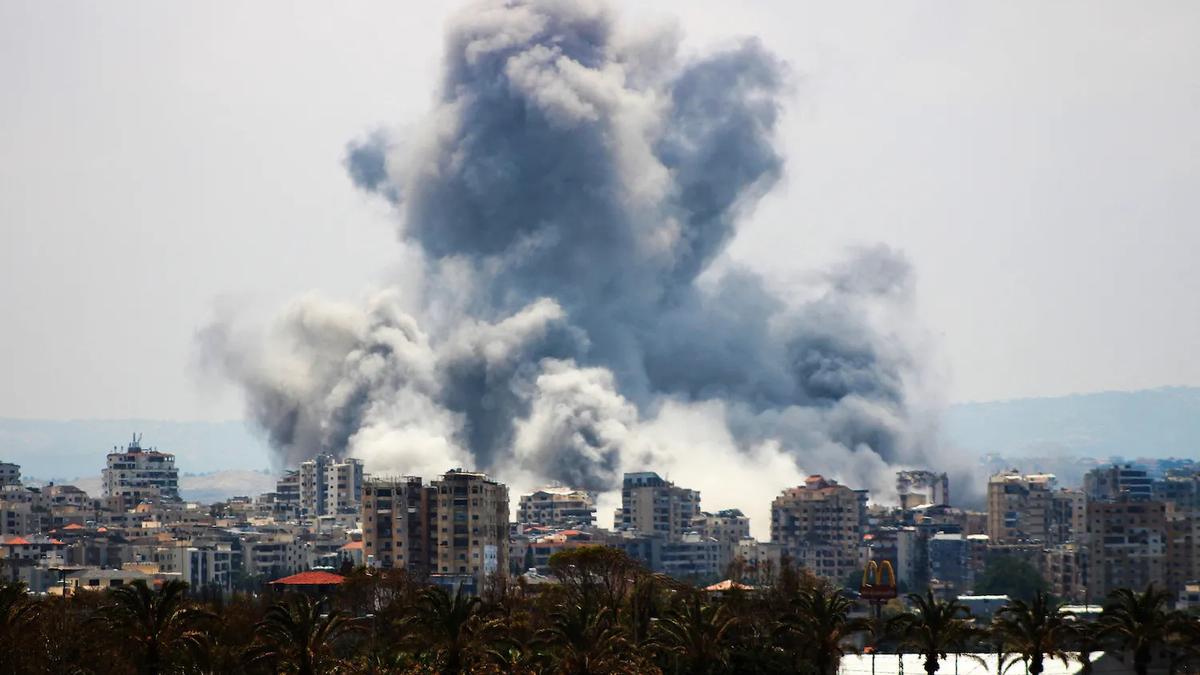
The recent ceasefire announcement by US President Donald Trump, calling for an end to hostilities between Israel and Hezbollah, has brought a temporary reprieve to the escalating US-Iran tensions. However, this fragile calm is threatened by the underlying complexities of the region's geopolitics.
Israeli Prime Minister Benjamin Netanyahu's decision to launch strikes on Hezbollah-controlled areas in southern Beirut was a response to the group's attacks on Israeli military targets. Netanyahu's assertion that Israel would continue its campaign to carve out a self-declared security zone in southern Lebanon underscores the country's determination to assert its dominance in the region.
Iran's decision to suspend negotiations with the US over Israel's military actions in Lebanon is a clear indication of the country's frustration with the US's handling of the situation. Iranian Foreign Minister Abbas Araghchi's statement that a ceasefire between Iran and the US constitutes a comprehensive ceasefire across all fronts, including Lebanon, highlights the country's desire for a broader agreement.
US President Donald Trump's announcement of a ceasefire, following a call with Israeli Prime Minister Netanyahu and a conversation with Hezbollah, has been met with skepticism by many analysts. The US's measured and deliberate self-defense strikes against Iranian air defenses, a ground control station, and two drones, demonstrate the country's determination to protect its interests in the region.
The ongoing tensions between the US, Iran, Israel, and Hezbollah have significant regional implications. The potential closure of the Strait of Hormuz, a key shipping choke point, would have far-reaching consequences for global energy markets. The involvement of Yemen's Houthi rebels, backed by Iran, would further escalate the conflict.
The fragile ceasefire announced by Trump is unlikely to hold, given the competing interests and underlying tensions in the region. The US-Iran talks, which have been ongoing for months, are at risk of imploding. The potential consequences of a wider conflict, including the closure of the Strait of Hormuz and the involvement of regional actors, would have devastating effects on global energy markets and regional stability.
The recent ceasefire announcement by Trump has brought a temporary reprieve to the escalating US-Iran tensions. However, the underlying complexities of the region's geopolitics threaten to derail the fragile peace. The competing interests and tensions between the US, Iran, Israel, and Hezbollah will continue to drive the conflict forward, with significant regional implications and future consequences.
Editor's Note: The analysis is based on publicly available information and may not reflect the full complexity of the situation. The potential consequences of a wider conflict are uncertain and may depend on various factors, including the actions of regional actors and the outcome of US-Iran talks.
Source referenced: FOREIGNPOLICY
This brief was synthesized by our Editorial Engine and reviewed by The Ground Narrative team.