TRENDING

Monday, 5 October 2026
----------------------
24 Rabi' Al-Thani 1448 AH
A Tibetan activist died after self-immolating outside the United Nations headquarters in New York, drawing global attention to China's policies in Tibet. The tragic act underscores persistent human rights concerns and the unresolved geopolitical dispute over the region's autonomy.
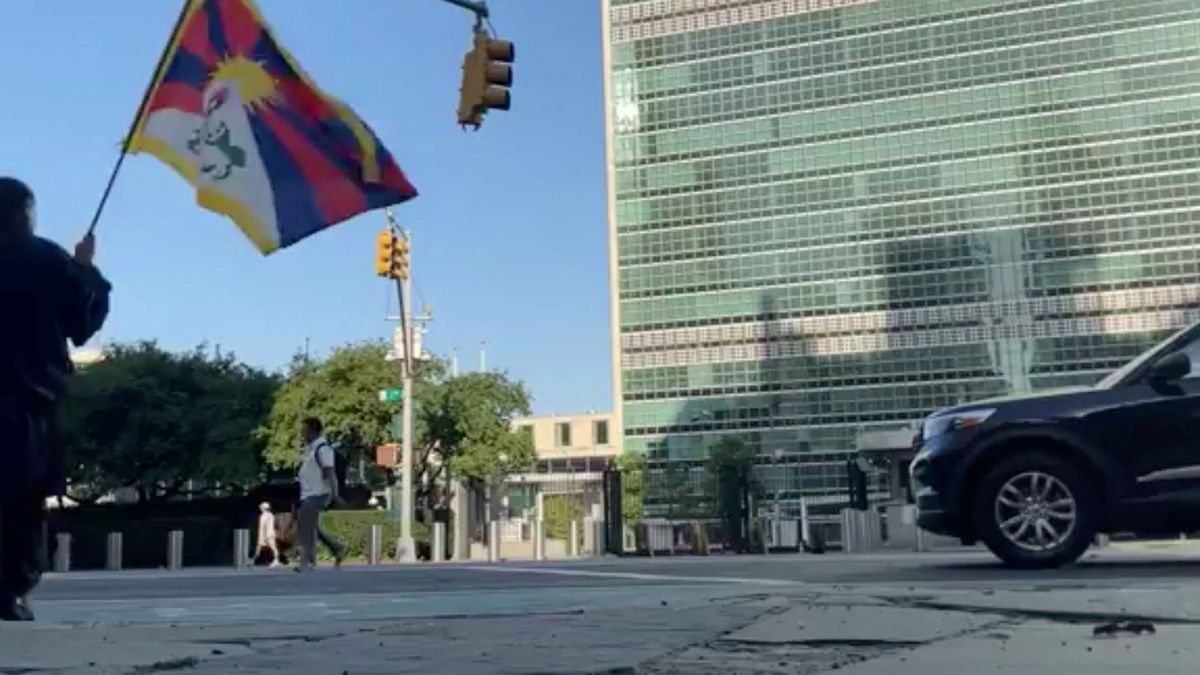
On July 2, 2026, a profound act of protest unfolded outside the United Nations headquarters in New York, drawing immediate international attention. Lobga Rangzen, a 52-year-old Tibetan activist, died after setting himself on fire while holding a Tibetan flag. The incident, which occurred around 6:30 PM local time, saw emergency services respond to find Mr. Rangzen with severe burns. He was subsequently transported to a hospital where he was pronounced dead. This tragic event serves as a stark and somber reminder of the enduring geopolitical tensions surrounding Tibet and the persistent human rights concerns voiced by its advocates.
The choice of location for this extreme act of protest—the United Nations headquarters—is highly symbolic. The UN is widely regarded as the foremost international body for diplomacy, human rights, and the resolution of global conflicts. By choosing this venue, Mr. Rangzen's act was designed to amplify the Tibetan cause on a global stage, appealing to the conscience of international leaders and the public. Pro-Tibet groups, including the International Campaign for Tibet, quickly identified Mr. Rangzen as a tireless advocate for Tibetan rights, highlighting his condemnation of China's recently enacted "Law on Promoting Ethnic Unity and Progress." This law, which Beijing claims is intended to foster a "shared" national identity, is viewed by overseas campaigners and international bodies, including the United States and the European Union, as a legislative tool that could further erode the rights of ethnic minorities, such as Tibetans and Uighurs, and potentially extend Beijing's legal reach beyond its borders.
Mr. Rangzen's self-immolation is not an isolated incident but rather a continuation of a deeply troubling trend. According to the International Campaign for Tibet, more than 150 Tibetans have resorted to self-immolation as a form of protest between 2009 and 2022. These acts underscore the profound desperation and perceived lack of alternative avenues for expressing dissent against Beijing's rule in Tibet. The historical roots of this conflict trace back to 1950 when China sent troops into Tibet, a vast high-altitude plateau that Beijing asserts has been an integral part of China for over seven centuries. This assertion is vehemently contested by international human rights groups and the Tibetan government-in-exile, who routinely condemn what they describe as China's oppressive rule.
The Tibetan spiritual leader, the 90-year-old Dalai Lama, has been based in India since fleeing the Tibetan capital Lhasa in 1959 after Chinese troops suppressed an uprising. His "Middle Way" policy advocates for genuine autonomy for Tibet within China, seeking a non-violent, dialogue-based resolution to the Sino-Tibet conflict. However, China does not recognize Tibet's government-in-exile, the Central Tibetan Administration, and has not engaged in formal dialogue with the Dalai Lama's representatives since 2010, leaving the path to a peaceful resolution largely stalled.
The incident outside the UN headquarters inevitably reignites scrutiny of China's policies towards its ethnic minorities and its broader human rights record. While the UN Secretary-General's spokesperson expressed sadness over the "tragic and horrific incident," the broader international community faces a complex diplomatic challenge. Nations like the United States and the European Union have voiced concerns over China's new "Law on Promoting Ethnic Unity and Progress," recognizing its potential to further exacerbate human rights issues and its implications for international legal norms if applied extraterritorially.
From a geopolitical perspective, such acts of protest, though individual, serve to keep the Tibetan issue on the international agenda, challenging Beijing's narrative of stability and unity. They highlight the persistent internal resistance to Chinese rule and the significant gap between China's claims of benevolent governance and the experiences of many Tibetans. The incident underscores the limitations of international diplomacy when confronted with issues of national sovereignty and human rights within powerful states. While direct intervention is unlikely, the continued international spotlight on Tibet contributes to a broader discourse on human rights and self-determination, potentially influencing global perceptions of China and its role on the world stage. The tragic death of Lobga Rangzen is a stark reminder of the human cost of unresolved geopolitical conflicts and the desperate measures individuals may take to draw attention to their cause.
Source referenced: ALJAZEERA
This brief was synthesized by our Editorial Engine and reviewed by The Ground Narrative team.