TRENDING

Monday, 5 October 2026
----------------------
24 Rabi' Al-Thani 1448 AH
A sudden surge of 70,000 migrants into Spain's North African exclave of Ceuta has exposed Madrid's precarious geopolitical standing, revealing how migration is wielded as a potent tool of statecraft.
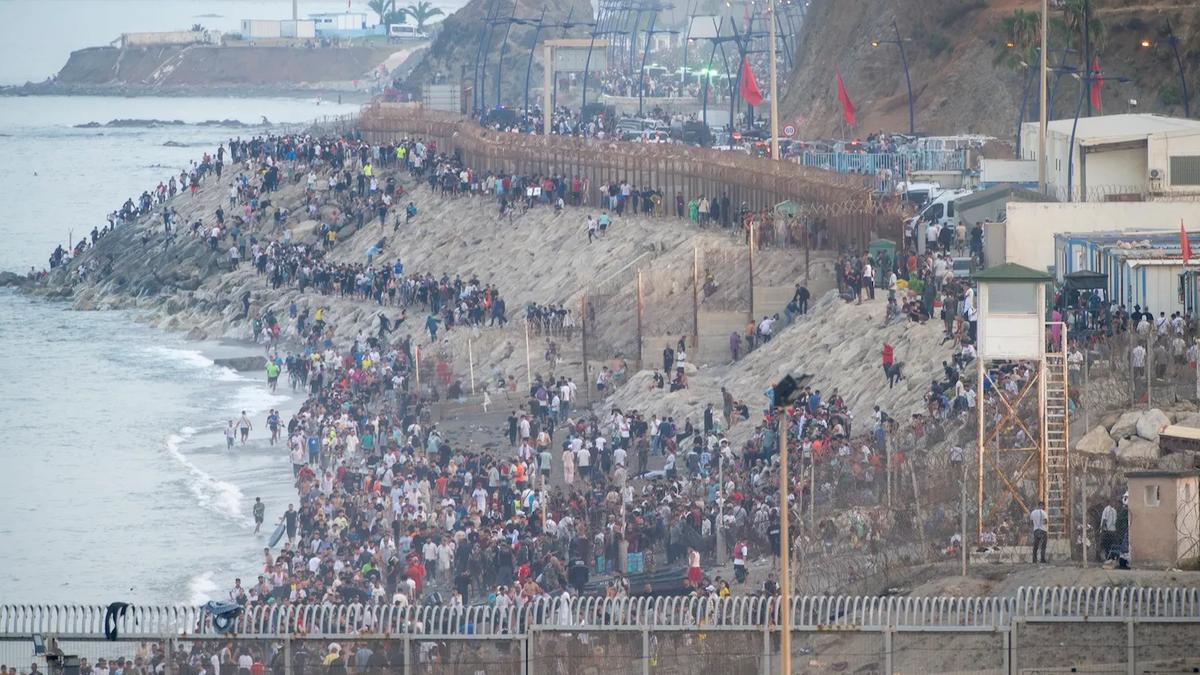
On July 30, approximately 70,000 migrants crossed from Morocco into Ceuta, the small Spanish exclave on the North African coast. This overwhelming influx, which caught Spanish security forces off guard, quickly pushed local shelters and social services to their breaking point. Within a day, most migrants, lacking a clear path or resources, returned to Morocco, leaving behind a trail of dashed hopes and at least 88 confirmed deaths, with more bodies expected to be recovered from the water. This event mirrors a similar crisis in 2021, underscoring a recurring pattern in the fraught relationship between Madrid and Rabat.
Morocco has long asserted sovereignty over Ceuta and Melilla, Spain's two North African exclaves, making them a constant point of friction. The recent migrant surge appears to be a calculated demonstration of Moroccan leverage, a tactic of hybrid warfare where human movement is weaponized to exert political pressure. Evidence suggests Moroccan border guards deliberately ceased controlling crowds that had gathered for weeks, allowing the mass crossing to occur. This move comes despite Spain's previous significant concession in 2022, when Prime Minister Pedro Sánchez abandoned decades of support for Western Sahara's self-determination, instead backing Rabat's autonomy plan to mend ties after the 2021 Ceuta crisis. That pivot, revealed through a leaked letter, alienated Algeria, a key energy supplier and Morocco's regional rival, highlighting Spain's delicate diplomatic balancing act. The US and Israel have also played a role, with the US recognizing Moroccan sovereignty over Western Sahara in 2020 as part of the Abraham Accords, and a recent US House bill directing security funding to Morocco while describing Ceuta and Melilla as "located in Moroccan territory."
The most immediate human cost falls upon the migrants themselves. Lured by social media posts suggesting an open border, thousands, many young, embarked on a perilous journey only to find despair, inadequate resources, and often, death. They are not merely individuals seeking a better life; they are pawns in a high-stakes geopolitical game, their hopes exploited to send a message between two governments. Beyond the migrants, the residents of Ceuta bore the brunt of overwhelmed public services and security concerns. Furthermore, the Sahrawi people, whose aspirations for self-determination in Western Sahara were undermined by Spain's policy pivot, continue to pay a diplomatic price, their future dictated by power plays in distant capitals.
Spanish Prime Minister Sánchez, despite his public image as a critic of powerful nations, notably refrained from directly accusing Morocco of orchestrating the Ceuta crossings. This silence, despite clear evidence of Moroccan complicity, points to a deeper, unacknowledged vulnerability. Spain's government also remains silent on the 2022 Pegasus spyware incident, where the phones of Sánchez and his defense minister were tapped, with investigations pointing towards Moroccan involvement. Awarding a medal to Morocco's intelligence chief, linked to Pegasus use, further illustrates Madrid's reluctance to confront Rabat directly. This suggests that Spain's "rapprochement" with Morocco, bought at the cost of its Western Sahara policy and strained Algerian relations, has not secured genuine stability but rather emboldened Morocco to continue its pressure tactics. The subtle, yet significant, shifts in US and even some Israeli diplomatic language regarding Ceuta and Melilla's status—despite official disclaimers—are also downplayed, signaling a potential erosion of international consensus on Spain's territorial claims.
Readers should closely watch future migrant flows across the Ceuta and Melilla borders; these will serve as a direct barometer of the underlying Spain-Morocco relationship. Any further diplomatic or financial gestures from the US or Israel towards Morocco that touch upon the status of the exclaves will be critical indicators of shifting international support. Spain's delicate balancing act between maintaining a fragile peace with Morocco and mending ties with Algeria, particularly concerning energy cooperation, will also be crucial. Finally, the progress of a proposed Spanish law granting citizenship to Sahrawis born under colonial rule could spark further reactions from Rabat, potentially triggering another cycle of pressure.
Source referenced: FOREIGNPOLICY
This brief was synthesized by our Editorial Engine and reviewed by The Ground Narrative team.


