TRENDING

Tuesday, 6 October 2026
----------------------
25 Rabi' Al-Thani 1448 AH
Spain prepares for a rare total solar eclipse, drawing millions of visitors amidst its highest wildfire risk period, forcing a massive security operation to balance tourism with climate-driven public safety concerns.
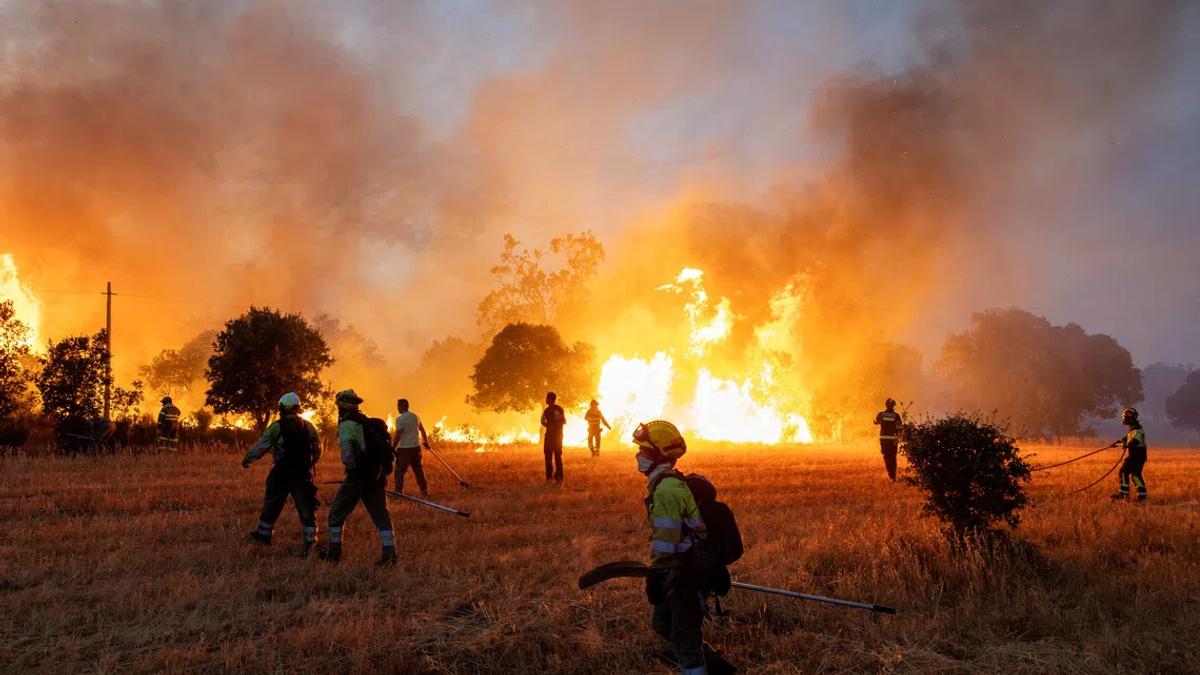
On August 12, Spain is set to witness a rare total solar eclipse, an event expected to draw an estimated six million visitors to its northwestern and central regions. This celestial spectacle, however, coincides with one of the country's most perilous periods for wildfires, driven by temperatures soaring to 40 degrees Celsius and exceptionally dry conditions. In response, Spanish authorities are deploying over 35,000 officers and establishing 660 official viewing sites, attempting to manage the massive influx of people while simultaneously mitigating the severe risk of widespread environmental catastrophe.
The Spanish government finds itself in a precarious position, balancing the undeniable economic allure of astro-tourism with the critical imperative of public safety and environmental protection. On one hand, the eclipse represents a significant boost for the tourism sector, with foreign searches for inland cities tripling and bookings to regions like Asturias surging by nearly 300 percent. This economic injection is a powerful incentive, especially for a nation keen on leveraging unique events to attract visitors. On the other hand, the state bears the ultimate responsibility for preventing a major disaster. A catastrophic wildfire ignited by a careless visitor during such a high-profile event would not only cause immense environmental damage but also represent a significant political failure, eroding public trust and potentially inviting international scrutiny. The sheer scale of the security operation underscores the state's recognition of this double bind: it must facilitate the event while simultaneously attempting to control the very risks that come with it, all under the amplifying lens of a rapidly changing climate.
While millions eagerly anticipate the eclipse, the most immediate and profound human cost falls upon the rural communities living along the eclipse path. These are the residents whose homes, livelihoods, and local ecosystems are directly threatened by the increased wildfire risk. Groups like "Monte en Pie" (Keeping Woodlands Alive) in Buitrago de Lozoya voice profound concerns, highlighting that while the eclipse lasts minutes, a major fire's damage can endure for decades. Their protests and calls for caution often clash with the broader national economic narrative promoting tourism. Furthermore, the 35,000 deployed officers and countless other first responders face immense pressure, tasked with both crowd control and immediate wildfire suppression in an already "extremely tough summer" marked by severe blazes across Europe. Their resources are stretched thin, and their safety is compromised, as they become the frontline inheritors of the state's management dilemma.
Official statements and public awareness campaigns rightly focus on individual responsibility—avoiding littering, barbecues, and unauthorized parking. Yet, this emphasis on individual actions, while necessary, often downplays the larger, systemic issue at play: the accelerating impact of climate change on public life and national infrastructure. The narrative tends to frame this as managing a major public event "under the shadow of wildfire risk," rather than acknowledging that the wildfire risk itself is a direct and increasingly normalized consequence of a warming planet. The fact that Spain has already seen 200,000 hectares scorched this year—six times more than the previous year—indicates a crisis far beyond individual dropped cigarettes. The state's massive, reactive security operation, while impressive, can inadvertently obscure the need for more proactive, long-term climate adaptation strategies that go beyond event-specific measures, and which address the root causes of increased vulnerability. The underlying question of whether such large-scale events are truly sustainable in increasingly volatile environments is rarely foregrounded.
As the eclipse passes, the immediate aftermath will be crucial. The success or failure of Spain's security operation in preventing major wildfires will serve as a stark indicator of how well nations can manage high-stakes public events in an era of escalating climate risks. Observers should watch for any post-eclipse fire incidents and the official responses to them. Beyond the immediate, this event offers a critical case study for how governments and the tourism industry will adapt to a future where extreme weather events become more frequent. Will this lead to more stringent environmental regulations for mass gatherings, or even the cancellation of events in high-risk periods? Furthermore, the resilience and advocacy of local communities like Monte en Pie will be a barometer of public pressure for more fundamental shifts in climate policy, pushing beyond reactive measures towards comprehensive, long-term strategies for living with—and mitigating—a rapidly changing climate.
Source referenced: STRAITSTIMES
This brief was synthesized by our Editorial Engine and reviewed by The Ground Narrative team.