TRENDING

Monday, 5 October 2026
----------------------
24 Rabi' Al-Thani 1448 AH
Pakistan's interior minister is in Tehran for talks to reopen the Strait of Hormuz, a critical waterway at the center of the US-Israeli war on Iran. The move highlights Pakistan's growing role as a mediator in regional conflicts, but what are the underlying power dynamics at play?
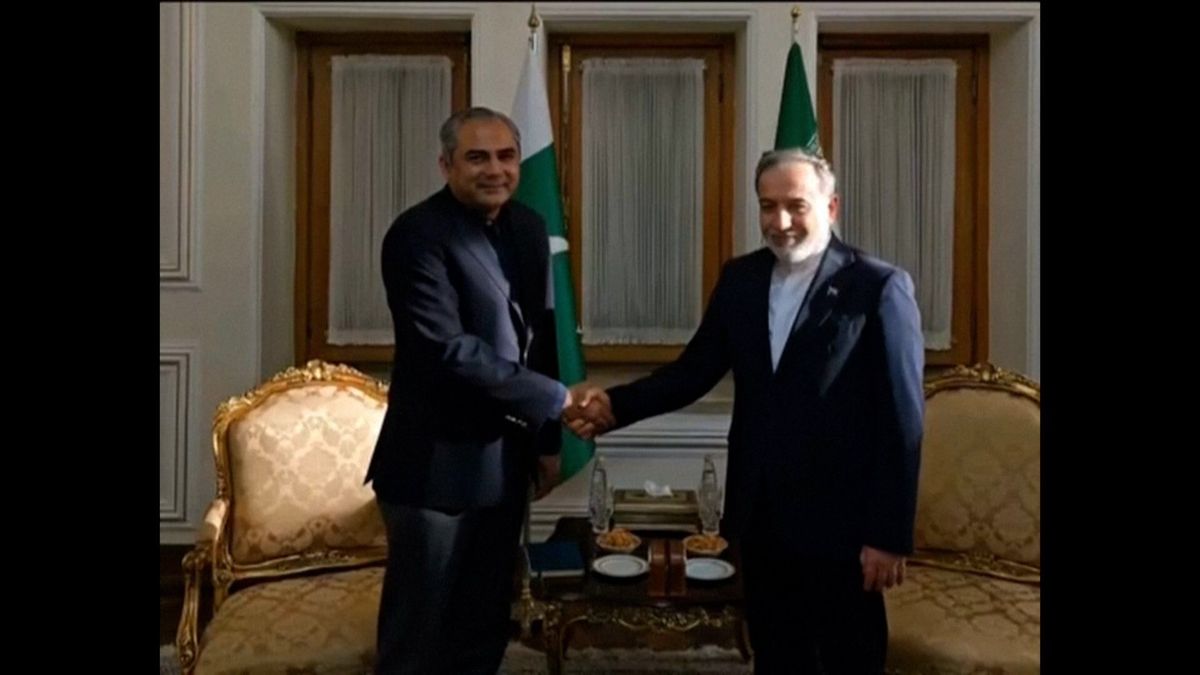
Pakistan's interior minister, Mohsin Naqvi, has met with Iranian Foreign Minister Abbas Araghchi in Tehran to discuss the reopening of the Strait of Hormuz. The strait, a vital shipping lane, has been at the center of the US-Israeli war on Iran, with significant implications for global trade and regional stability.
The talks between Pakistan and Iran are a strategic move by Islamabad to assert its influence in the region. By mediating between Iran and the US-Israeli alliance, Pakistan aims to bolster its position as a key player in regional geopolitics. The move also reflects Pakistan's desire to reduce its dependence on the US and diversify its diplomatic relationships. Meanwhile, the US and Israel are likely to be wary of Pakistan's growing ties with Iran, given the longstanding rivalry between the two blocs.
The closure of the Strait of Hormuz has had far-reaching consequences for the people of the region. The disruption to trade has led to shortages of essential goods, including food and medicine, exacerbating the humanitarian crisis in countries such as Yemen and Gaza. The conflict has also resulted in the loss of lives, with civilians caught in the crossfire between warring parties. As the conflict continues, it is the ordinary people who bear the brunt of the crisis, with their livelihoods and well-being hanging in the balance.
What is being downplayed in the official statements is the extent to which the US-Israeli war on Iran is driven by a desire to maintain control over the region's energy resources. The Strait of Hormuz is a critical chokepoint for oil exports, and the US and its allies are keen to ensure that they maintain dominance over the global energy market. Meanwhile, Iran's resistance to US pressure is often framed as a matter of national pride, but it also reflects the country's determination to assert its sovereignty and protect its economic interests.
As the talks between Pakistan and Iran continue, readers should watch for signs of a potential breakthrough in the negotiations. Will the US and Israel accept Pakistan's mediation efforts, or will they seek to undermine the process? How will the reopening of the Strait of Hormuz impact the regional balance of power, and what will be the consequences for the people of the region? As the situation unfolds, it is essential to keep a close eye on the power dynamics at play and the human cost of the conflict.
Editor's Note: The outcome of the talks is uncertain, and the situation remains highly fluid.
Source referenced: ALJAZEERA
This brief was synthesized by our Editorial Engine and reviewed by The Ground Narrative team.


