TRENDING

Sunday, 4 October 2026
----------------------
23 Rabi' Al-Thani 1448 AH
On August 12, 2026, a total solar eclipse will sweep across Europe, captivating millions but leaving billions under an ordinary sky. This analysis uncovers the underlying power dynamics of a shared celestial event, from economic opportunities to the unequal access to its full glory.
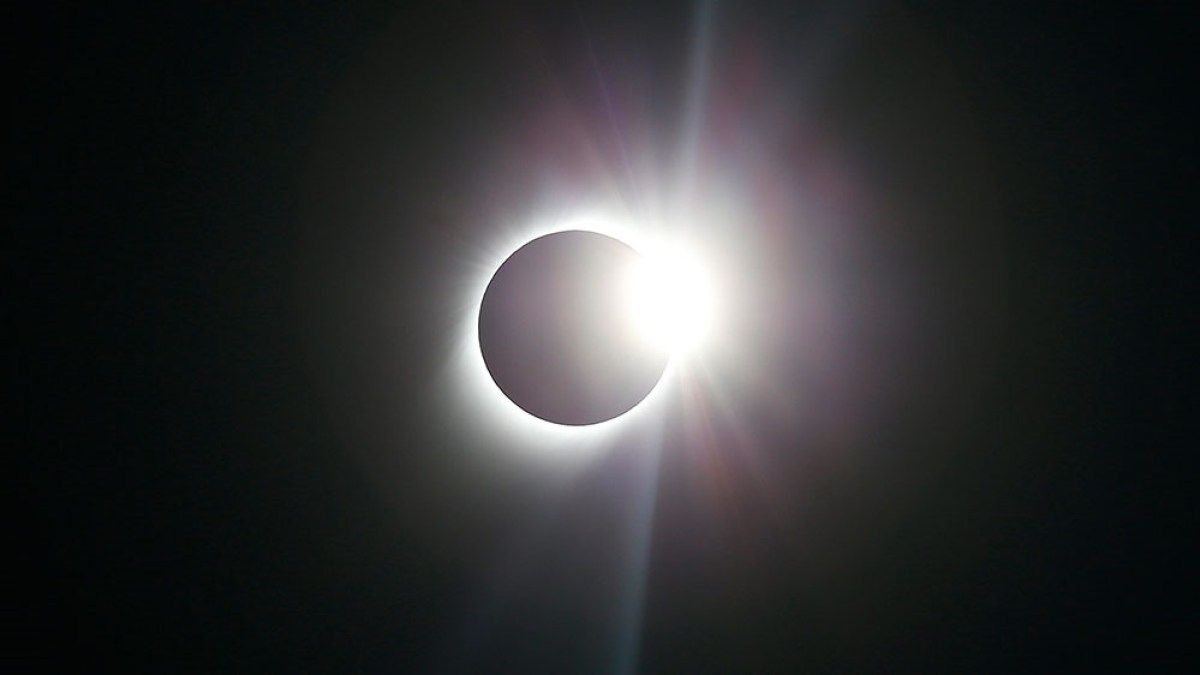
On August 12, 2026, a rare celestial event will unfold as the moon's shadow races across the Earth. Starting at 15:34 GMT, a total solar eclipse will sweep from the Arctic, across Greenland, Iceland, and Spain, casting a temporary darkness for up to two minutes and 18 seconds. This marks mainland Europe's first total solar eclipse since 1999, with an estimated 15 million people primarily in Spain, Iceland, and parts of Greenland and Portugal experiencing the path of totality, while nearly a billion others across Western Europe, North Africa, and parts of North America will witness a partial eclipse.
While a solar eclipse is a purely natural phenomenon, its occurrence immediately triggers a complex web of human power dynamics. The primary beneficiaries of such an event are often not governments, but the tourism industries and local economies within the path of totality. Cities like Leon, Valladolid, Zaragoza, Teruel, and Valencia in Spain are poised to see a massive influx of visitors, generating significant revenue for hotels, restaurants, and local businesses. This creates a powerful economic incentive for regions to market and facilitate viewing, turning a natural wonder into a commercial opportunity.
Beyond direct tourism, the power of information and public safety also comes to the fore. Scientific institutions like NASA and local observatories become crucial gatekeepers of accurate data, guiding public understanding and ensuring safe viewing practices. Governments and local authorities, in turn, wield the power of logistics, tasked with managing unprecedented crowd movements, ensuring infrastructure can cope, and disseminating critical safety warnings regarding eye protection. This collective effort highlights how a shared natural event can shift the focus of "power" from traditional geopolitical actors to those who manage information, commerce, and public safety at a local and global scale.
Despite the widespread visibility of a partial eclipse, the profound experience of totality remains a privilege. While nearly one in eight people worldwide will see at least a partial solar coverage, only a fraction of that number—approximately 15 million—will witness the complete blotting out of the sun. This creates an inherent inequality of experience, where billions of people remain under an "ordinary sky." For those not in the path of totality, or those who cannot afford the travel and accommodation costs to reach it, the event remains a distant news story rather than a direct, awe-inspiring encounter.
Furthermore, the human cost extends to public safety. The intense public interest in eclipses often leads to a surge in demand for certified solar viewing glasses. The market can be flooded with counterfeit or uncertified products, posing a significant risk of permanent eye damage for unsuspecting viewers. The cost of proper, certified eye protection, though seemingly small, can still be a barrier for some, highlighting how even a universal natural event can expose economic disparities and safety vulnerabilities among the general public. Local communities in the path of totality also bear the human cost of strained infrastructure, increased traffic, and potential environmental impact from large crowds.
What often goes unstated or downplayed by official narratives and corporate promotions is the intense commercialization that accompanies such rare celestial events. While the scientific community emphasizes the educational and research aspects, and governments focus on public safety, a parallel industry thrives on packaging and selling the experience. From exclusive viewing tours and themed merchandise to media rights and sponsored events, the "awe" of the eclipse becomes a commodity. This commercial lens can subtly shift the public's perception, transforming a moment of universal wonder into another consumer event.
Moreover, the environmental footprint of millions of travelers converging on specific locations is rarely highlighted. The increased carbon emissions from travel, waste generation, and strain on local resources are often overlooked in the excitement of the spectacle. There's also the subtle omission that for the vast majority of humanity, this event is simply not happening in a meaningful way. The narrative often centers exclusively on the path of totality, implicitly minimizing the experience of those who will see a lesser partial eclipse or nothing at all, reinforcing a sense of being "left out" from a globally celebrated moment.
As the shadow passes, the immediate aftermath will bring into focus several critical areas. Observers should watch for reports on the economic impact on host regions, particularly in Spain and Iceland, to gauge the true financial benefits versus the logistical challenges. Crucially, public health authorities will monitor for any reports of eye injuries, which will serve as a stark reminder of the importance of accurate safety information and the dangers of misinformation.
Looking ahead, the lessons learned from managing the August 2026 eclipse will directly inform planning for the next total solar eclipse on August 2, 2027, which will traverse southern Spain, North Africa, and Yemen. This will provide another opportunity to assess how well governments and commercial entities balance the spectacle's allure with public safety, equitable access, and environmental responsibility. The ongoing commodification of natural wonders will undoubtedly continue, making it essential to scrutinize who truly benefits and who bears the often-invisible costs of these shared cosmic moments.
Source referenced: ALJAZEERA
This brief was synthesized by our Editorial Engine and reviewed by The Ground Narrative team.