TRENDING

Sunday, 4 October 2026
----------------------
23 Rabi' Al-Thani 1448 AH
A seemingly minor incident in Norway's Svalbard archipelago reveals the intensifying struggle between human ambition and environmental preservation in the rapidly changing Arctic.
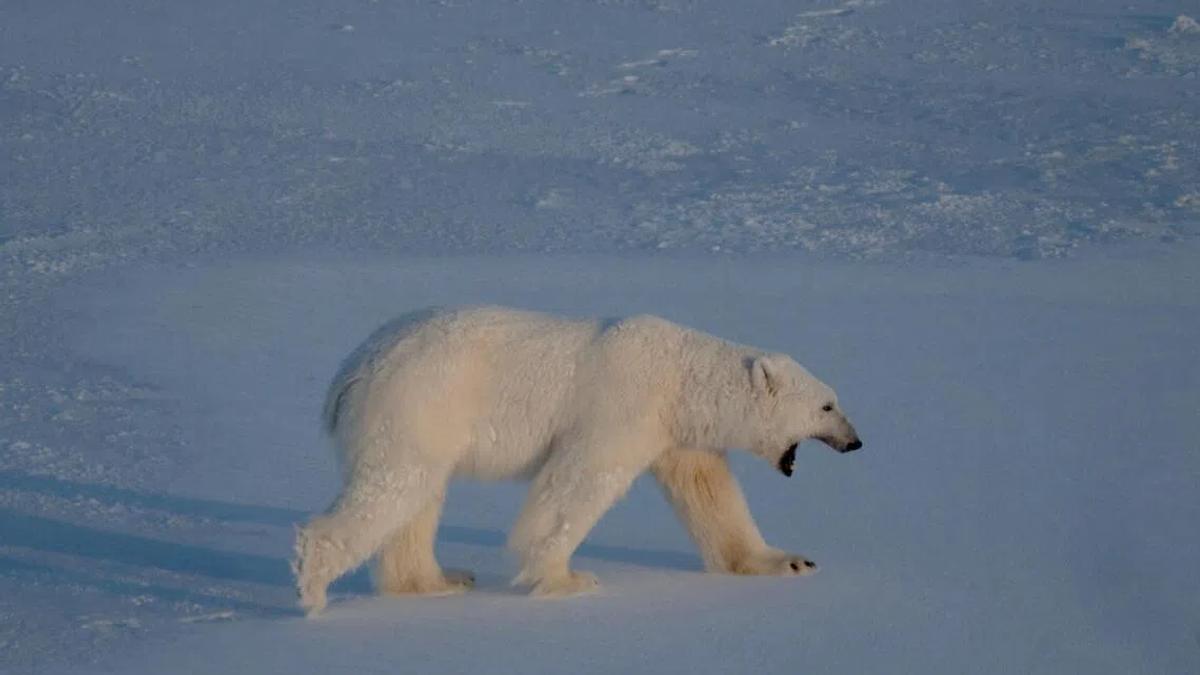
In Norway's remote Svalbard archipelago, a person aboard a vessel was fined 50,000 kroner (approximately $6,700) for using a foghorn to disturb a sleeping polar bear. The incident, which took place in a fjord in north-eastern Svalbard, saw the animal roused from its rest and forced to relocate. Polar bears have been a protected species in the territory since 1972, with strict regulations against needlessly disturbing them.
This seemingly isolated event is a microcosm of the larger power dynamics at play in the Arctic. Norway, as a sovereign state, asserts its authority through environmental regulations, signaling its commitment to conservation but also its control over a strategically vital region. The fine, though substantial for an individual, is a small assertion of state power against the backdrop of increasing international interest in the Arctic. As climate change melts ice caps, new shipping lanes open, and access to vast natural resources becomes feasible. This creates a complex interplay of national interests, economic incentives, and the desperate need for environmental stewardship. Every nation with a claim or interest in the Arctic — Russia, Canada, the United States, Denmark, and Norway — is vying for influence, scientific data, and economic advantage. The 'protection' of a polar bear, in this context, becomes a tangible demonstration of a nation's ability to enforce its will and define the rules of engagement in a contested domain, even as it navigates the global pressure for sustainable practices.
The immediate human cost of this incident falls on the individual fined, but the broader human cost of Arctic exploitation or neglect is borne by a much wider community. Indigenous populations, whose cultures and livelihoods are intrinsically linked to the Arctic ecosystem, face the most direct consequences of environmental degradation and increased human activity. Their traditional hunting grounds are altered, their food sources impacted, and their way of life threatened by both climate change and the influx of external interests. Beyond the local communities, the global population ultimately bears the cost of a destabilized Arctic, which plays a critical role in regulating global climate patterns. The decisions made by powerful governments and corporations regarding resource extraction, shipping, and tourism in the region will have ripple effects far beyond the polar circle, affecting weather patterns, sea levels, and biodiversity worldwide. These are the costs rarely factored into the profit margins of new shipping routes or resource ventures.
While the narrative around Arctic incidents often focuses on environmental protection, what's frequently downplayed or omitted by powerful actors is the accelerating race for control and resources. The opening of new shipping routes, like the Northern Sea Route, promises shorter transit times and massive economic benefits, but also brings increased risks of pollution, accidents, and militarization. Governments, while publicly advocating for environmental treaties and conservation, are simultaneously investing heavily in icebreaker fleets, military infrastructure, and resource exploration permits. The fine for disturbing a polar bear, while important, can serve as a convenient distraction from the larger, more aggressive strategic maneuvers underway. It allows states to project an image of responsible stewardship, even as the underlying drivers of human presence in the Arctic are fundamentally economic and strategic, often at odds with true ecological preservation. The 'sleeping polar bear' is not just an animal; it's a metaphor for an entire region being awakened and exploited.
Watch for continued increases in Arctic tourism and commercial shipping traffic, which will inevitably lead to more human-wildlife encounters and necessitate stricter, or more frequently enforced, regulations. Pay close attention to the rhetoric and actions of Arctic Council member states, particularly regarding new resource exploration licenses and military deployments. The ongoing scientific research into the Arctic's rapidly changing environment will provide crucial data, but the political will to act on that data will be the true test. The balance between economic opportunity, national security interests, and genuine environmental protection in the Arctic remains precarious, and every small incident, like a foghorn in a fjord, serves as a bellwether for the larger shifts underway.
Source referenced: STRAITSTIMES
This brief was synthesized by our Editorial Engine and reviewed by The Ground Narrative team.