TRENDING

Monday, 5 October 2026
----------------------
24 Rabi' Al-Thani 1448 AH
The recent eruption of Taal Volcano underscores the Philippines' persistent challenges in disaster management and economic resilience, given its location on the Pacific Ring of Fire. This event, while localized, reflects broader geopolitical implications for national stability and international cooperation.
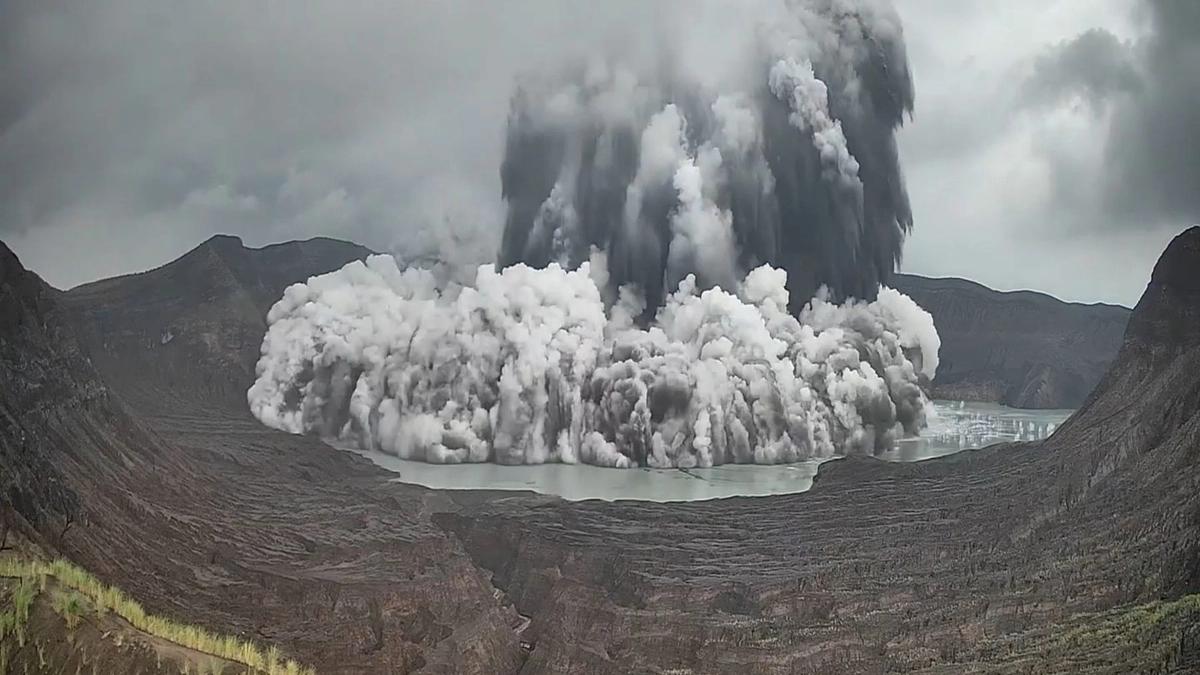
On July 2, 2026, the Taal Volcano in the Philippines experienced an eruption, sending a column of ash and steam approximately 1,200 meters into the air and generating significant waves across its crater lake. The event, which lasted for nearly five minutes, serves as a stark reminder of the Philippines' inherent geological vulnerabilities and the ongoing challenges these pose to national development and regional stability.
The eruption, characterized by ash and steam, suggests a phreatomagmatic event, where magma interacts with water, leading to explosive activity. While the immediate scale of this particular eruption appears contained, Taal Volcano is one of the world's most active and dangerous volcanoes, located within a caldera lake and in close proximity to densely populated areas, including parts of Metro Manila. Its history is marked by numerous destructive eruptions, making any activity a cause for significant concern. The Philippines, situated on the seismically active Pacific Ring of Fire, is highly susceptible to such natural phenomena, including earthquakes, tsunamis, and volcanic eruptions. This geographical reality is a constant, defining factor in the nation's strategic planning and resource allocation.
The immediate consequences of volcanic activity typically include ashfall, which can disrupt air travel, damage agriculture, and pose health risks to respiratory systems. The generation of waves across the crater lake also highlights localized hazards for communities living on or near the volcano island. Economically, such events can severely impact local livelihoods, particularly in fishing and tourism, which are vital to the regional economy surrounding Taal. Prolonged or more intense activity could lead to widespread displacement of populations, straining government resources for evacuation, relief, and long-term rehabilitation efforts. The Philippine government's capacity for rapid response, effective communication, and sustained recovery operations is continually tested by these recurring natural disasters. The ability to manage these crises efficiently is crucial for maintaining public trust and ensuring national stability, particularly in a developing nation where resources are often stretched.
While a single, short eruption may not immediately trigger major international interventions, the cumulative effect of frequent natural disasters in the Philippines has broader geopolitical implications. The nation's resilience in the face of these challenges is a factor in its overall stability, which is of interest to regional partners and global powers. Major disaster events often necessitate international humanitarian aid and technical assistance, fostering diplomatic engagement and cooperation. The Philippines' strategic location in Southeast Asia, a region characterized by complex geopolitical dynamics and critical maritime trade routes, means that any significant internal instability, including that caused by natural disasters, can have ripple effects on regional security and economic flows. Furthermore, the need for robust disaster preparedness and climate change adaptation strategies in the Philippines often involves collaboration with international bodies and donor countries, reinforcing multilateral ties and shared responsibilities in addressing global challenges.
The eruption of Taal Volcano serves as a potent reminder that natural hazards are an intrinsic part of the Philippines' geopolitical landscape. For the nation, this necessitates a continuous investment in early warning systems, resilient infrastructure, comprehensive disaster risk reduction programs, and public education. From a strategic perspective, understanding and mitigating the impact of such events is not merely a humanitarian concern but a critical component of national security and sustainable development. The ongoing challenge for the Philippines is to integrate these realities into its long-term economic planning and foreign policy, ensuring that it can not only respond effectively to immediate crises but also build a more resilient future in a highly dynamic and hazard-prone environment. The international community's role in supporting these efforts remains vital, underscoring the interconnectedness of global challenges and the importance of collective action in building resilience against natural forces.
Editor's Note: Analysis of geopolitical implications is based on the typical consequences of volcanic activity in the Philippines, as the raw article provides limited specific impact details for this particular eruption.
Source referenced: ALJAZEERA
This brief was synthesized by our Editorial Engine and reviewed by The Ground Narrative team.


