TRENDING

Tuesday, 6 October 2026
----------------------
25 Rabi' Al-Thani 1448 AH
Switzerland recently held a nationwide referendum championed by the right-wing Swiss People's Party (SVP) to cap the country's population at 10 million by 2050. This vote carries significant geopolitical implications, potentially jeopardizing Switzerland's critical free movement agreements and broader relations with the European Union.
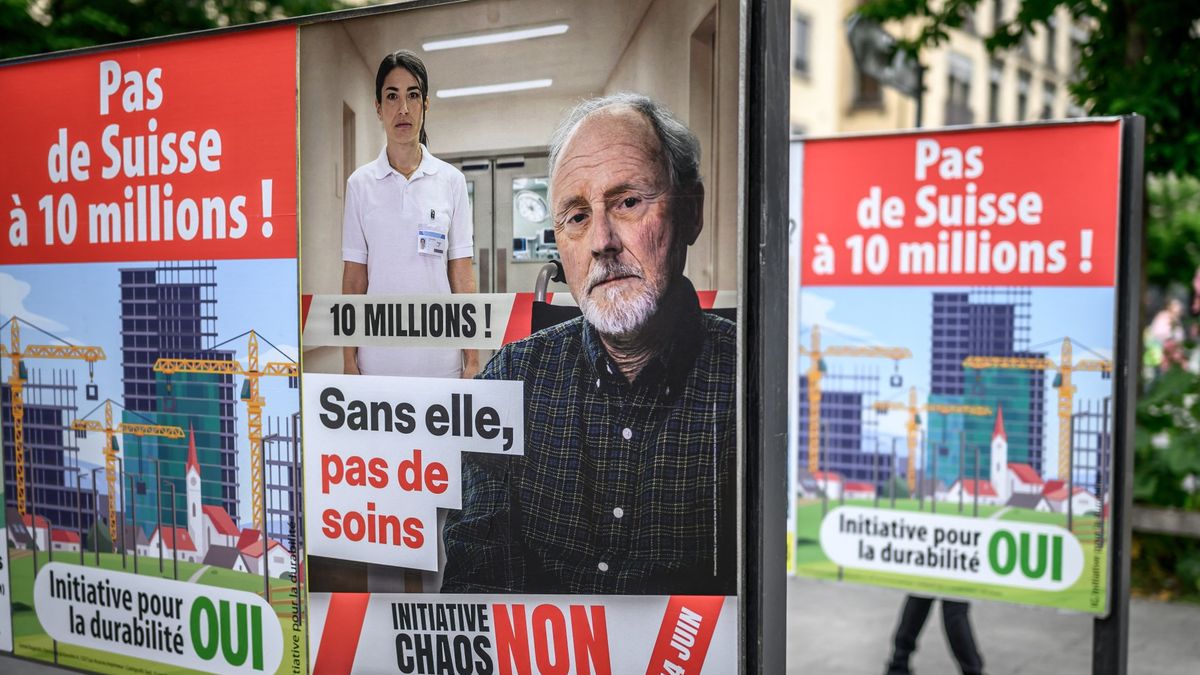
Switzerland recently concluded a pivotal nationwide vote, initiated by the populist right-wing Swiss People's Party (SVP), on a proposal to constitutionally cap the country's permanent resident population at 10 million by 2050. This referendum, held on Sunday, June 14, 2026, represents a significant moment in Switzerland's ongoing debate over immigration and its unique relationship with the European Union, carrying profound geopolitical and economic implications for the Alpine nation and potentially for wider European migration discourse.
At the heart of the vote is the SVP's "sustainability initiative," which mandates that if Switzerland's population reaches 9.5 million before 2050, the government would be compelled to implement stringent measures. These include restricting asylum applications, family reunification, and residency permits. Crucially, the initiative also threatens to force the abrogation of Switzerland's foundational agreement with the EU on the free movement of people, a cornerstone of their bilateral relations since 2002. Official projections indicate Switzerland is on track to reach the 10 million mark by the early 2040s, having grown by 23 percent to 9.1 million since the free movement accord came into effect.
Why the SVP pushed for this: The SVP argues that unchecked demographic growth has strained Switzerland's infrastructure, housing, social programs, natural resources, and traditional way of life. This narrative resonates with a segment of the electorate concerned about the perceived pressures of a growing population. The party has consistently fanned anti-migration sentiment over the years, framing this initiative as essential for the country's long-term sustainability.
Why opponents resisted: The federal government, parliament, and a broad coalition of critics vehemently oppose the cap. They highlight that the boom in migration over the last generation has been a vital source of foreign labor and specialized skills, particularly in critical sectors such as healthcare, finance, pharmaceuticals, and technology. Government data supports this, showing that alongside the 23 percent population growth since 2002, Switzerland's economic output has increased by 24 percent. Critics also express deep concern that approving the proposal would severely weaken critical ties with Brussels, given the EU's status as Switzerland's top trading partner. Even some SVP figures have suggested the proposal is intended more as a "wake-up call" to the government to manage growth rather than an outright desire to end free movement.
EU-Switzerland Relations: The most immediate and significant geopolitical consequence of a 'yes' vote would be the potential unraveling of the free movement agreement with the EU. This agreement is not isolated but is part of a complex web of over 120 bilateral treaties that govern various aspects of Swiss-EU relations, from trade to research. Undermining free movement could trigger a domino effect, jeopardizing Switzerland's access to the EU's single market and its overall economic stability. For the EU, such a move by Switzerland could set an unwelcome precedent, challenging the principle of free movement that is fundamental to its own integration project.
Broader European Context: This Swiss vote unfolds against a backdrop of heightened sensitivity around international migration across Europe. While many European nations grapple with aging populations and increasing anti-foreigner sentiment, often focused on migrants from the Global South, the Swiss context is distinct. The majority of foreign residents in Switzerland are from other European countries. This makes the Swiss debate a unique barometer of internal European tensions regarding population growth, national identity, and the perceived limits of integration, even among economically prosperous and culturally similar populations.
Economic Impact: Should the cap be implemented and free movement curtailed, Switzerland's highly specialized economy could face significant labor shortages, particularly in sectors heavily reliant on foreign talent. This could impede innovation, reduce competitiveness, and potentially lead to economic contraction. The uncertainty surrounding future labor supply and market access would also deter foreign investment.
Switzerland's unique system of direct democracy empowers its citizens with a direct say in policymaking through referendums, typically held four times a year. This mechanism allows popular initiatives, like the SVP's, to directly challenge government policy and international agreements. Swiss voters have a history of tackling immigration issues, with one notable instance in 2014 where a similar "against mass immigration" initiative narrowly passed, albeit without leading to a full abrogation of free movement due to implementation complexities. While many countries impose limits on immigration, experts note that no other nation has ever voted to constitutionally cap its total population, making this Swiss initiative a potentially unprecedented global development.
Regardless of the outcome, the Swiss population cap referendum underscores a deep-seated tension between national sovereignty, demographic pressures, and the benefits of international integration. It serves as a critical indicator of public sentiment regarding immigration's perceived impact on national resources and identity, with far-reaching implications for Switzerland's economic model and its intricate, often delicate, relationship with its largest trading partner, the European Union. The world watches to see how this direct democratic exercise will shape the future of one of Europe's most prosperous and globally connected nations.
Source referenced: ALJAZEERA
This brief was synthesized by our Editorial Engine and reviewed by The Ground Narrative team.