TRENDING

Monday, 5 October 2026
----------------------
24 Rabi' Al-Thani 1448 AH
The United Nations warns that drone strikes in Sudan have worsened, with over 80% of civilian deaths this year attributed to these attacks. As the conflict escalates, the international community remains largely silent on the humanitarian crisis unfolding in the region. The power dynamics at play reveal a complex web of interests, with Sudan caught in the middle of global and regional rivalries.
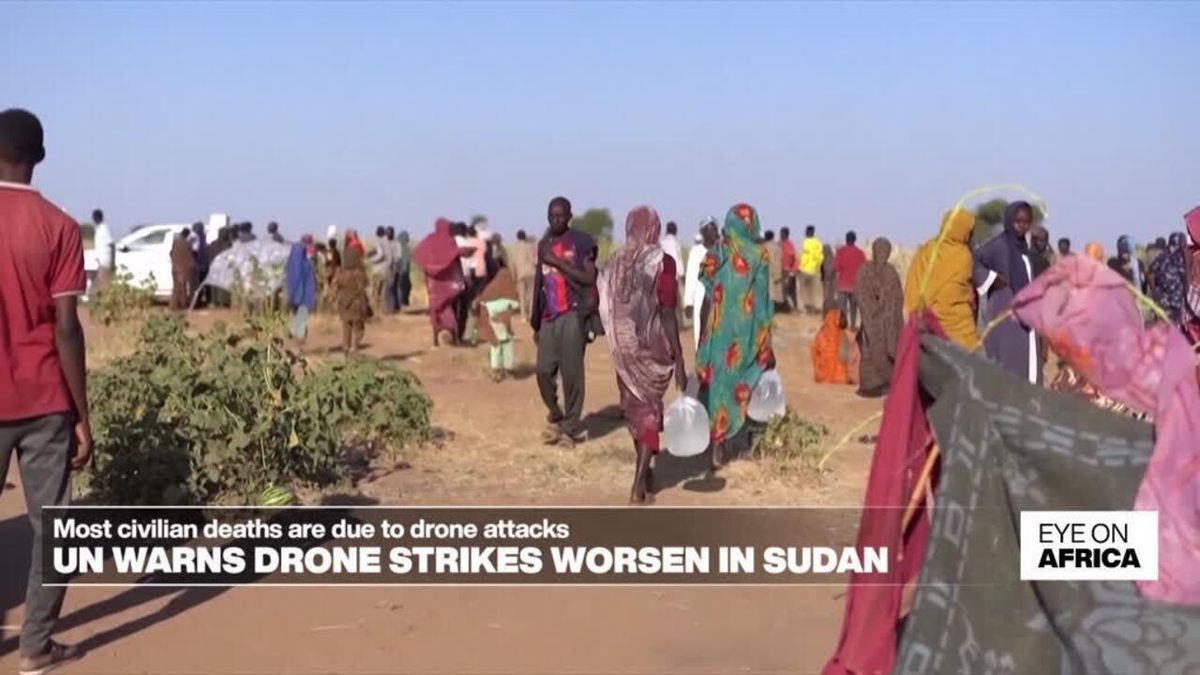
The United Nations has issued a stark warning regarding the escalating drone strikes in Sudan, which have resulted in a significant increase in civilian casualties. According to the UN, more than 80% of civilian deaths in Sudan over the start of this year were due to drone attacks. This alarming trend underscores the deteriorating security situation in the country and the dire need for international attention to mitigate the humanitarian crisis.
The situation in Sudan is a manifestation of the complex power dynamics at play in the region. Global powers, including the United States, China, and Russia, have strategic interests in Sudan, given its location and natural resources. The country's oil reserves and its position in the Horn of Africa make it a critical point for international trade and security. Furthermore, Sudan's border with South Sudan, a nation rich in oil, adds another layer of complexity to the conflict. The involvement of regional actors, such as Egypt and the United Arab Emirates, further complicates the scenario, as each seeks to secure its interests in the face of shifting alliances and rivalries.
The escalating drone strikes in Sudan have a devastating impact on civilians. The human cost of these attacks is not just the immediate loss of life but also the long-term effects on communities, including displacement, psychological trauma, and economic hardship. The international community's relative silence on the issue exacerbates the suffering, as it fails to apply sufficient pressure on parties involved to cease hostilities and negotiate a peaceful resolution. The plight of civilians in Sudan serves as a stark reminder of the consequences of proxy wars and the exploitation of natural resources in fragile states.
While the drone strikes and civilian casualties dominate the headlines, there are aspects of the conflict that receive less attention. The role of foreign powers in supplying weaponry and military technology to parties involved in the conflict is a critical factor that is often downplayed. Moreover, the economic interests of these foreign powers, including the desire to control Sudan's natural resources and strategic trade routes, are rarely discussed in the context of the conflict. Understanding these underlying motivations is essential to grasping the full scope of the crisis in Sudan and the reasons behind the international community's reluctance to intervene effectively.
As the situation in Sudan continues to deteriorate, several factors will be crucial in determining the trajectory of the conflict. The response of the international community, particularly the United Nations and major global powers, will be significant. Any shifts in alliances among regional actors could also impact the conflict's dynamics. Furthermore, the ability of Sudanese civil society to mobilize and demand peace will be a critical factor in pushing for a negotiated settlement. Observers should watch for these developments closely, as they will influence not only the future of Sudan but also the stability of the broader region.
Editor's Note: The analysis is based on publicly available data and may not reflect the full complexity of the situation on the ground due to limitations in access to information.
Source referenced: FRANCE24
This brief was synthesized by our Editorial Engine and reviewed by The Ground Narrative team.


