TRENDING

Tuesday, 6 October 2026
----------------------
25 Rabi' Al-Thani 1448 AH
The 2026 FIFA World Cup, co-hosted by North American nations, is starkly revealing the limitations of sports diplomacy as geopolitical realities and hard power assertions increasingly overshadow the unifying potential of global athletic events. Amidst rising global conflicts and restrictive immigration policies, the tournament highlights a critical juncture for international relations and the efficacy of soft power.
On an idyllic spring day, diplomats gathered at the United Nations garden, trading their formal attire for jerseys to participate in an informal soccer tournament. This event, held in anticipation of the FIFA Men’s World Cup and in honor of U.N. World Football Day, underscored a deeply held belief in the power of sports to foster cooperation and open minds. As Germany's U.N. ambassador, Ricklef Beutin, articulated, while sports may not resolve conflicts, sports diplomacy remains a crucial tool for uniting people. This sentiment echoes historical successes, most notably the "ping-pong diplomacy" of the 1970s, which played a pivotal role in thawing U.S.-China relations and is often cited as a prime example of soft power in action—the ability to influence through persuasion rather than coercion.
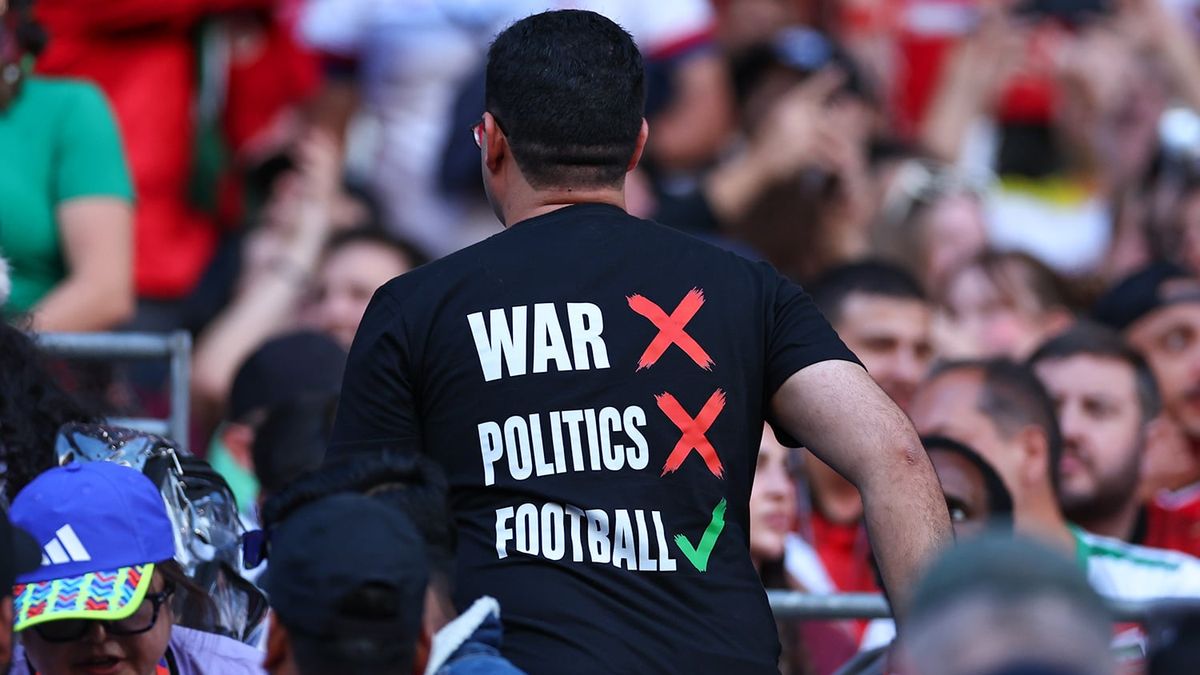
However, as the 2026 FIFA World Cup unfolds across Canada, Mexico, and the United States, the veneer of sports as a neutral ground for international engagement is increasingly challenged. The tournament, designed to be the most international iteration yet with an expanded 48 teams, is inadvertently becoming a stage where the limitations of soft power are exposed by the undeniable force of hard power. This dynamic raises a fundamental question: Has sports diplomacy, in its traditional sense, hit a wall in an era defined by escalating global conflicts and resurgent nationalism?
The primary challenge to sports diplomacy at this World Cup stems from the host nations' domestic policies, particularly those of the United States. The Trump administration's stringent immigration policies, manifesting as a "stranglehold on entry visas" for players, officials, and fans, directly contradict the inclusive spirit of a global sporting event. This approach not only complicates logistics but also sends a clear message that national security and immigration control supersede the ideals of international camaraderie. The irony is palpable: a tournament designed to bring the world together is simultaneously made more exclusionary by the policies of one of its primary hosts.
This tension is further exacerbated by the global geopolitical landscape. The article notes that armed conflicts are at their highest level since World War II, leading to a patchwork of curbs on free speech, boycotts, and bans that permeate various international domains, including sports. While FIFA, the sport's global governing body, attempts to engage in public diplomacy, its efforts appear insufficient to counteract the weight of national policies and geopolitical realities. The contrast between the U.N.'s celebratory watch parties and the intrusive airport interrogations faced by many travelers highlights a significant disconnect between diplomatic aspirations and on-the-ground experiences.
The 2026 World Cup presents several striking contradictions. On one hand, the expansion to 48 teams and the prominence of diaspora players underscore the increasingly globalized and interconnected nature of modern football. National teams are no longer solely reflections of their geographic borders but embody complex histories of migration and global talent flows. On the other hand, growing resistance to immigration, particularly within the United States, creates a hostile environment that undermines this very internationalism. U.S. President Donald Trump's reportedly ambivalent attitude toward the World Cup, despite the record-breaking viewership for the U.S. national team's opener, further illustrates a potential disconnect between national leadership and public engagement with global events.
Historically, sports have rarely been entirely apolitical. The article reminds us that even totalitarian regimes of the 1930s, such as Fascist Italy hosting the 1934 World Cup and Nazi Germany the 1936 Berlin Olympics, utilized these events for propaganda and to project an image of legitimacy, a practice now commonly referred to as "sportswashing." While these regimes were, ironically, more accommodating to foreign athletes to avoid boycotts, their underlying motivations were deeply political. This historical context suggests that the current challenges are not entirely new but rather a resurgence of the inherent tension between the unifying potential of sports and the divisive realities of geopolitics.
The current state of sports diplomacy, as illuminated by the 2026 World Cup, carries significant geopolitical implications. It suggests a potential weakening of soft power as a tool for international influence when confronted by robust assertions of hard power. For nations that invest heavily in hosting global events to enhance their reputations, the experience of the U.S. at this World Cup could serve as a cautionary tale. Restrictive domestic policies can inadvertently undermine the very reputational benefits sought through such endeavors, potentially damaging a nation's standing on the global stage.
Furthermore, the challenges faced by the World Cup raise broader questions about the future of large-scale international events. If the free movement of participants and the spirit of inclusivity are continually hampered by nationalistic policies and geopolitical tensions, the viability and perceived neutrality of events like the Olympics or other cultural exchanges may diminish. The 2026 World Cup, therefore, is not merely a sporting spectacle but a crucial barometer for the state of international relations, reflecting a world where the ideals of global unity are increasingly tested by the enduring realities of national interests and power politics. The ability of sports to transcend these divisions, while still possible in individual moments, appears to be under greater strain than ever before. The tournament serves as a stark reminder that while sports can open minds and unite people, they cannot fully insulate themselves from the hard-power dynamics that shape the global narrative.
Source referenced: FOREIGNPOLICY
This brief was synthesized by our Editorial Engine and reviewed by The Ground Narrative team.