TRENDING

Friday, 16 October 2026
----------------------
5 Jumada Al-Awwal 1448 AH
The upcoming FIFA Men's World Cup final between Spain and Argentina is more than just a battle of soccer superpowers. It's a reflection of the complex historical and cultural ties between the two nations, shaped by their shared colonial past, social, economic, and cultural exchange.
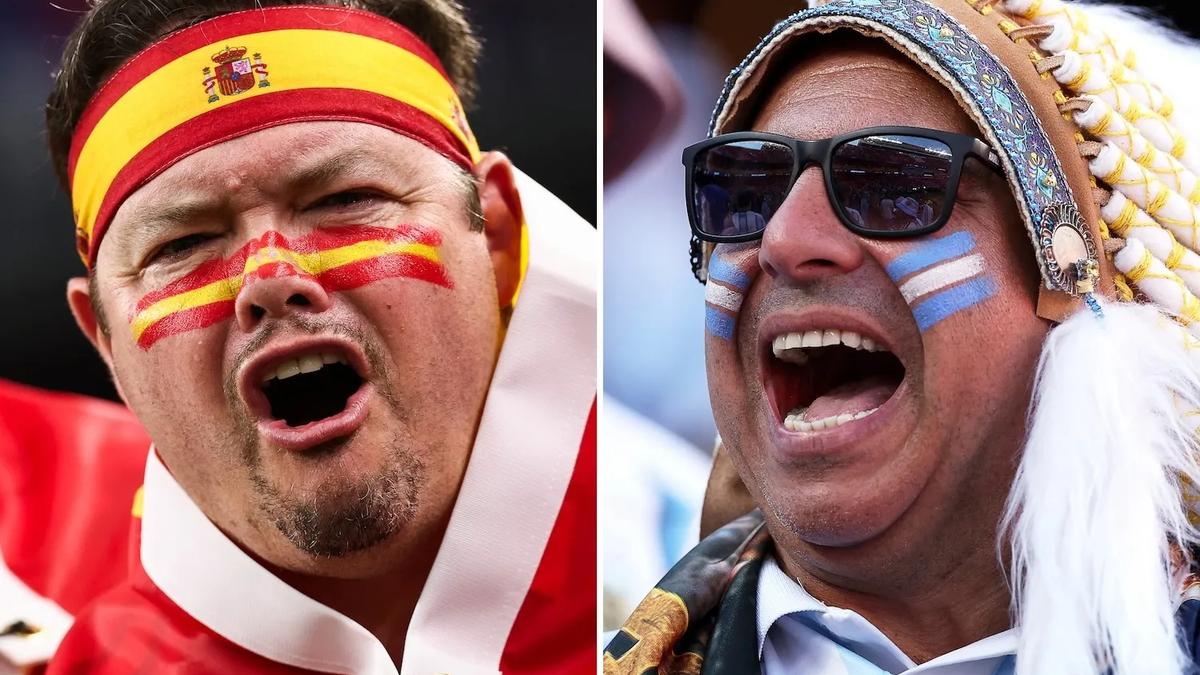
The FIFA Men's World Cup final between Spain and Argentina is a highly anticipated event, with both teams vying for the top spot. However, beyond the excitement of the game, lies a deeper story of the complex historical and cultural ties between the two nations. Spain and Argentina share a former colonial relationship, with Spain's initial landings in 1516 marking the beginning of Argentina's path to modern form. The viceroyalty of the Rio de la Plata, established in 1776, encompassed what would become Argentina, Uruguay, and Paraguay.
Argentina's national identity is a unique blend of European and indigenous influences. The country's elite has a strong affinity for Italian culture, with over 62% of Argentinians tracing their descent to Italian roots. This is reflected in the Spanish language spoken in Argentina, known as Rioplatense Spanish, which has a distinct flavor and is influenced by Italian and southern Italian languages. In contrast, the influence of indigenous peoples is minimal, and slavery played a relatively insignificant role in shaping the country's history.
The emergence of soccer superpowers in both Spain and Argentina can be attributed to the uneven development of the global economy under British hegemony. British capital and sports, such as soccer, cricket, and golf, were exported to various parts of the world, including Argentina and Spain. In Argentina, soccer was introduced by the British community in 1867, and the affinity was with cricket. The Buenos Aires Football Club was founded, and the game spread rapidly, with teams from South Africa and Europe competing in the league.
The politics of football are intense in both Spain and Argentina. In Spain, the game is closely tied to the country's history, with the dictator Francisco Franco using football as a tool for propaganda. In Argentina, the game has been a source of national pride, with the country's national team being a symbol of the nation's identity. The politics of football are also reflected in the rivalry between Barcelona and Madrid, with Barcelona being seen as a symbol of Catalan independence.
The FIFA Men's World Cup final between Spain and Argentina is more than just a battle of soccer superpowers. It's a reflection of the complex historical and cultural ties between the two nations, shaped by their shared colonial past, social, economic, and cultural exchange. The game is a symbol of the nation's identity, and the politics of football are intense in both countries. As the world watches the final, it's essential to remember the deeper story behind the game, one that reflects the complexities of global politics and the power of sports to unite and divide nations.
Source referenced: FOREIGNPOLICY
This brief was synthesized by our Editorial Engine and reviewed by The Ground Narrative team.