TRENDING

Wednesday, 14 October 2026
----------------------
3 Jumada Al-Awwal 1448 AH
The UK's nationalization of British Steel from Chinese ownership signals a global shift towards economic nationalism and strategic industry control, while France grapples with severe water scarcity, underscoring the escalating impact of climate change on developed nations.
The global landscape is increasingly defined by a confluence of economic nationalism, strategic resource competition, and the accelerating impacts of climate change. Recent developments, including the United Kingdom's decision to nationalize its last remaining virgin steel factory from Chinese ownership and France's struggle with widespread drought, exemplify these interconnected challenges, pointing to a future where states assert greater control over critical industries and resources amidst environmental pressures.
In a significant move reflecting growing economic nationalism, the United Kingdom government voted to nationalize the British Steel plant in Scunthorpe on July 17, 2026. This action effectively expropriated the facility from its previous owner, the Chinese Jingye Group, which had acquired the struggling company years prior. The primary stated motivation for the UK government, as reported by *The Guardian*, was to safeguard approximately 4,000 jobs and prevent the country from becoming "at the mercy of international markets" for a vital industrial commodity. This rationale underscores a broader strategic imperative to secure domestic supply chains and reduce reliance on foreign entities for critical industrial capacity.
However, the nationalization has ignited a diplomatic dispute with China. The *Global Times* reported that Beijing condemned the move, with the Chinese Ministry of Commerce asserting that the British government had "disregarded Jingye Group's important contributions to the British economy" and "seriously undermined Jingye's legitimate rights." China highlighted Jingye's substantial investments into what was a loss-making enterprise. Conversely, *The Times* (UK) presented a counter-narrative, suggesting that the government's intervention, initiated 15 months prior, was partly in response to alleged "sabotage" by the Chinese owners, who were purportedly attempting to run the plant into the ground to increase British dependency on Chinese imports. This accusation, if substantiated, would represent a severe breach of trust in international investment and could have far-reaching implications for future cross-border mergers and acquisitions, particularly in strategic sectors. The incident underscores the increasing scrutiny and political sensitivity surrounding foreign ownership of critical national infrastructure and industries, especially from geopolitical rivals.
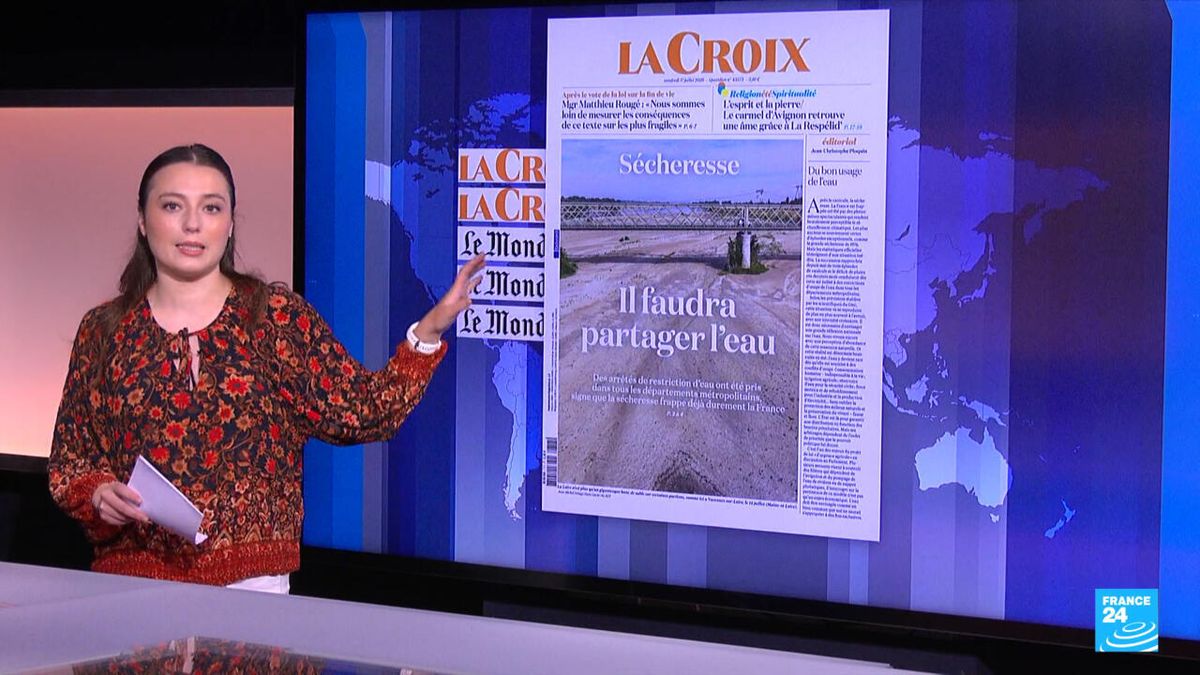
Simultaneously, France is grappling with a severe water crisis, a stark illustration of climate change's immediate and tangible effects on developed economies. Following unusually low rainfall in May and three intense heatwaves, a quarter of the country's small waterways have run dry, including significant sections of the Loire River, as prominently featured on the front page of *La Croix* on July 17, 2026. This has led to 100 French departments being placed under water restrictions, with residents in some areas now reliant on emergency water deliveries.
The crisis has ignited a crucial debate within France regarding long-term adaptation strategies. *Le Monde* highlighted an open letter from a coalition of climate and nature NGOs, which voiced strong opposition to measures proposed in the country's emergency agriculture bill. The bill reportedly includes plans to double France's water storage capacity to sustain irrigation during increasingly hot summers. The NGOs argue that such an approach promotes an "every man for himself" mentality towards a vital resource and delays the necessary, fundamental adaptation of the country's agricultural model. This internal policy struggle reflects a broader global challenge: how nations balance immediate economic needs, particularly in agriculture, with the imperative for sustainable environmental practices and climate resilience. The poignant testimony of an organic farmer, also featured in *Le Monde*, who saw his crops sabotaged despite his efforts to adapt, underscores the profound and personal impact of these climatic shifts on livelihoods.
Further afield, in Central Asia, a significant environmental initiative is gaining traction. Spanish scientists, as reported by *El País*, are proposing a monumental project to refill the Aral Sea, aiming to restore it to 50 percent of its original capacity. Once the world's fourth-largest lake, the Aral Sea has shrunk to a mere 10 percent of its size due to decades of water diversion for agricultural irrigation, primarily during the Soviet era. The scientific motivation behind this ambitious undertaking is not only ecological restoration but also a substantial climate change mitigation effort: refilling the sea could prevent the release of an estimated 600 million tonnes of CO2 currently sequestered in the exposed lakebed. This project highlights the potential for international scientific collaboration to address large-scale environmental disasters and contribute to global climate goals, while also underscoring the long-term geopolitical implications of transboundary water management and historical environmental mismanagement in regions prone to resource scarcity.
These disparate events, from the industrial heartlands of the UK to the agricultural fields of France and the desertified plains of Central Asia, collectively paint a picture of a world grappling with profound shifts. The UK's nationalization of British Steel signals a growing trend of states prioritizing national security and economic resilience through direct intervention in strategic industries, potentially reshaping global trade and investment norms. Simultaneously, the French water crisis and the Aral Sea initiative underscore the undeniable and escalating impact of climate change, forcing nations to confront resource scarcity and adapt their economic and social models. The coming years will likely see an intensification of these trends, with governments increasingly compelled to balance economic sovereignty, environmental sustainability, and international cooperation in an ever-more interconnected and volatile global environment.
Source referenced: FRANCE24
This brief was synthesized by our Editorial Engine and reviewed by The Ground Narrative team.