TRENDING

Saturday, 17 October 2026
----------------------
6 Jumada Al-Awwal 1448 AH
A major investment conference in Shanghai signals a new phase for the China-Pakistan Economic Corridor, focusing on digital technology and AI in Pakistan's Sindh province. This move deepens China's strategic footprint while offering Pakistan a path to modernization, albeit with significant underlying costs.
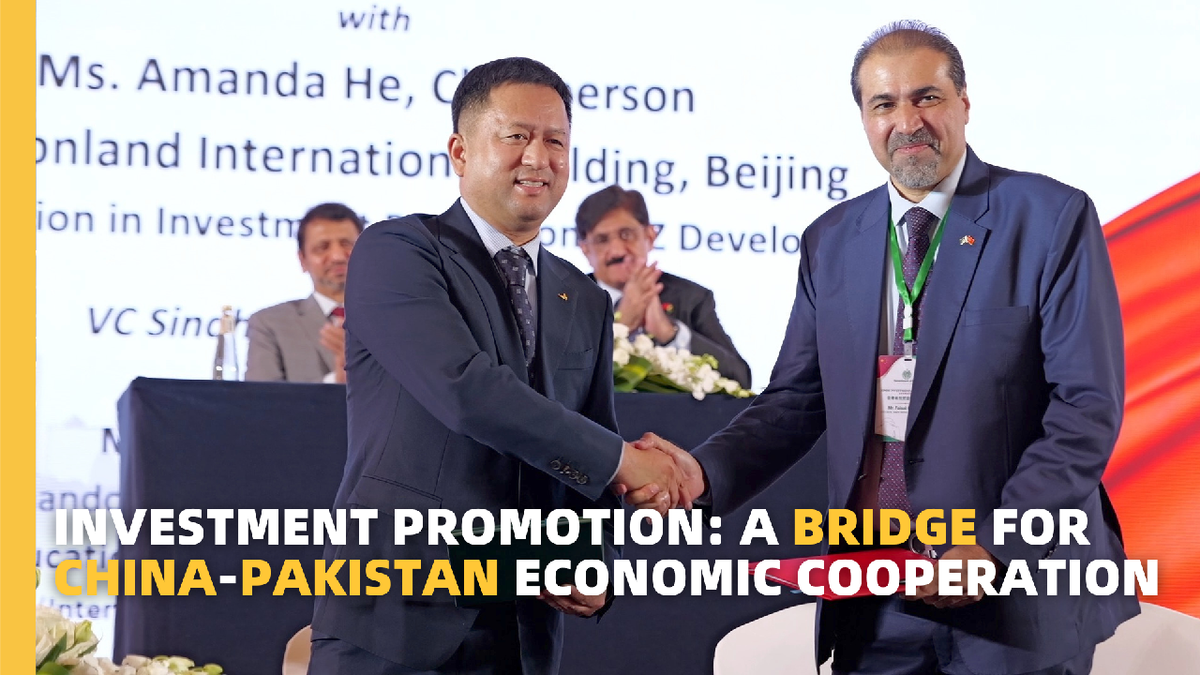
More than 400 Chinese and Pakistani participants recently convened in Shanghai for a pivotal investment conference. The gathering aimed to channel further Chinese investment into Sindh, Pakistan's most populous province, targeting key growth sectors such as digital technology, artificial intelligence, manufacturing, and electric vehicles. This event marks a significant step in the ongoing evolution of the China-Pakistan Economic Corridor (CPEC), signaling its expansion into a new, technologically driven phase.
The investment conference in Shanghai is more than a simple business forum; it is a carefully orchestrated move within a grander geopolitical and economic strategy. At its core, this event highlights the deeply asymmetrical power dynamic between China and Pakistan, where the former is the primary architect and financier, and the latter is the eager recipient of capital and infrastructure.
For China, the expansion of CPEC into high-tech sectors within Sindh serves multiple strategic objectives. Firstly, it is a critical component of Beijing's broader Belt and Road Initiative (BRI), showcasing its commitment to a flagship project and extending its economic and political influence across Asia. CPEC provides China with a vital land bridge to the Arabian Sea via Gwadar Port, offering an alternative trade route that bypasses the congested and geopolitically sensitive Malacca Strait. This enhances China's energy security and strengthens its logistical resilience, a long-term strategic imperative. The shift towards digital technology, AI, manufacturing, and electric vehicles also aligns with China's own economic transformation, allowing it to export its advanced industrial capacity and secure future markets for its burgeoning tech sector. This is not just about building roads and ports anymore; it's about embedding Chinese technological ecosystems into Pakistan's future economy, creating a dependency that extends beyond physical infrastructure.
For Pakistan, the allure of Chinese investment is undeniable. Facing persistent economic challenges, including a precarious balance of payments, high inflation, and a burgeoning debt crisis, Pakistan desperately needs foreign capital to stimulate growth and create jobs. CPEC has been touted by successive Pakistani governments as a game-changer, promising modernization, infrastructure development, and a pathway to prosperity. The focus on digital and advanced manufacturing sectors in Sindh offers the prospect of leapfrogging traditional industrial development, fostering a knowledge economy, and integrating Pakistan into global supply chains. Sindh, home to Karachi, Pakistan's economic powerhouse and largest city, is strategically crucial. Investment here is intended to stabilize the national economy, generate employment for its vast youth population, and potentially alleviate some of the internal political pressures that often plague the country. The partnership also provides Pakistan with a powerful diplomatic counterweight in its complex regional dynamics, particularly concerning its long-standing rivalry with India.
However, the mechanics of this relationship are heavily weighted. China's investments often come with significant loans, increasing Pakistan's already substantial debt burden. The terms of these loans, often opaque, grant China considerable leverage, effectively shaping Pakistan's economic policy and strategic choices. While Pakistan seeks to modernize, it risks becoming a market for Chinese goods and services, and potentially a recipient of Chinese labor and technical expertise, rather than fostering robust indigenous industries. This dynamic creates a structural dependency, where Pakistan's economic future becomes increasingly intertwined with China's strategic priorities, making it difficult for Islamabad to assert full autonomy in its economic and foreign policy decisions.
While the promise of economic development and technological advancement through CPEC's next phase is often highlighted, the human cost, particularly for ordinary Pakistani citizens, frequently remains in the shadows. The scale of Chinese investment brings both opportunities and significant challenges that directly impact local communities and the national populace.
Perhaps the most pressing human cost is the escalating national debt. Pakistan already owes billions to China for initial CPEC projects, and new investments, even in high-tech sectors, typically translate into further loans. This debt burden ultimately falls on the Pakistani taxpayer. Future generations will bear the responsibility of repayment, potentially leading to austerity measures, cuts in social spending, and a diversion of national resources away from essential services like healthcare and education. This can trap a nation in a cycle of dependency, where economic growth is offset by the need to service foreign debt, limiting the government's ability to invest in its own people.
The shift to digital technology, AI, and electric vehicle manufacturing promises high-skilled jobs. However, the critical question is whether these jobs will genuinely benefit the local Pakistani workforce. Often, large-scale Chinese projects bring in Chinese labor and technical expertise, especially in the initial phases, limiting opportunities for local employment and skill transfer. While some training programs may exist, the sheer scale and speed of Chinese project execution can leave local workers under-prepared or relegated to lower-skilled positions. This can exacerbate unemployment among Pakistan's youth, creating frustration and widening the gap between the promised prosperity and lived reality.
Even
Source referenced: CGTN
This brief was synthesized by our Editorial Engine and reviewed by The Ground Narrative team.