TRENDING

Saturday, 17 October 2026
----------------------
6 Jumada Al-Awwal 1448 AH
Thousands marched through Tunis demanding relief from soaring prices and restored freedoms, uniting unions, professionals, and opposition groups. The rally exposes deep economic strain and a tightening presidential grip that ordinary Tunisians can no longer ignore.
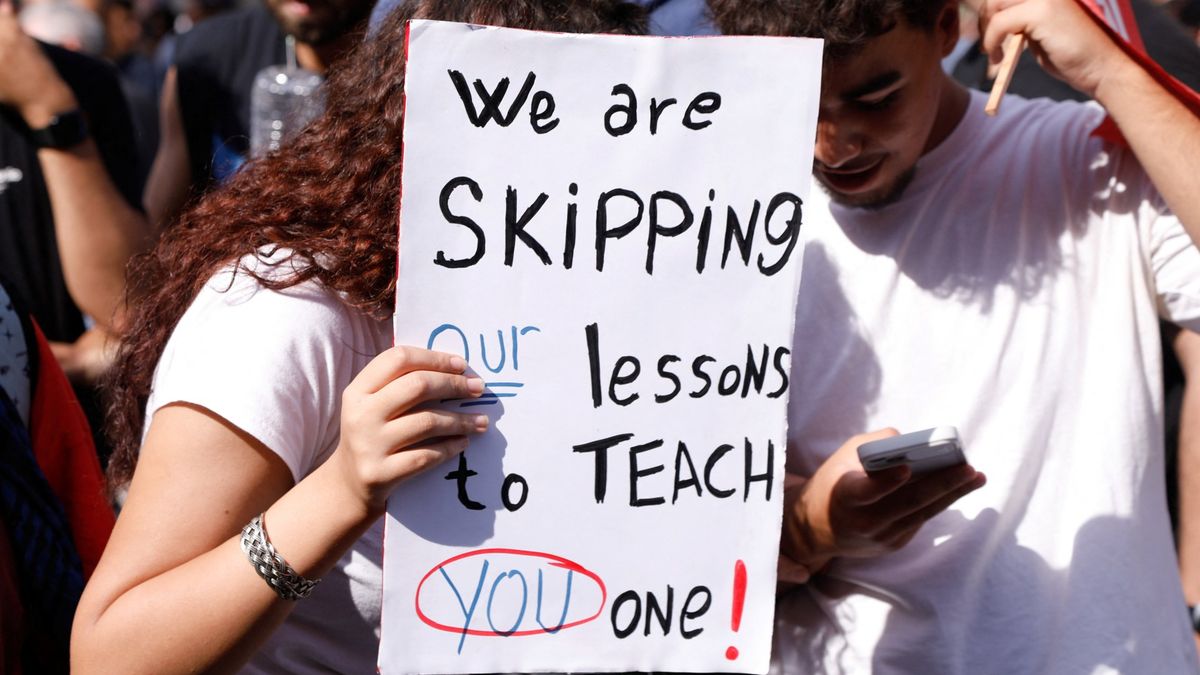
Thousands of Tunisians poured onto Habib Bourguiba Avenue in the capital on 17 October 2026, marking the largest street demonstration against President Kais Saied in years. Organized by the Tunisian General Labour Union (UGTT) alongside opposition parties and civil‑society groups, the march featured lawyers, doctors, journalists and unemployed youth demanding the release of detained critics and an end to curbs on trade‑union rights. Police presence was heavy, several roads were closed, and slogans echoed the 2011 uprising, signalling a renewed public outcry over cost‑of‑living pressures and political repression.
The protest reflects a convergence of economic desperation and a political system that has been reshaped to concentrate authority in the presidency. After Saied suspended parliament in 2021 and dissolved it in 2022, the new constitution granted him sweeping powers, allowing him to sideline the legislature, appoint judges, and rule by decree. This centralisation serves two core incentives: first, it shields the president from parliamentary scrutiny, preserving his political survival amid accusations of corruption; second, it enables rapid policy moves—such as subsidy cuts and public‑sector wage freezes—that the government argues are necessary to meet IMF‑backed fiscal targets.
Economic trade‑offs are equally pivotal. Tunisia’s economy has been battered by dwindling tourism, rising global commodity prices, and a fragile banking sector. To secure external financing, the regime has embraced austerity measures that depress wages and inflate food prices, directly affecting the purchasing power of ordinary citizens. The UGTT, historically a kingmaker in Tunisian politics, now finds its bargaining power eroded as the president bypasses collective bargaining in favor of unilateral decrees, prompting the union to resort to street mobilisation as its last lever of influence.
Internationally, the protest occurs under a watchful eye from European donors and Gulf investors who have stakes in Tunisia’s stability. While European states publicly champion democratic norms, they also provide crucial budgetary support, creating a paradox where external aid is contingent on political compliance. This dynamic incentivises the Saied administration to project an image of control, downplaying dissent to avoid jeopardising foreign inflows that prop up the fragile economy.
The most immediate victims are the working‑class Tunisians who juggle multiple jobs to afford basic necessities. Sfax resident Yassine Gharseli, who travelled 250 km to join the rally, epitomises the daily reality of power cuts, water shortages and medicine scarcity that have become routine. Unemployment, especially among youth, hovers near 30 percent, forcing many into informal work with no social safety net. The health sector feels the strain as doctors confront drug shortages while patients endure long waits, eroding public trust in state institutions.
Women, too, bear a disproportionate burden. With rising food prices, household budgets tighten, compelling many to cut back on education and nutrition, which can have long‑term societal repercussions. Rural communities, already marginalized, experience the brunt of water rationing and electricity blackouts, limiting agricultural productivity and deepening regional inequalities.
Political repression adds another layer of cost. Over the past year, dozens of journalists and opposition figures have been detained under broad “false news” statutes, curtailing independent reporting and silencing dissenting voices. The chilling effect extends to civil‑society organisations, which now operate under constant threat of surveillance and legal harassment, stifling the very channels that could amplify citizens’ grievances.
Government statements portray the austerity measures as temporary, necessary adjustments to stabilize public finances. Yet they omit the depth of Tunisia’s debt burden—over 90 percent of GDP—and the looming risk of a sovereign default. By framing the cuts as a short‑term sacrifice, the regime downplays the systemic vulnerabilities that could trigger a deeper economic crisis if public confidence continues to erode.
European donors frequently issue generic calls for “dialogue” and “reform” without explicitly linking aid to democratic concessions. This diplomatic ambiguity allows the Saied administration to claim external endorsement while sidestepping substantive pressure to restore parliamentary oversight. The lack of transparent conditionality obscures the true leverage that foreign financing could exert on Tunisia’s political trajectory.
State‑aligned outlets amplify the narrative that protests are the work of “foreign agitators” or “political opportunists,” diverting attention from the genuine socioeconomic grievances driving the streets. Independent journalists, many of whom face prosecution, are unable to provide comprehensive coverage, leaving the international audience with a fragmented picture that underestimates the protest’s breadth and depth.
Observers should monitor three interlocking developments. First, the government’s response: whether Saied will resort to harsher crackdowns, introduce new legal restrictions, or concede to union demands by rolling back specific austerity measures. Second, the stance of external financiers: any shift in European or Gulf funding conditions could force the president to recalibrate his economic policy or, conversely, embolden him to double‑down on repression. Third, the cohesion of opposition forces: sustained coordination between the UGTT, opposition parties, and civil‑society groups could translate street energy into parliamentary action if the political space reopens, potentially reshaping Tunisia’s democratic trajectory in the months ahead.
The rally was driven by soaring living costs, shortages of basic services, and growing restrictions on political freedoms under President Kais Saied, organized by the UGTT and opposition groups.
Saied suspended parliament in 2021, dismissed the government, and after a 2022 constitutional overhaul, he consolidated power in the presidency, limiting parliamentary oversight and curbing union rights.
If the movement stays unified, it could pressure the government to ease austerity, release detained critics, and possibly restore some democratic institutions, while also risking harsher crackdowns.
Source referenced: ALJAZEERA
This brief was synthesized by our Editorial Engine and reviewed by The Ground Narrative team.


