TRENDING

Sunday, 18 October 2026
----------------------
7 Jumada Al-Awwal 1448 AH
China has urged the European Union to maintain open trade and resist protectionist measures, emphasizing stable global supply chains. This appeal comes as the EU increasingly scrutinizes Beijing's trade practices and pursues 'de-risking' strategies.
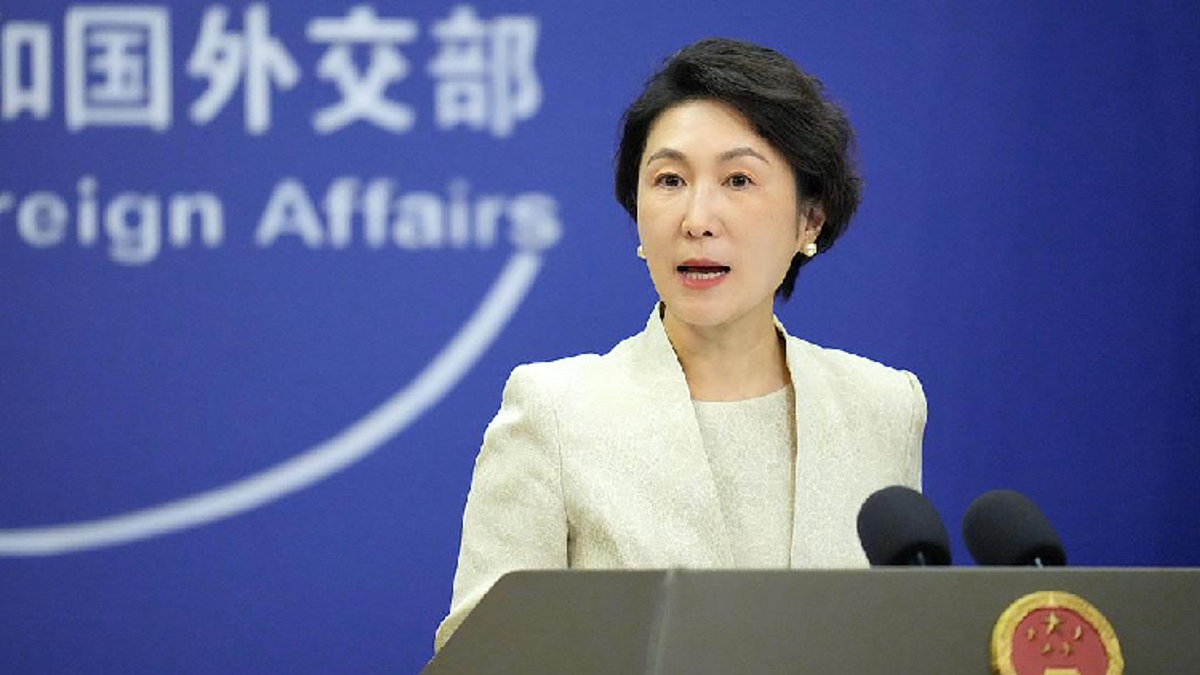
China, through its Foreign Ministry spokesperson Mao Ning, recently urged the European Union to jointly promote balanced growth and sustainable development in bilateral trade. Beijing's statement emphasized the need to maintain stable global industrial and supply chains, asking the EU to honor commitments to free trade, abide by WTO rules, and avoid protectionist or discriminatory policies. This appeal followed a "positive progress" report from the second meeting of the China-EU trade and investment consultation mechanism, signaling Beijing's desire to manage growing economic friction through dialogue.
The current plea from Beijing to the European Union is not merely a diplomatic nicety; it is a calculated move within a rapidly shifting global power landscape. At its core, the message reveals China's deep-seated concern over the EU's increasing inclination towards "de-risking" and the potential for new trade barriers. For decades, the EU has been a critical market for Chinese exports and a vital source of advanced technology and investment. This interdependence has underpinned a significant portion of China's economic growth model.
China's power in this dynamic stems from its position as the world's factory and a colossal consumer market. Many European industries, from automotive to high-tech manufacturing, are deeply integrated into Chinese supply chains and rely heavily on sales to Chinese consumers. The prospect of losing or significantly reducing access to the EU market, or facing punitive tariffs, poses a direct threat to China's economic stability and its domestic employment goals. By invoking "free trade" and "WTO rules," Beijing strategically positions itself as the defender of the global trading order, even as it faces accusations of bending those very rules to its own advantage through state subsidies and market access restrictions. This rhetorical move aims to put the onus on the EU to justify any protectionist measures, framing them as violations of established norms rather than legitimate responses to unfair competition.
The European Union, on the other hand, wields significant power as one of the world's largest single markets and a technological powerhouse. Its leverage lies in its ability to set standards, impose regulations, and diversify its supply chains. The EU's recent push for "strategic autonomy" reflects a growing realization that over-reliance on any single external power, particularly one with a different political system and geopolitical agenda, carries inherent risks. This shift is driven by a confluence of factors: the lessons learned from the COVID-19 pandemic's supply chain disruptions, the geopolitical tensions exacerbated by Russia's war in Ukraine, and growing concerns over China's human rights record and its assertive foreign policy. The EU is increasingly scrutinizing Chinese state subsidies, particularly in burgeoning sectors like electric vehicles (EVs) and renewable energy, which it views as distorting fair competition and undermining European industries.
The "dialogue" that Mao Ning referenced, the China-EU trade and investment consultation mechanism, is itself a battleground. For China, these talks are an opportunity to diffuse tensions, prevent the imposition of tariffs, and secure continued market access. For the EU, they are a platform to address grievances, push for greater reciprocity, and signal its resolve to protect its economic interests and values. The "positive progress" mentioned by Beijing might simply indicate an an agreement to continue talking, rather than a substantive resolution of core differences. Both sides are engaged in a delicate balancing act, trying to maximize economic benefits while minimizing strategic vulnerabilities in an increasingly fragmented global economy. This power dynamic is not static; it is constantly being renegotiated through diplomatic exchanges, trade investigations, and the broader geopolitical currents shaped by the US-China rivalry. The EU's ability to act cohesively, despite internal divisions, will be a critical determinant of its leverage in these ongoing negotiations.
When major economic blocs like China and the European Union engage in trade disputes, the abstract language of tariffs, subsidies, and market access often obscures the very real human consequences. These shifts in global trade policy ripple through economies, directly impacting the livelihoods of millions of ordinary citizens, from factory floors to family budgets.
For European workers, particularly those in industries competing directly with heavily subsidized Chinese goods – such as electric vehicles, solar panels, or steel – the stakes are high. While EU measures to counter unfair competition might protect domestic jobs in the short term, they could also lead to retaliatory tariffs from China, impacting European export-oriented sectors like luxury goods, machinery, or chemicals. Workers in these export industries could face job insecurity, reduced hours, or even layoffs. Conversely, if European industries are unable to compete with cheaper Chinese imports, the long-term viability of entire sectors and the jobs they provide are at risk.
European consumers also bear a significant portion of the cost. Chinese imports often provide affordable goods, from electronics to clothing. Should trade barriers increase, consumers could face higher prices for everyday items, reducing their purchasing power. While the argument for "strategic autonomy" and local production often promises higher quality or more ethical sourcing, these benefits typically come with a higher price tag, disproportionately affecting lower-income households. The drive to diversify supply chains, while prudent for resilience, can also add costs in the short to medium term, which are ultimately passed on to the consumer.
On the Chinese side, the human cost is equally profound. China's economic model relies heavily on exports to fuel growth and employment. Millions of Chinese workers are employed in factories producing goods for European markets. Any significant reduction in EU demand or the imposition of tariffs would directly threaten these jobs, particularly in coastal manufacturing hubs. For a government that prioritizes social stability above all else, mass unemployment in key industrial sectors presents a significant challenge. The drive to shift towards domestic consumption and high-tech industries is a long-term strategy, but in the interim, the livelihoods of many depend on continued access to foreign markets.
Beyond the two main blocs, workers across the global supply chain, from raw material extraction to logistics and shipping, are vulnerable. Many developing nations serve as intermediate points in these complex networks. Disruptions in China-EU trade can lead to reduced demand for their resources or services, impacting local economies and exacerbating poverty.
Small and medium-sized enterprises (SMEs) in both Europe and China are particularly susceptible. Unlike large multinational corporations that can absorb some shocks or relocate production, SMEs often operate on tighter margins and have less flexibility. A sudden change in trade policy, a new tariff, or a disruption in supply can quickly push them to the brink, leading to business closures and job losses. Their ability to adapt to new regulations or find alternative markets is often limited, making them silent casualties in these high-stakes economic contests. The pursuit of national economic advantage, while framed in terms of prosperity, often translates into direct hardship for individuals and communities caught in the crossfire of international trade policy.
While China's public statements emphasize "free trade" and "WTO rules," there are crucial elements that are often downplayed or omitted from the official narrative. Understanding these silences is key to grasping the full scope of the China-EU trade relationship.
The most significant untold story is China's own long-standing record of protectionist practices. For decades, Beijing has systematically employed state subsidies, forced technology transfers, intellectual property theft, and non-tariff barriers to nurture its domestic industries and give Chinese companies an unfair advantage. Foreign companies operating in China frequently face market access restrictions, opaque regulatory environments, and pressure to form joint ventures that require sharing sensitive technologies. When Mao Ning urges the EU to "honor its commitment to free trade," it rings hollow to many European businesses that have struggled to achieve genuine reciprocity in the Chinese market. The call for adherence to WTO rules is also selective; China has often been criticized for exploiting loopholes or simply ignoring rulings that go against its interests, particularly concerning state-owned enterprises and industrial policy. This strategic hypocrisy allows Beijing to frame EU defensive measures as "protectionism" while deflecting scrutiny from its own historical and ongoing practices.
The EU itself is not a monolithic entity, and its approach to China is marked by significant internal divisions. Member states have vastly different economic dependencies on China and varying geopolitical priorities. Germany, for instance, with its powerful automotive industry, has historically championed engagement with China due to its deep market penetration and supply chain integration. Other countries, particularly those in Central and Eastern Europe, or those with smaller economies, might be more cautious or even hawkish, often influenced by security concerns or a desire to align more closely with the United States. This internal divergence means that while the EU collectively speaks of "strategic autonomy" and "de-risking," the practical implementation of these policies is often slow, fragmented, and subject to intense lobbying from different national interests. Beijing understands these divisions and often seeks to exploit them, engaging with individual member states to undermine a unified EU front. The "positive progress" in consultations might be a result of China successfully identifying and leveraging these internal fault lines.
Trade relations between China and the EU are never purely economic; they are deeply intertwined with broader geopolitical considerations. The United States has consistently pressured its European allies to take a harder line on China, particularly on issues of national security, human rights, and technological competition. The EU's "de-risking" strategy is, in part, a response to this pressure and a recognition of the risks associated with deep entanglement with an increasingly assertive China. Beijing's call for cooperation is also an attempt to prevent the EU from aligning too closely with the US in a potential new Cold War scenario. The "stable and smooth operation of global industrial and supply chains" is not just about efficiency; it's about maintaining China's central role in the global economy and preventing a Western-led effort to create alternative, China-free supply chains. What is often unstated is that economic leverage is a powerful tool in international relations, and China is deploying it to shape the EU's geopolitical alignment.
Finally, the official statements downplay the extent to which the global trade architecture, particularly the WTO, is struggling to cope with the realities of 21st-century state capitalism. Both China and, increasingly, Western powers are resorting to industrial policies, subsidies, and national security exceptions that strain WTO rules. China's appeal to WTO rules is ironic given its own history, but it also highlights the lack of effective enforcement mechanisms. The "dialogue" between China and the EU is happening in a context where the rules-based international order is under significant stress, and major powers are increasingly prioritizing national interests over multilateral norms. The "positive progress" may simply be a way to buy time while both sides continue to develop their own protectionist tools outside the spirit of truly free and fair trade.
The coming months will be critical in determining the trajectory of China-EU trade relations and the broader global economic landscape. Several key indicators will reveal whether Beijing's call for cooperation yields genuine policy shifts or merely serves as a rhetorical shield.
First, closely monitor the EU's ongoing anti-subsidy investigations, particularly those targeting Chinese electric vehicles, wind turbines, and other green technologies. These investigations are not merely technical; they are a litmus test for the EU's commitment to its "de-risking" strategy and its willingness to protect domestic industries from what it perceives as unfair competition. Any definitive action, such as the imposition of tariffs, would signal a significant escalation and a hardening of the EU's stance, likely provoking a strong response from Beijing. Conversely, if these investigations are prolonged or result in minimal action, it could indicate that internal EU divisions or economic pressures have tempered its resolve.
Second, observe the practical implementation of the EU's "strategic autonomy" initiatives. This includes efforts to diversify supply chains, boost domestic manufacturing capabilities, and secure critical raw materials. Look for concrete investments in European industries, new trade agreements with alternative partners, and regulatory frameworks designed to reduce reliance on China. The speed and scale of these initiatives will indicate the EU's long-term commitment to reshaping its economic dependencies, rather than simply managing existing ones. Pay attention to how European companies, particularly large multinationals, adjust their investment and production strategies in China and elsewhere.
Third, watch for any shifts in the United States' approach to its European allies regarding China. Will Washington intensify pressure on the EU to adopt more confrontational trade policies, or will it prioritize transatlantic unity over a unified front against Beijing? The degree of US-EU coordination on trade and technology issues will be a powerful signal of the Western bloc's collective strategy towards China. Any divergence could be exploited by Beijing to further its own agenda.
Finally, keep an eye on China's internal economic indicators and its own trade policies. If China's export growth slows significantly or if domestic economic challenges mount, Beijing may become more aggressive in its efforts to secure foreign markets or more flexible in addressing EU concerns. Conversely, if China's economy remains robust, it may feel less compelled to make concessions. Also, observe any new Chinese industrial policies or market access restrictions that contradict its public calls for free trade, revealing the true intent behind its diplomatic rhetoric. The interplay of these factors will determine whether the China-EU relationship moves towards greater cooperation or deeper friction.
China seeks to prevent the EU from implementing protectionist measures and to ensure continued access to European markets and technology. Beijing also aims to counter the EU's "de-risking" strategies and maintain stable global supply chains.
The EU is concerned about China's state subsidies, intellectual property theft, market access barriers, and geopolitical alignment. It seeks to balance economic benefits with strategic autonomy and fair competition for its industries.
Consumers in both blocs could face price changes, while workers in industries competing with subsidized goods or relying on exports would feel direct impacts. Small and medium enterprises are particularly vulnerable to trade disruptions.
Source referenced: CGTN
This brief was synthesized by our Editorial Engine and reviewed by The Ground Narrative team.