TRENDING

Saturday, 17 October 2026
----------------------
6 Jumada Al-Awwal 1448 AH
A new wave of Russian strikes has killed and injured dozens of Ukrainian civilians, underscoring the relentless human toll of the conflict. These attacks occur amidst significant shifts in international support and policy towards Ukraine.
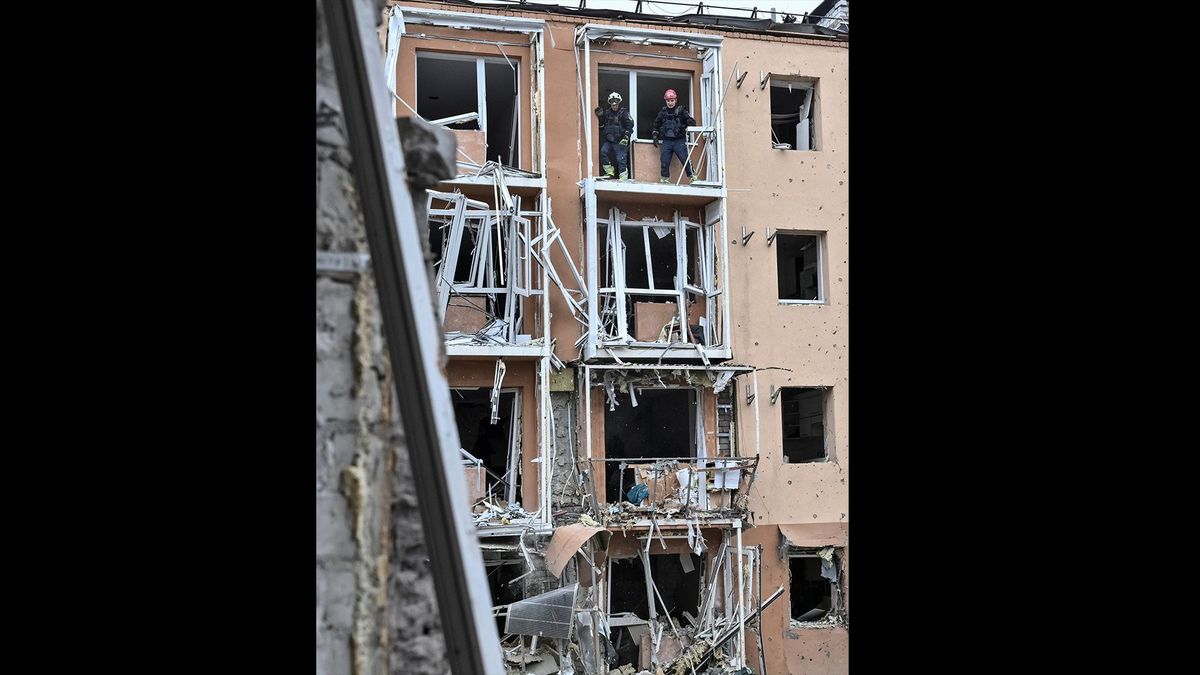
On October 17, 2026, a widespread barrage of Russian drones and missiles struck cities across Ukraine, resulting in the deaths of at least eight civilians and injuring nearly sixty others. Ukrainian air defenses reported intercepting or neutralizing 293 out of 332 incoming projectiles, indicating a large-scale, coordinated assault. The strikes targeted various locations, causing damage to civilian infrastructure and residential areas, marking another grim chapter in the ongoing conflict that continues to exact a heavy price from the Ukrainian populace.
This latest wave of Russian aggression is not merely a continuation of past patterns; it is a calculated move within a rapidly shifting global power landscape. The timing of these strikes, particularly against the backdrop of reports that Donald Trump waived Russia sanctions and a widening rift between the United States and Ukrainian President Volodymyr Zelenskyy, reveals a strategic calculus designed to exploit perceived weaknesses and divisions within the Western alliance.
Russia's primary incentive is to degrade Ukraine's capacity to wage war and to break the will of its people. By launching massive, sustained missile and drone attacks, Moscow aims to exhaust Ukraine's air defense systems, which are heavily reliant on Western supplies. The sheer volume of projectiles forces Ukraine to expend precious interceptor missiles, gradually depleting its ability to protect its cities and critical infrastructure. This strategy is amplified when the flow of Western military aid, particularly air defense munitions, becomes uncertain or dwindles.
The reported waiver of Russia sanctions by a leading US political figure sends a powerful signal to Moscow: the united front of economic pressure may be fracturing. Sanctions are a critical non-military tool used by Western nations to constrain Russia's war economy and its ability to fund its military operations. Any perceived weakening of this pressure can embolden Russia, suggesting that the international community's resolve is wavering. This directly translates into a greater capacity for Russia to sustain its war effort, including the production and deployment of more missiles and drones.
The widening rift between the US and President Zelenskyy further complicates Ukraine's position. Such disagreements, whether over strategy, corruption, or the pace of the counteroffensive, can undermine the coherence of military and financial support. For Ukraine, continued Western backing is not just about equipment; it's about diplomatic leverage, economic stability, and the psychological assurance that it is not fighting alone. A public or perceived fracture in this relationship can lead to a reduction in aid, a delay in crucial deliveries, and a general erosion of confidence among Ukraine's allies. This creates an opening for Russia to intensify its military pressure, believing that Ukraine's ability to resist will be compromised.
From Kyiv's perspective, the core challenge is survival. Its military doctrine is heavily influenced by the need to protect its population and infrastructure while attempting to regain lost territory. The reliance on Western military technology and financial aid means that political shifts in donor countries have immediate and profound impacts on its operational capabilities. The current situation forces Ukraine into a difficult position: it must maintain a strong defense against escalating attacks while simultaneously navigating complex diplomatic waters to secure continued international support, even as that support appears increasingly conditional or uncertain.
While the headlines often focus on geopolitical maneuvering and military statistics, the true weight of these power shifts is borne by ordinary Ukrainian citizens. The latest strikes, killing eight and injuring nearly sixty, are not abstract numbers; they represent lives shattered, families grieving, and communities living under perpetual fear.
For millions across Ukraine, the blare of air raid sirens is a constant, terrifying soundtrack to daily life. Each siren signals a frantic scramble for shelter, a desperate hope that the incoming projectile will be intercepted, and a chilling awareness of vulnerability. Children grow up accustomed to seeking refuge in basements and subway stations, their education and development interrupted by the omnipresent threat of explosions. Adults grapple with the impossible choice between fleeing their homes and trying to maintain some semblance of normalcy amidst the chaos. The psychological toll of this sustained terror is immense, leading to widespread anxiety, PTSD, and a deep sense of insecurity that will linger for generations.
Beyond direct casualties, Russian strikes systematically target critical infrastructure, including power grids, water supply systems, and heating facilities. These attacks are designed to make daily life unbearable, especially as winter approaches. When power is cut, homes go dark and cold, hospitals struggle to operate, and essential services grind to a halt. Water shortages force communities to rely on emergency supplies, increasing the risk of disease. The destruction of businesses and workplaces leads to widespread unemployment, further destabilizing an already fragile economy. Farmers cannot plant or harvest, factories cannot produce, and trade routes are disrupted, pushing more families into poverty and displacement.
Millions of Ukrainians have already been forced from their homes, becoming internally displaced persons or refugees in neighboring countries. Each new wave of strikes adds to this exodus, tearing apart social fabric and severing community ties. Those who remain often do so out of necessity, unable to leave, or out of a fierce determination to protect what little they have left. They face overcrowded shelters, inadequate resources, and the constant threat of further attacks. The human cost is not just in lives lost, but in the erosion of dignity, the loss of futures, and the profound trauma inflicted upon an entire nation.
In the aftermath of such devastating attacks, powerful actors often craft narratives that serve their own interests, downplaying uncomfortable truths or omitting crucial context. The latest Russian strikes in Ukraine are no exception, with several critical elements being omitted or reframed by various parties.
Western governments, particularly the United States, have consistently touted their
Source referenced: ALJAZEERA
This brief was synthesized by our Editorial Engine and reviewed by The Ground Narrative team.