TRENDING

Saturday, 17 October 2026
----------------------
6 Jumada Al-Awwal 1448 AH
Croatian President Zoran Milanović met Chinese Foreign Minister Wang Yi in Zagreb, pledging tighter ties. The deal promises new infrastructure and trade, but its ripple effects reach far beyond the Adriatic shoreline.
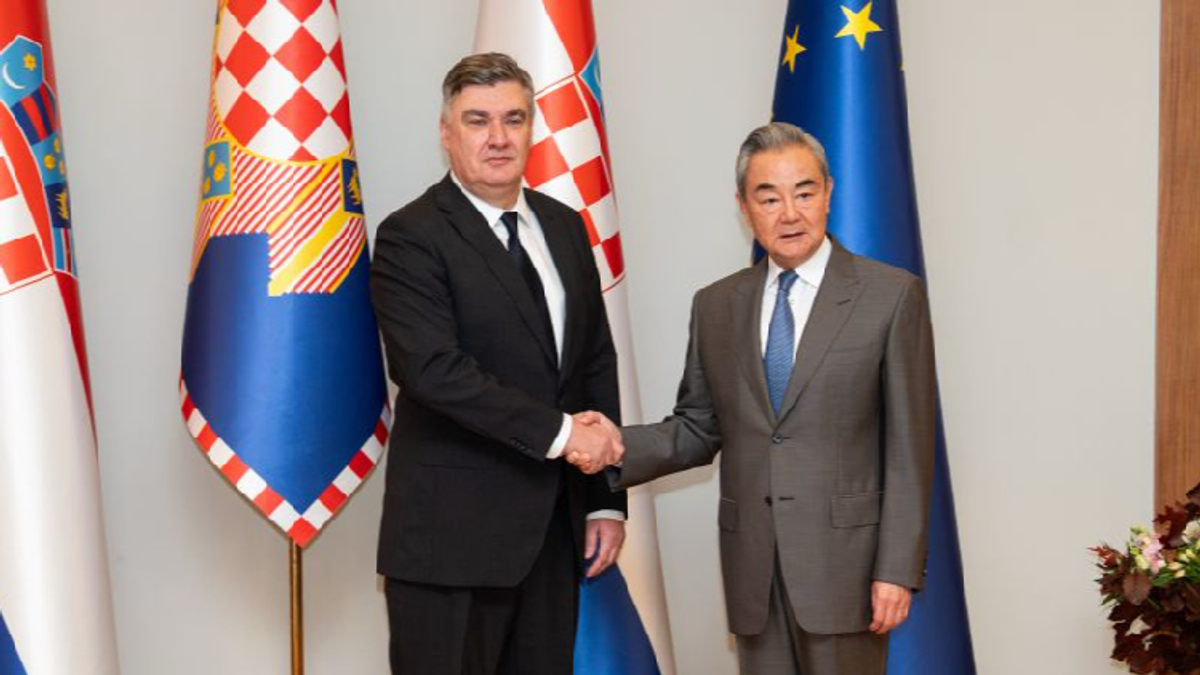
Croatian President Zoran Milanović welcomed Chinese Foreign Minister Wang Yi to Zagreb on October 16, 2026. Both leaders reiterated a commitment to deepen cooperation across trade, technology, and cultural exchange, while reaffirming the one‑China policy. The meeting concluded with promises of “mutually beneficial” projects and a joint statement praising peaceful development.
The handshake in Zagreb masks a web of strategic calculations. For Croatia, aligning with Beijing offers a hedge against the EU’s fiscal constraints and a chance to attract Chinese capital for ports, rail links, and renewable energy. Milanović’s domestic audience, weary of stagnant wages, sees Chinese investment as a shortcut to jobs, bolstering his political survival ahead of the next parliamentary cycle.
From Beijing’s side, the Adriatic offers a foothold in the EU’s maritime network. China’s Belt and Road Initiative seeks to stitch together ports from the South China Sea to the Mediterranean, and a modernized Rijeka or Ploče terminal would shorten supply chains for Chinese exporters. The move also feeds the narrative of a “global South” partnership, countering U.S. and EU criticism of China’s trade surplus.
Economically, the deal promises lower‑cost infrastructure financed through state‑backed loans, but it also deepens Croatia’s exposure to Chinese market fluctuations. Militarily, while no explicit security pact was signed, the presence of Chinese firms in critical logistics hubs subtly expands Beijing’s strategic depth in a region traditionally under NATO’s maritime umbrella.
Chinese investment in port upgrades often comes with preferential docking rights for Chinese shipping lines. Local fishers, already squeezed by EU quotas, risk losing access to traditional landing sites as larger vessels dominate the waterways.
Infrastructure projects funded by Chinese banks typically employ Chinese contractors and labor crews, limiting the spill‑over of skills and wages to the local workforce. When jobs do go to Croatians, they are often low‑skill, temporary positions that do not address the structural unemployment in the hinterland.
Croatia’s pivot may force the European Union to allocate additional funds to offset perceived security gaps, diverting resources from other member states. Smaller economies worry that a precedent of bilateral deals with China could erode collective bargaining power in trade negotiations.
Chinese loans are frequently packaged as “soft” financing, yet they carry clauses that can trigger asset seizures if repayment falters. Analysts note that similar arrangements in the Balkans have led to Chinese control over strategic infrastructure, a fact rarely highlighted in official statements.
The agreement opens the door for Chinese 5G and surveillance equipment to enter Croatian telecom markets. While framed as modernisation, the long‑term implications for data privacy and alignment with Western cyber‑security standards remain largely unaddressed.
Both Zagreb and Beijing emphasize economic cooperation, but NATO observers warn that Chinese logistics hubs could complicate alliance planning in the Mediterranean. The official narrative omits any discussion of how dual‑use facilities might be leveraged in future geopolitical crises.
Watch for the first concrete project approvals from the Chinese side—most likely a port expansion in Rijeka. The terms of financing, especially repayment schedules and collateral clauses, will reveal how deep Croatia’s fiscal entanglement becomes. Simultaneously, monitor EU responses: whether Brussels tightens investment screening rules or offers alternative funding to counterbalance Beijing’s influence. Finally, keep an eye on local protests or labor disputes that could signal growing public resistance to a partnership that promises growth but delivers uncertainty.
The first announced initiatives focus on modernising the Rijeka and Ploče ports, expanding 5G networks, and launching joint renewable‑energy ventures, all financed through Chinese state‑backed loans.
While Croatia remains an EU member, deeper Chinese ties could strain Brussels‑Zagreb coordination, prompting the EU to reconsider investment screening and potentially allocate extra funds to offset security concerns.
Source referenced: CGTN
This brief was synthesized by our Editorial Engine and reviewed by The Ground Narrative team.