TRENDING

Saturday, 17 October 2026
----------------------
6 Jumada Al-Awwal 1448 AH
China’s recent UN plea highlights a worsening flood of small arms into Haiti. The article breaks down who profits, who suffers, and what the next moves might be.
A Chinese envoy to the United Nations urged member states to curb the influx of illicit weapons into Haiti after the Security Council renewed its sanctions regime for another year. The statement came amid reports that gangs in Port‑au‑Prince continue to acquire firearms and ammunition from abroad, deepening a humanitarian crisis that has already displaced tens of thousands of residents.
China’s diplomatic push is more than a humanitarian appeal; it is a calculated move in a broader contest for influence in the Caribbean. By positioning itself as a responsible global actor at the UN, China seeks to demonstrate its willingness to engage in security matters traditionally dominated by the United States and regional powers. The sanctions regime, originally imposed in 2022, ties the flow of weapons to the willingness of source countries—most notably the United States, Brazil, and several West African states—to enforce export controls.
The United Nations framework gives China a platform to shape the narrative without committing troops or direct aid. Meanwhile, the United States, which has long funded Haitian police training and maintains a modest naval presence in the region, faces criticism for the persistence of arms trafficking routes that often run through its own ports. Regional actors such as the Dominican Republic and the Caribbean Community (CARICOM) have limited capacity to interdict shipments, leaving a vacuum that illicit networks exploit.
Economic incentives also drive the trade. Small‑arms dealers profit from the high demand created by gang rivalries, while some local officials allegedly turn a blind eye in exchange for bribes. The sanctions renewal creates a legal lever, but enforcement depends on the political will of source states, many of which balance domestic gun‑rights lobbying against foreign policy concerns.
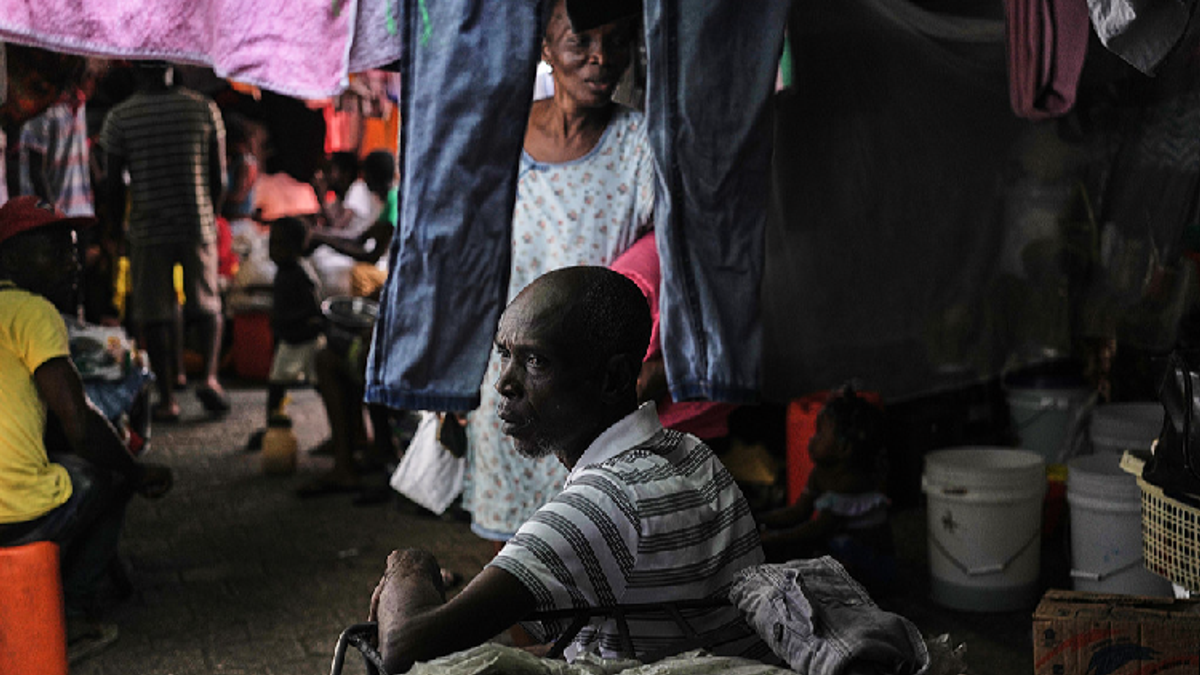
Haitian civilians bear the brunt of the weapons flood. In August 2026, a UN‑run shelter in Port‑au‑Prince housed over 1,200 families who fled gang‑controlled neighborhoods after a series of armed raids. The constant threat of gunfire forces children to miss school, women to abandon livelihoods, and entire communities to live in makeshift tents.
Street vendors and informal traders lose income when armed groups impose “taxes” on market stalls or seize goods outright. The resulting insecurity depresses tourism—a sector that once contributed roughly 5 % of Haiti’s GDP—leaving a ripple effect on hotels, transport workers, and artisans.
Medical clinics report a surge in gun‑related injuries, stretching already scarce resources. Schools operating in conflict zones often close for weeks, denying a generation of children consistent education and increasing the risk of recruitment into armed groups.
China’s public statements emphasize Haitian political will and UN cooperation, but they downplay the role of its own strategic interests. By championing sanctions, China can portray the United States as ineffective while avoiding direct military involvement that could entangle Beijing in a protracted conflict.
Western officials, on the other hand, tend to frame the crisis as a failure of Haitian governance alone, sidestepping the fact that many of the weapons trace back to surplus stockpiles in the United States and to black‑market networks operating out of Brazil’s northern ports. This framing shifts responsibility away from export‑control laxities and toward local corruption.
Another layer often omitted is the influence of private security firms hired by multinational corporations operating in the Caribbean. These firms sometimes provide logistical support that inadvertently facilitates arms movement, especially when they operate under opaque contracts that lack robust oversight.
Finally, the UN resolution itself is presented as a decisive tool, yet the text offers no new enforcement mechanisms. The real leverage lies in the willingness of source countries to allocate customs resources, intelligence sharing, and diplomatic pressure—areas where political calculations frequently outweigh humanitarian concerns.
The next six months will reveal whether the renewed sanctions translate into concrete interdiction actions. Key indicators include: increased customs inspections in U.S. ports known for re‑exporting surplus weapons; diplomatic pressure from China on countries like Brazil to tighten export licensing; and any shift in the United Nations’ monitoring mandate that moves from rhetoric to on‑the‑ground verification.
Watch for statements from the Haitian transitional council that signal a genuine political settlement, as the absence of a unified local authority will continue to invite external meddling. Regional security initiatives, such as the Caribbean‑wide maritime patrols announced by the Dominican Republic, could either plug trafficking gaps or become another arena for great‑power posturing.
Finally, monitor the flow of humanitarian aid. If aid agencies begin to receive assurances that weapons will not be diverted, a modest reduction in civilian displacement could follow. Conversely, any resurgence of large‑scale arms seizures would likely trigger a renewed call for a more robust, perhaps even militarized, international response.
Most of the small arms trace back to surplus stockpiles in the United States and to black‑market networks operating out of Brazil’s northern ports, though some also come from West African arms dealers.
China gains diplomatic capital by appearing as a responsible global actor at the UN, positioning itself against U.S. shortcomings without committing troops, and expanding its influence in the Caribbean.
Source referenced: CGTN
This brief was synthesized by our Editorial Engine and reviewed by The Ground Narrative team.