TRENDING

Saturday, 17 October 2026
----------------------
6 Jumada Al-Awwal 1448 AH
Federal agents raided the Washington, DC home of US Representative Ilhan Omar, seizing her phone and passport as part of an immigration fraud investigation. Her lawyers have vehemently challenged the legality and timing of the search, alleging political motivation and a disregard for judicial instructions.
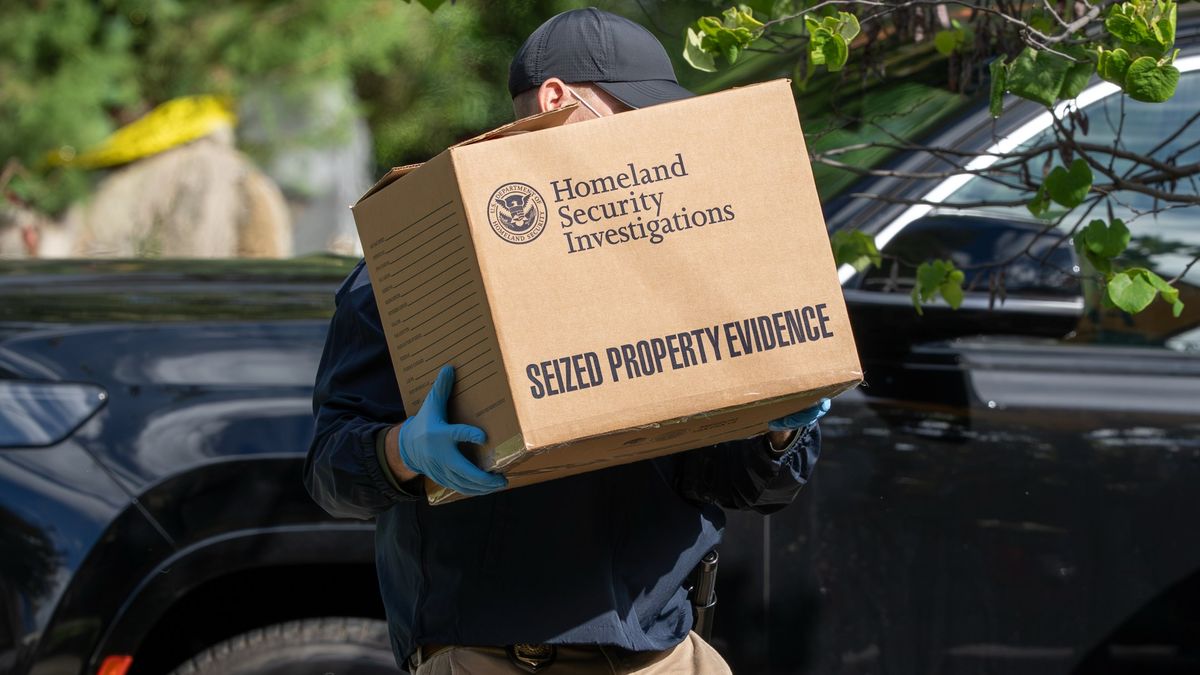
On October 12, 2026, Homeland Security officers conducted a federal raid on the Washington, DC residence of US Representative Ilhan Omar of Minnesota. During the search, agents seized her phone and passport, indicating an ongoing investigation into alleged immigration fraud. Days later, lawyers representing Representative Omar formally demanded the return of the seized property, accusing the US Department of Justice (DOJ) of orchestrating a politically motivated inquiry and failing to adhere to specific judicial instructions outlined in the search warrant.
The raid on Representative Omar's home illuminates a critical friction point in American governance: the delicate balance between the executive branch's prosecutorial power and the legislative branch's constitutional protections. At its core, this incident is a stark demonstration of how state power can be deployed, and perceived to be deployed, against a political figure. The DOJ, as part of the executive, holds immense authority to investigate and prosecute, but this power is traditionally constrained by norms designed to prevent its weaponization for political ends.
One of the most significant power dynamics at play is the timing of the raid, occurring just weeks before the November midterm elections. Historically, the DOJ has maintained a policy of avoiding overt investigative actions that could influence an election outcome, precisely to safeguard its perceived impartiality. Omar's lawyers explicitly invoked this precedent, framing the timing as evidence of political motivation. This challenges the DOJ's claim of operating solely under the rule of law, forcing a public debate on whether the institution is truly independent or susceptible to political pressures, particularly from an administration or influential figures who may harbor animosity towards specific politicians.
Furthermore, the alleged failure to follow judicial instructions—specifically, not providing the warrant in advance to Omar's legal counsel or contacting the House of Representatives' Office of General Counsel—points to a potential disregard for the separation of powers. Members of Congress, while not above the law, are afforded certain protections to ensure they can perform their legislative duties without undue interference. The House General Counsel's office exists to help navigate these complexities, ensuring that searches do not inadvertently seize privileged legislative materials or infringe upon a legislator's ability to represent their constituents. If these protocols were indeed bypassed, it suggests either an oversight or a deliberate move to assert executive authority over legislative prerogatives, setting a concerning precedent for future interactions between the branches of government.
Another layer of power mechanics involves the persistent use of immigration status as a political cudgel. Ilhan Omar, a naturalized US citizen who arrived as a refugee from Somalia, has long been a target of conservative critics questioning her citizenship. This recurring scrutiny, which includes a prior investigation during the Trump administration that found insufficient evidence, demonstrates how a person's origins and identity can be weaponized to undermine their legitimacy and political standing. For powerful actors, questioning the citizenship of a prominent minority politician serves not only to discredit the individual but also to send a broader message to immigrant communities about their precarious position within the national fabric, regardless of their legal status.
Finally, the shadow of former President Trump's influence cannot be ignored. His public attacks on Omar and suggestions of investigation, just days before the raid, create an undeniable perception of political orchestration, even if the DOJ denies direct involvement. This highlights the enduring power of rhetoric from influential figures to shape public narratives and potentially influence the actions, or perceived actions, of federal agencies. It underscores how the political ecosystem can create an environment where investigations, even if legally sound, are viewed through a lens of partisan retribution.
The raid on Representative Ilhan Omar's home carries a significant human cost, extending far beyond the immediate legal and political ramifications for the Congresswoman herself. At the most direct level, Representative Omar faces an immense personal and professional burden. The seizure of her personal devices and passport, coupled with the public spectacle of a federal search, constitutes a profound violation of privacy and a direct assault on her sense of security. Beyond the immediate distress, she must now contend with the reputational damage inherent in being the subject of a federal investigation, regardless of its outcome. This can distract from her legislative work, consume her time and resources in legal defense, and potentially erode trust among her constituents and political allies. The psychological toll of being a repeated target of such scrutiny, especially given her background as a refugee and a prominent woman of color in American politics, is immeasurable.
Perhaps the most insidious human cost is the chilling effect this incident has on immigrant and naturalized citizen communities across the United States. When a high-profile, legally naturalized citizen and elected official faces a federal investigation into their immigration history, it sends a powerful and unsettling message. It suggests that even those who have followed all legal pathways to citizenship are not immune from suspicion and scrutiny, particularly if they are politically active or outspoken. This can foster a pervasive sense of precarity and fear, discouraging civic engagement, political participation, and even open expression among communities who may already feel marginalized. The fear of having one's past scrutinized, or one's legal status questioned, can lead to self-censorship and a retreat from public life, undermining the very principles of an inclusive democracy.
The incident also exacts a heavy toll on the broader public's trust in America's democratic institutions, particularly the impartiality of its justice system. When federal agencies are perceived to be acting with political motivations, or when established norms designed to protect legislative independence are allegedly bypassed, it erodes the foundational belief that justice is blind. This can lead to increased cynicism, deeper political polarization, and a weakening of the social contract. Citizens may become less likely to cooperate with law enforcement, view legal processes with suspicion, and ultimately lose faith in the system's ability to deliver fair and equitable outcomes for all, not just the politically connected.
Finally, the raid contributes to the normalization of politically charged investigations as a tool in partisan warfare. If such actions are allowed to proceed without significant accountability or pushback, it sets a dangerous precedent where federal agencies can be perceived as instruments for discrediting political opponents. This makes it harder for individuals to serve in public office, especially those from non-traditional backgrounds, and ultimately harms the vibrancy and diversity of America's political landscape. The human cost here is a less courageous, less representative political class, operating under the constant threat of state-sanctioned harassment.
While official statements from the DOJ emphasize adherence to legal obligations and Omar's lawyers highlight political motivations, several crucial aspects of this event remain downplayed or entirely omitted from the mainstream narrative. The most significant untold story is the subtle but potent message this raid sends about the fragility of citizenship for certain populations in the United States.
Governments and powerful political factions often downplay how immigration status, particularly for non-white, non-European individuals, can be weaponized as a tool of control and discreditation. While the DOJ asserts its investigation is legitimate, the repeated targeting of Representative Omar's immigration history, despite prior probes finding insufficient evidence, creates a narrative that some citizens are perpetually
Federal agents conducted a search as part of an investigation into alleged immigration fraud. Her lawyers claim the investigation is politically motivated and unlawful.
They accused the Department of Justice of a politically motivated investigation, failing to follow judicial instructions, and threatening the separation of powers by not contacting House counsel.
The DOJ rejected the claims, stating that their attorneys and law enforcement partners complied with all court orders and legal obligations during the search.
Source referenced: ALJAZEERA
This brief was synthesized by our Editorial Engine and reviewed by The Ground Narrative team.