TRENDING

Monday, 5 October 2026
----------------------
24 Rabi' Al-Thani 1448 AH
Ukrainian President Volodymyr Zelenskyy's first official visit to Serbia highlights the complex web of alliances and interests in the region, as Serbia navigates its relationships with Russia and the European Union. The visit comes at a crucial time for Serbian President Aleksandar Vucic, who faces parliamentary elections and pressure from the EU to align his country's foreign policy.
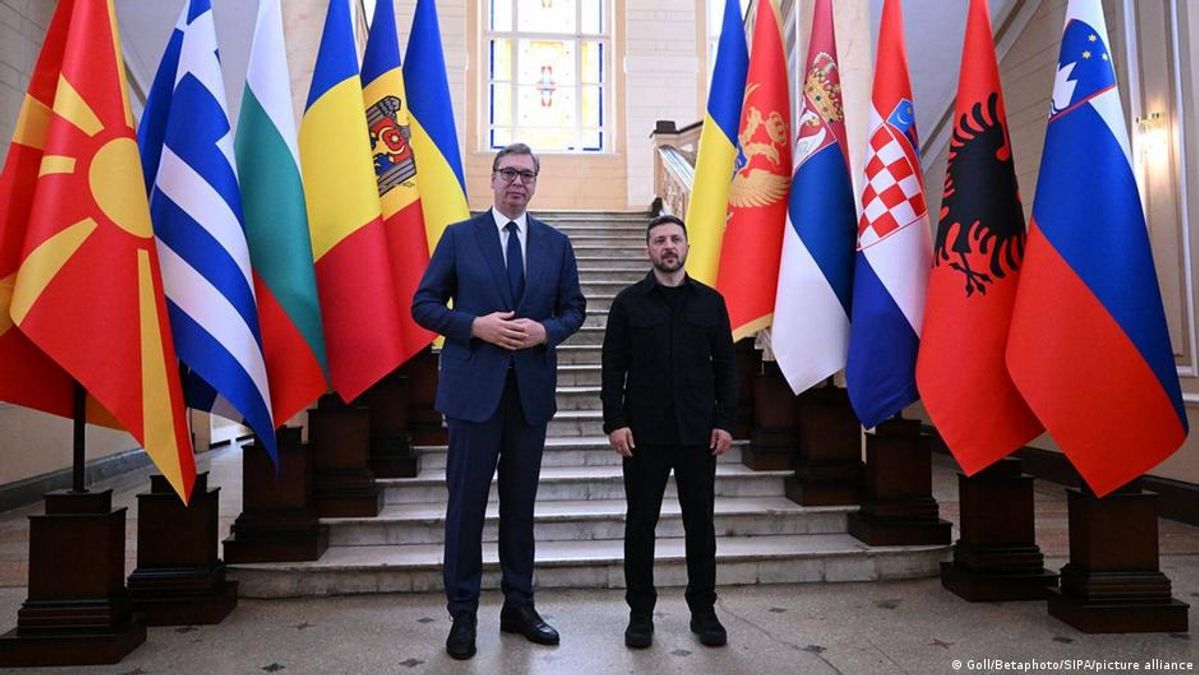
Ukrainian President Volodymyr Zelenskyy made his first official visit to Serbia, a country widely regarded as Europe's most pro-Russian nation. The visit is significant, given Serbia's historical ties with Russia and its opposition to anti-Russian sanctions. Despite this, Serbia has been secretly supplying Ukraine with military equipment, including artillery shells, through intermediaries.
The visit is a balancing act for both Zelenskyy and Serbian President Aleksandar Vucic. Vucic faces parliamentary elections and needs to present himself as open to cooperation with the EU, while also maintaining his country's traditional ties with Russia. Zelenskyy, on the other hand, seeks to expand Ukraine's circle of European partners and secure Serbian munitions for his country's war effort. The EU has been exerting pressure on Vucic to align his country's foreign policy with the bloc's, and Zelenskyy's visit may be seen as a way to nudge Serbia towards the EU.
The people of Serbia and Ukraine are caught in the middle of this complex web of alliances and interests. In Serbia, a student-led protest movement has been challenging Vucic's government, accusing it of corruption and incompetence. The movement has made the outcome of the upcoming parliamentary election unpredictable, and there are fears of large-scale efforts to manipulate the election. In Ukraine, the war with Russia has had a devastating impact on civilians, and Zelenskyy's visit to Serbia is seen as a way to secure support for his country's war effort.
What is being downplayed in the official statements is the extent of Serbia's cooperation with Ukraine, particularly in the supply of military equipment. The fact that Serbia has been secretly delivering artillery shells to Ukraine through intermediaries is a significant development, given Serbia's pro-Russian stance. Additionally, the potential for a joint drone factory using Ukrainian expertise, Serbian workers, and investment from the United Arab Emirates is a story that is not being fully told.
Readers should watch for the outcome of the parliamentary elections in Serbia and how Vucic's government responds to the pressure from the EU. They should also monitor the development of Serbia's cooperation with Ukraine, particularly in the supply of military equipment. Furthermore, the potential for a joint drone factory and the implications of such a project for the region should be closely watched. As the situation in the Balkans continues to evolve, it is essential to keep an eye on the complex web of alliances and interests that are shaping the region's future.
Editor's Note: The analysis is based on publicly available information and may not reflect the full complexity of the situation on the ground.
Source referenced: DW
This brief was synthesized by our Editorial Engine and reviewed by The Ground Narrative team.


