TRENDING

Sunday, 25 October 2026
----------------------
14 Jumada Al-Awwal 1448 AH
Senegalese President Bassirou Diomaye Faye has launched a new political party, Kiiraay, formalizing a significant split from his former ally Ousmane Sonko and the Pastef party. This move signals a consolidation of presidential power and reshapes the nation's political dynamics amidst ongoing governance challenges.
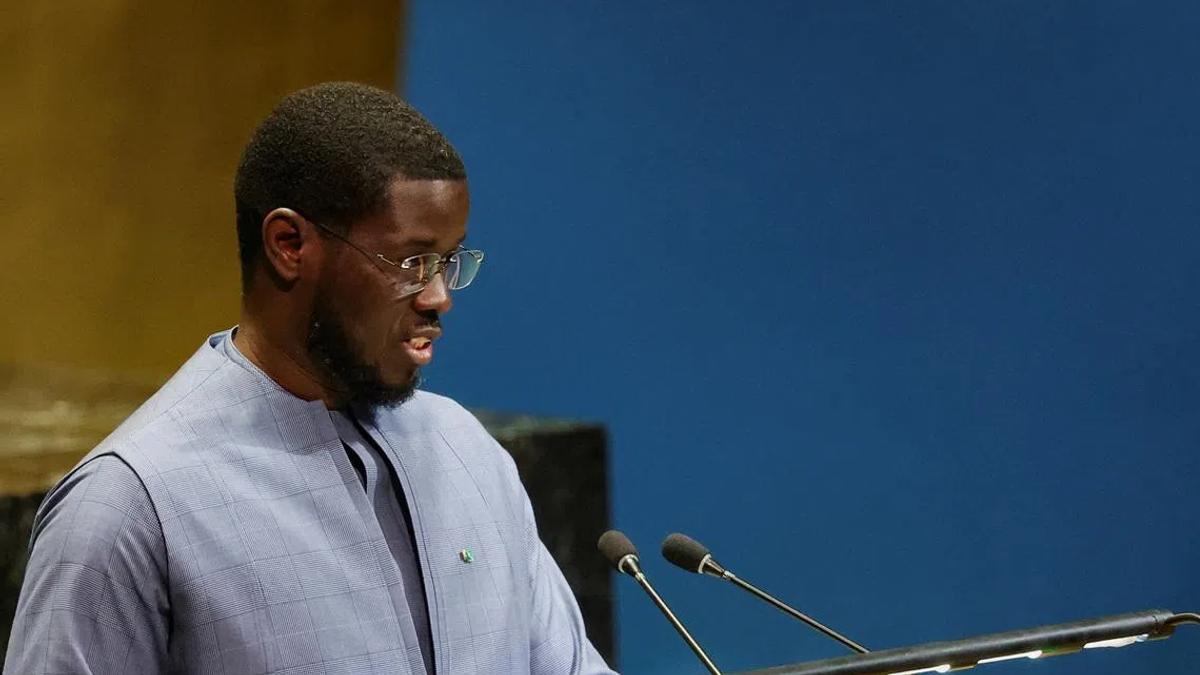
Senegal's political landscape is undergoing a significant realignment following President Bassirou Diomaye Faye's announcement of a new political party, Kiiraay — Republican Patriots. The launch, which took place at a gathering in the capital Dakar on July 26, 2026, formalizes a months-long power struggle and a definitive break with former Prime Minister Ousmane Sonko and the Pastef party that propelled Faye to power in 2024. This development marks a critical juncture for Senegal, a nation often regarded as a beacon of democratic stability in a volatile West African region.
President Faye and Ousmane Sonko were once the unified faces of Senegal's anti-establishment movement, captivating a significant portion of the electorate with promises of change and reform. Their alliance culminated in Faye's unexpected victory in the 2024 presidential elections, a triumph that represented a powerful rejection of the incumbent political establishment. However, the unity proved fragile. A power struggle began to emerge, culminating in President Faye's dismissal of Sonko from the prime ministership in May 2026. Despite this, Sonko retained considerable political influence, subsequently becoming the speaker of the National Assembly and remaining the leader of Pastef, which still commands a substantial majority in parliament.
The formation of Kiiraay, meaning 'shield' in the local Wolof language, is a strategic move by President Faye to establish his own independent political base and consolidate power. By declaring Kiiraay as "the majority party in this country," Faye is signaling his intent to govern with a mandate derived directly from his new political vehicle, rather than being beholden to the Pastef party, which remains under Sonko's leadership. This move is crucial for Faye to assert his authority and implement his agenda without internal resistance from his former political allies.
The internal political dynamics within Senegal hold significant implications, both domestically and regionally. For Senegal, a country grappling with a crisis stemming from the revelation of misreported debt under the previous government, political stability is paramount. A fragmented ruling camp could potentially hinder effective governance and the implementation of crucial economic reforms necessary to address the nation's financial challenges. President Faye's ability to forge a cohesive governing coalition, either through attracting Pastef members to his new party or by forming new alliances, will be critical to his administration's success.
Regionally, Senegal's political stability is closely watched. West Africa has experienced a series of military coups and democratic backslides in recent years, making Senegal's continued adherence to democratic processes particularly important. While the current developments represent an internal political realignment rather than an unconstitutional power grab, any significant internal instability could raise concerns among international partners and regional bodies like ECOWAS. The ability of Senegal's democratic institutions to manage this high-profile political divorce between its two most prominent leaders will serve as a test of its resilience.
The formalization of the split between President Faye and Ousmane Sonko marks a new chapter in Senegalese politics. It underscores the challenges inherent in post-election power-sharing arrangements, particularly when charismatic leaders with independent bases of support are involved. President Faye's new party, Kiiraay, will now serve as his primary political instrument, through which he will seek to govern and implement his vision for Senegal. The coming months will reveal how this new political configuration impacts legislative processes, policy implementation, and the broader political stability of the nation. The ability of President Faye to navigate this complex political landscape, manage the debt crisis, and maintain national unity will define his presidency and shape Senegal's trajectory in the coming years.
Source referenced: STRAITSTIMES
This brief was synthesized by our Editorial Engine and reviewed by The Ground Narrative team.