TRENDING

Monday, 5 October 2026
----------------------
24 Rabi' Al-Thani 1448 AH
Saudi Arabia's Deputy Foreign Minister Walid al-Khuraiji's attendance at the funeral of former Iranian Supreme Leader Ali Khamenei marks a significant shift in regional dynamics, raising questions about Riyadh's strategic motivations and potential implications for the Middle East.
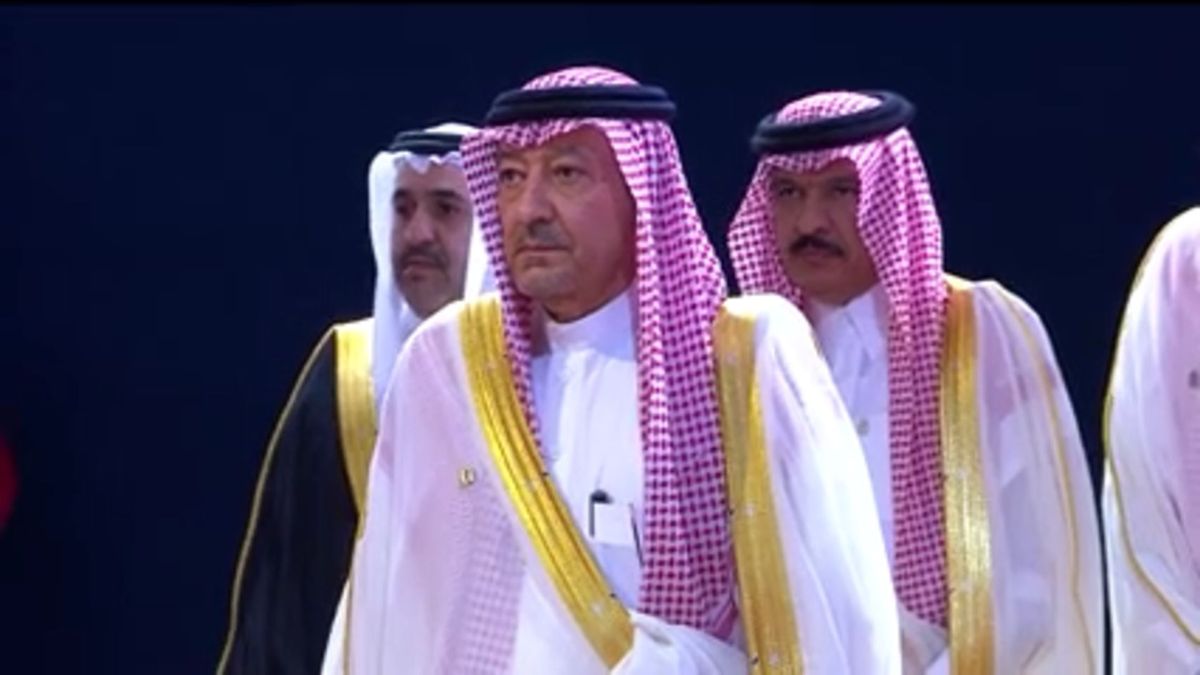
Saudi Arabia's Deputy Foreign Minister Walid al-Khuraiji's unexpected attendance at the funeral of former Iranian Supreme Leader Ali Khamenei has sent shockwaves throughout the Middle East. This unprecedented move marks a significant shift in regional dynamics, raising questions about Riyadh's strategic motivations and potential implications for the region.
In March, Saudi Foreign Minister Prince Faisal bin Farhan Al Saud urged Iran to 'recalculate' its strategy following repeated strikes on US bases in the kingdom, saying tolerance for attacks on Gulf states is limited. This statement was seen as a clear warning to Tehran, emphasizing the need for a change in its approach. However, the recent funeral attendance suggests that Riyadh may be willing to engage in a more conciliatory approach, at least in the short term.
Saudi Arabia's decision to attend the funeral can be seen as a calculated move to ease tensions with Iran and potentially pave the way for future diplomatic engagement. By paying respects to the late leader, Riyadh may be signaling its willingness to put aside past differences and explore new avenues for cooperation. This could be particularly significant in the context of the ongoing conflict in Yemen, where Saudi Arabia and Iran have been on opposite sides of the conflict.
The implications of this move are far-reaching and could have significant consequences for the region. A thawing of relations between Saudi Arabia and Iran could lead to a reduction in tensions and potentially even a ceasefire in Yemen. This, in turn, could have a positive impact on regional stability and security. However, it also raises concerns about the potential for Riyadh to compromise on its long-standing positions, potentially emboldening Iranian hardliners and undermining the efforts of moderate voices within the Iranian establishment.
The future consequences of this move are uncertain, and it remains to be seen whether this marks the beginning of a new era of diplomacy in the region. However, one thing is clear: Saudi Arabia's decision to attend the funeral of former Iranian Supreme Leader Ali Khamenei marks a significant shift in regional dynamics, and its implications will be closely watched by policymakers and analysts around the world.
In conclusion, Saudi Arabia's Deputy Foreign Minister Walid al-Khuraiji's attendance at the funeral of former Iranian Supreme Leader Ali Khamenei marks a significant shift in regional dynamics. While the motivations behind this move are unclear, it is evident that Riyadh is seeking to ease tensions with Tehran and potentially explore new avenues for cooperation. The implications of this move are far-reaching, and its consequences will be closely watched by policymakers and analysts around the world.
Editor's Note: While the motivations behind this move are unclear, it is evident that Riyadh is seeking to ease tensions with Tehran and potentially explore new avenues for cooperation.
Source referenced: ALJAZEERA
This brief was synthesized by our Editorial Engine and reviewed by The Ground Narrative team.


