TRENDING

Sunday, 4 October 2026
----------------------
23 Rabi' Al-Thani 1448 AH
A Russian fighter's dominant victory in the UFC extends beyond personal achievement, becoming a potent symbol in national narratives. This analysis dissects how individual sporting triumphs are leveraged for state soft power, often overshadowing the complex realities faced by ordinary citizens.
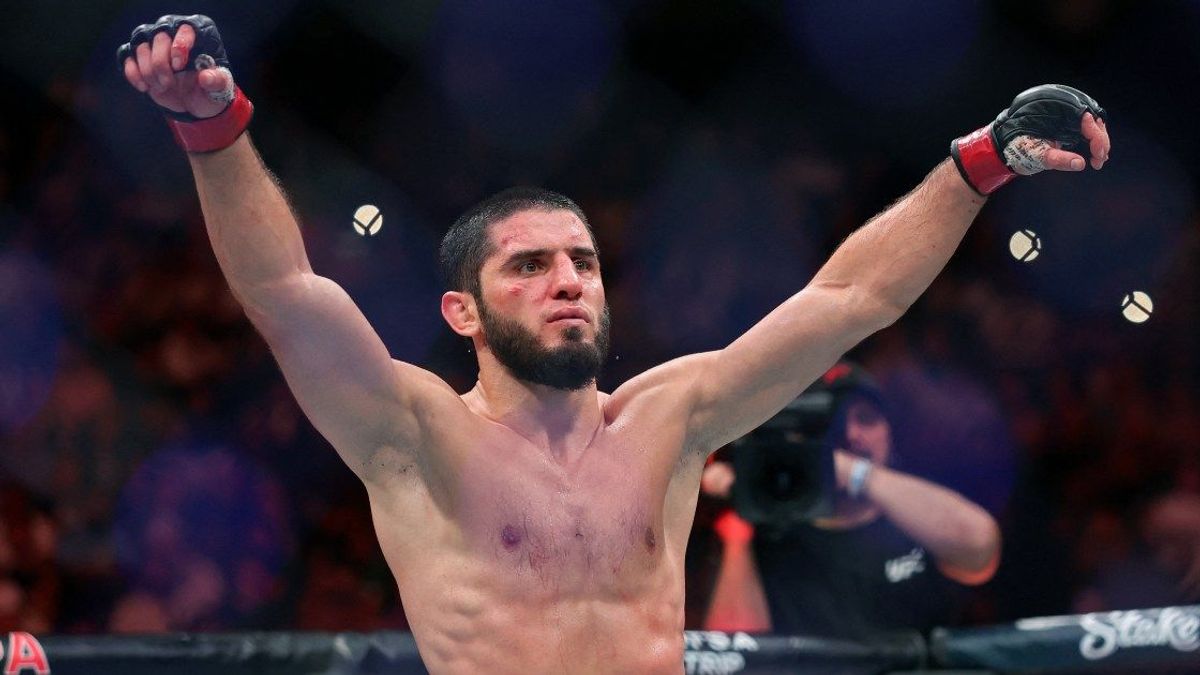
Islam Makhachev, a Russian fighter, successfully defended his UFC welterweight championship against Ireland's Ian Machado Garry in Philadelphia, extending his record-setting winning streak to 17 consecutive fights. The victory, secured by unanimous decision, cemented Makhachev's status as a dominant force in mixed martial arts. In the co-main event, Mackenzie Dern also retained her women’s strawweight title.
While the immediate spectacle was one of individual athletic prowess, the victory of a Russian champion on a global stage carries significant weight in the intricate mechanics of international power projection. For states like Russia, individual sporting triumphs are rarely just about the athlete; they are opportunities to project national strength, resilience, and a preferred global image. In an era of geopolitical friction and international sanctions, a dominant athlete like Makhachev becomes an invaluable asset in the soft power arsenal. His success can be woven into a narrative of national excellence and defiance, subtly countering narratives of isolation or weakness. This isn't about direct government control over the athlete, but rather the opportunistic appropriation of individual achievement to serve broader state interests, fostering national pride and potentially influencing global perceptions. The sheer visibility of a UFC champion, broadcast to millions worldwide, makes such a figure a potent, albeit unofficial, ambassador.
For the ordinary citizens in Russia, the roar of the crowd and the glint of the championship belt rarely translate into tangible improvements in their daily lives. While a victory like Makhachev's can provide a temporary surge of national pride and a welcome distraction from domestic challenges or international pressures, its impact on the ground is largely symbolic. The economic benefits primarily accrue to the athlete, their team, and the global sports entertainment industry. For the average Russian, grappling with economic realities, sanctions, or social issues, the champion's success remains distant. The human cost here isn't one of direct suffering caused by the fight, but rather the subtle cost of misdirection: the emotional investment in national symbols that can divert attention from more pressing, systemic issues that truly affect their livelihoods and futures. It also places an unspoken burden on athletes to embody national aspirations, often without their explicit consent or understanding of the political weight their performances carry.
What official statements and state-aligned media often omit or downplay is the deliberate cultivation and leveraging of athletic success as a tool of statecraft. The narrative presented is typically one of pure sporting achievement, celebrating the individual's dedication and talent. However, beneath this surface lies a calculated effort to integrate such successes into broader nationalistic or geopolitical agendas. No government will explicitly state that a fighter's win is a strategic victory against international rivals. Instead, they will amplify the message of national strength, character, and unity, allowing the public to draw the desired conclusions. This strategic silence allows states to reap the benefits of soft power projection without explicitly politicizing sports, maintaining a veneer of apolitical competition while subtly advancing their interests. The global nature of sports, with its massive viewership, makes it an ideal, largely unregulated, platform for such influence.
Readers should watch how Makhachev's future performances and public statements are framed by Russian state media and official channels. Any attempts to explicitly link his athletic achievements to national policy or political narratives will signal an intensification of this soft power strategy. Conversely, observe how Western media or political figures react to such successes – whether they acknowledge the underlying geopolitical currents or maintain a strict separation between sports and politics. Beyond individual athletes, the broader trend of states investing in and promoting sports figures as de facto national symbols, particularly from nations facing international scrutiny, will be a key indicator of how global narratives are being shaped, one championship at a time. The ongoing tension between the purity of sport and its utility as a political instrument will continue to play out in the public arena.
Source referenced: ALJAZEERA
This brief was synthesized by our Editorial Engine and reviewed by The Ground Narrative team.