TRENDING

Friday, 18 September 2026
----------------------
7 Rabi' Al-Thani 1448 AH
Russia’s 2026 parliamentary vote marks the first national election since the Ukraine war began, but United Russia’s grip remains unchallenged. The analysis uncovers who truly benefits, who pays the price, and what the numbers may conceal.
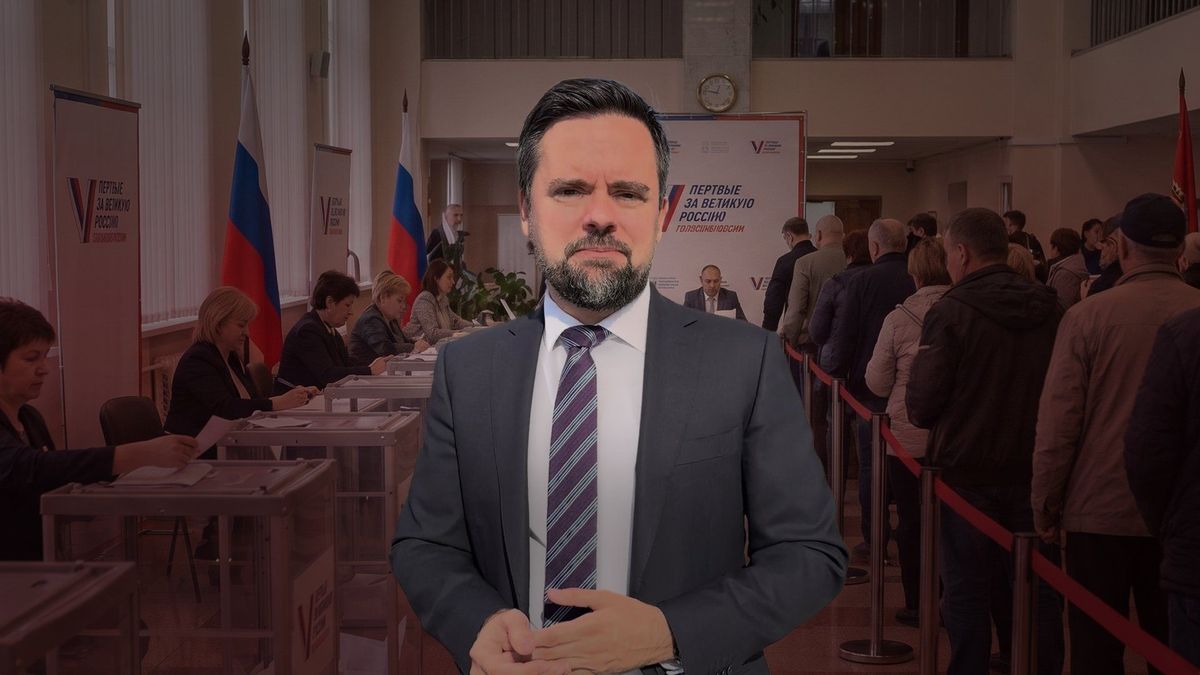
On 17 September 2026 Russians went to the polls for the first parliamentary election since the war in Ukraine erupted in 2022. United Russia, the party that has backed President Vladimir Putin for more than two decades, fielded a full slate of candidates and is projected to retain a super‑majority. A handful of nominal opposition parties—Liberal Democratic Party, Communists of Russia, and a newly registered “New People” bloc—appeared on the ballot, but none have historically cleared the 5 % threshold needed for representation.
United Russia’s dominance is less a product of popular consent than a web of institutional levers. The party controls the State Duma, which in turn shapes electoral law, media licensing, and the financing of campaign activities. State‑run television still commands over 70 % of viewership, delivering a curated narrative that equates any challenge to United Russia with national instability. Electoral districts are redrawn every five years by a commission staffed by senior officials loyal to the Kremlin, a practice that dilutes opposition strongholds.
Financial incentives also bind regional elites to the ruling party. Federal subsidies for infrastructure projects are allocated on the basis of “political loyalty scores,” a metric that rewards governors who deliver United Russia’s vote share. For the security apparatus, maintaining a predictable legislative majority simplifies budget planning for the Ministry of Defense, which continues to fund a war effort that consumes roughly 30 % of the national budget. In short, the party’s survival is intertwined with the regime’s ability to project continuity, both domestically and abroad.
While the ballot boxes click, ordinary Russians bear the hidden costs. Conscripts and their families endure prolonged deployments in eastern Ukraine, facing casualties, limited pay, and scant reintegration support. In the industrial heartland of the Urals, factories that once thrived on export contracts now operate at half capacity, leaving workers with reduced wages and sporadic layoffs. Rural communities in the North Caucasus experience a double squeeze: war‑related price spikes on food and fuel, and a lack of political channels to demand relief.
Urban middle‑class professionals, many of whom fled the country after 2022, watch the election from abroad, sending remittances that prop up households left behind. Their absence erodes the domestic consumer base, further weakening the economy and amplifying the state’s reliance on state‑owned enterprises that funnel profits back into the political machine.
Official statements tout a “free and fair” election, yet several layers of manipulation remain under‑reported. Independent observers have been barred from most polling stations, and the Central Election Commission continues to use electronic voting machines whose software audits are classified as state secrets. The Kremlin downplays the role of “administrative pressure”—such as threatening local business owners with license revocations unless they mobilize workers to vote for United Russia.
Corporate interests also stay quiet. Energy giants like Gazprom and Rosneft fund pro‑government NGOs that organize voter‑turnout drives, effectively turning corporate cash into political capital. Internationally, Western governments issue statements condemning any “undemocratic practices,” but their diplomatic language is calibrated to avoid triggering additional sanctions that could further cripple the Russian economy and, paradoxically, increase the regime’s control over scarce resources.
Observers should watch three indicators as the post‑election landscape unfolds. First, regional turnout patterns: unusually high participation in strategically important oblasts may signal intensified coercion, while low turnout in war‑affected zones could foreshadow localized unrest. Second, the parliamentary composition: even a modest gain by the “New People” bloc could introduce a token opposition that the Kremlin can use to claim pluralism without threatening its legislative agenda. Finally, international financial flows: any shift in sanctions policy or the emergence of alternative payment systems (e.g., a broader adoption of the Russian digital ruble) will affect how the state funds both the war and its domestic patronage network.
Keeping an eye on these dynamics will reveal whether the election merely reinforces the status quo or plants the seeds for a more contested political arena in the years ahead.
Editor's Note: Analysis based on publicly available election data and expert assessments; on‑the‑ground protest activity may evolve rapidly.
Source referenced: ALJAZEERA
This brief was synthesized by our Editorial Engine and reviewed by The Ground Narrative team.


