TRENDING

Wednesday, 23 September 2026
----------------------
12 Rabi' Al-Thani 1448 AH
A recent wave of disinformation on social media platforms has spread false claims of Ukrainian President Volodymyr Zelenskyy's death in a Russian airstrike. This article delves into the strategic motivations behind these rumors and their implications for global politics.
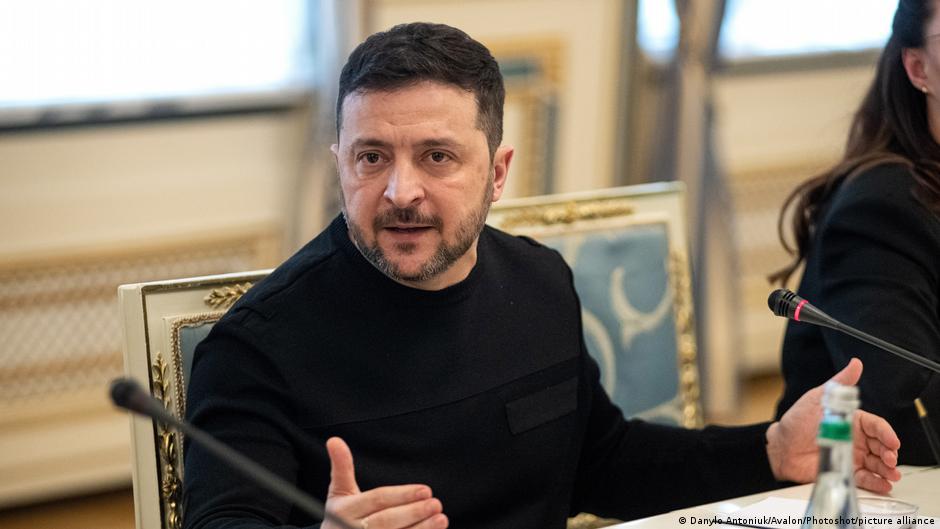
The spread of false information on social media platforms has become a significant concern in the digital age. The recent wave of disinformation surrounding Ukrainian President Volodymyr Zelenskyy's death in a Russian airstrike is a prime example of this phenomenon. The claim, which originated on social media platforms like X and TikTok, was quickly debunked by fact-checkers and officials.
The rumors surrounding Zelenskyy's death are not an isolated incident. Similar claims have been made in the past, including a pro-Russia information campaign that claimed Zelenskyy had committed suicide in 2022. This suggests that there may be a coordinated effort to spread disinformation about the Ukrainian president.
Pablo Maristany de las Casas, an analyst at the Institute for Strategic Dialogue Germany, attributes the rise of disinformation to the increasing use of generative AI tools. These tools make it possible to create realistic and convincing scenarios that can be used to manipulate public opinion.
The spread of disinformation has significant implications for regional stability. In the case of Ukraine, the rumors surrounding Zelenskyy's death can be seen as an attempt to undermine the country's morale and create divisions among its people. This can have serious consequences for the country's ability to resist Russian aggression.
The spread of disinformation also has significant consequences for global politics. As the use of generative AI tools becomes more widespread, it is likely that we will see more sophisticated and convincing disinformation campaigns. This can have serious consequences for international relations and global stability.
The recent wave of disinformation surrounding Ukrainian President Volodymyr Zelenskyy's death is a prime example of the strategic motivations behind these rumors. The use of generative AI tools and coordinated efforts to spread disinformation can have significant consequences for regional stability and global politics. It is essential that we take steps to combat the spread of disinformation and promote fact-based information in the digital age.
1. Improve fact-checking mechanisms: Governments and social media platforms must improve their fact-checking mechanisms to identify and debunk false information quickly.
2. Regulate the use of generative AI tools: Governments must regulate the use of generative AI tools to prevent their misuse in disinformation campaigns.
3. Promote media literacy: Educational institutions must promote media literacy to help people identify and critically evaluate information in the digital age.
4. Enhance international cooperation: International cooperation is essential to combat the spread of disinformation and promote fact-based information globally.