TRENDING

Thursday, 15 October 2026
----------------------
4 Jumada Al-Awwal 1448 AH
Russia's military campaign in Ukraine is reportedly 'bogged down,' experiencing net territorial losses for the first time since 2023, prompting intensified bombardments of Ukrainian urban centers. This strategic shift appears to be a response to mounting internal pressure on President Vladimir Putin amidst battlefield setbacks and advanced Ukrainian drone warfare.
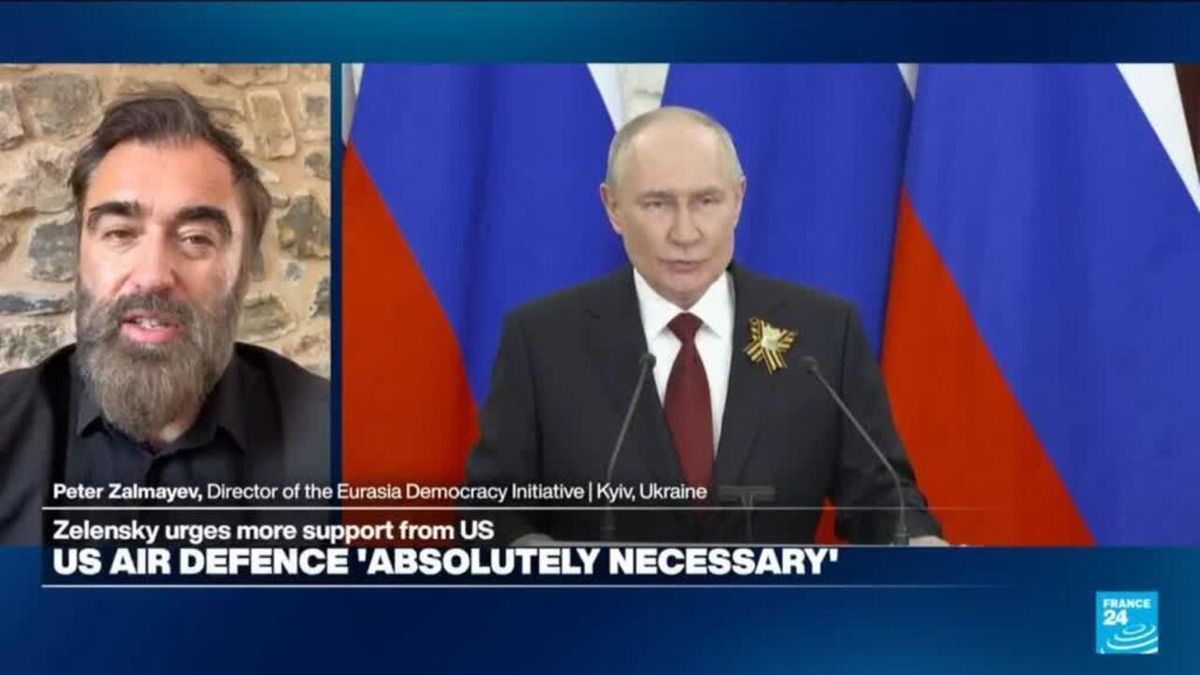
Recent assessments indicate a significant shift in the dynamics of Russia's full-scale invasion of Ukraine. For the first time since 2023, Russia is reportedly suffering net territorial losses, signaling a potential turning point in the protracted conflict. This development, highlighted by Peter Zalmayev, director of the Eurasia Democracy Initiative, challenges previous narratives of sustained Russian momentum and suggests that Moscow's military campaign has become increasingly "bogged down."
The reported territorial setbacks are accompanied by growing casualties for Russian forces and a decline in their ability to secure new gains. This confluence of factors has evidently created considerable pressure on the Kremlin, particularly on President Vladimir Putin, whose military objectives in Ukraine have proven more challenging than initially anticipated. The political cost of the ongoing conflict, both domestically and internationally, appears to be escalating.
In response to these battlefield difficulties, Russia has intensified its bombardment of Ukrainian urban centers, most notably Kyiv. These strikes, often involving hundreds of drones and missiles, have had devastating impacts on Ukrainian civilians and critical infrastructure, leading to widespread power outages and casualties. While the humanitarian toll is immense, the strategic motivation behind these intensified attacks appears to be multifaceted.
Analysts suggest that these spectacular strikes on urban areas serve as a means for the Kremlin to project an image of strength and capability, particularly to its "jingoistic militaristic base" at home. Amidst reports of military stagnation and territorial losses, such actions are designed to demonstrate that "Russia is not impotent" and "Russia can strike back." This tactic aims to counter any perception of weakness or strategic failure, thereby shoring up domestic support and maintaining the narrative of a powerful and decisive leadership.
The challenges faced by Russian forces are not solely due to Ukrainian ground resistance but also to Ukraine's evolving military capabilities and strategic targeting. The conflict has seen the increasing deployment of AI-enhanced drone warfare by Ukraine, which has proven effective in reconnaissance, targeting, and direct engagement. These advanced drones contribute to Russia's battlefield difficulties and enable Ukraine to conduct systematic strikes on vital Russian assets.
Crucially, Ukrainian forces have been targeting Russian oil infrastructure and military logistics deep within Russian territory. These strikes aim to disrupt Russia's war economy, impede its ability to supply its front lines, and impose a direct cost on the aggressor. The effectiveness of these operations further exacerbates the pressure on the Kremlin, forcing a response that, while devastating for Ukrainian civilians, may also be indicative of a reactive rather than proactive military strategy.
The reported net territorial losses for Russia, coupled with its reactive escalation through urban bombardments, carry significant geopolitical implications. This development could signal a shift in the strategic balance, potentially emboldening Ukraine's international partners to continue or even increase military aid. It also underscores the resilience of Ukrainian defense and its capacity to adapt to the evolving nature of modern warfare.
For Russia, the inability to secure decisive territorial gains and the increasing reliance on long-range strikes against civilian targets risk further international isolation and condemnation. The economic strain from sanctions and the costs of a prolonged conflict, compounded by successful Ukrainian strikes on its energy infrastructure, will likely continue to test Russia's long-term sustainability in the war. The internal political dynamics within Russia, particularly the need for President Putin to maintain the support of his hardline base, will remain a critical factor influencing the conflict's trajectory. The ongoing interplay between battlefield realities, domestic political pressures, and technological advancements in warfare will continue to shape the future of this pivotal European conflict.
Source referenced: FRANCE24
This brief was synthesized by our Editorial Engine and reviewed by The Ground Narrative team.


