TRENDING

Sunday, 4 October 2026
----------------------
23 Rabi' Al-Thani 1448 AH
Russia and Ukraine have exchanged deadly overnight strikes, resulting in civilian casualties on both sides. The attacks have raised concerns about the escalating conflict and its impact on innocent lives. As the situation continues to deteriorate, it is essential to examine the power dynamics at play and the human cost of the conflict.
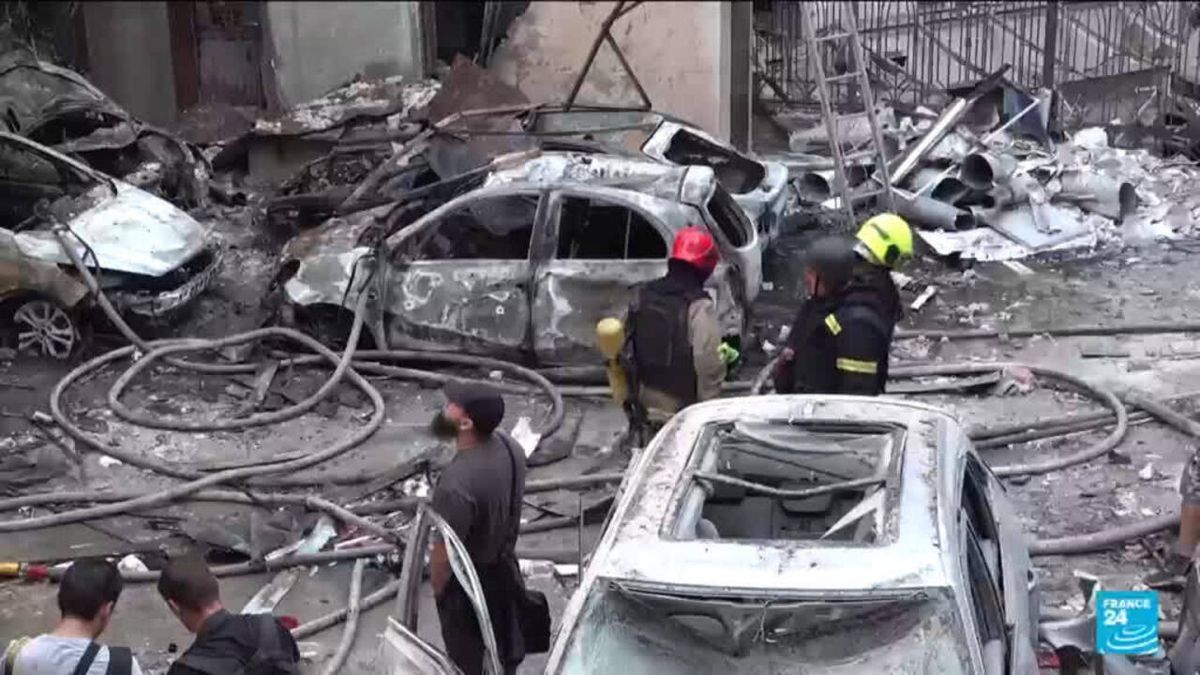
Russia and Ukraine have engaged in another round of overnight strikes, resulting in the loss of civilian lives and injuring many others on both sides. Ukrainian drone attacks in Russia's border region of Belgorod killed five people and wounded around two dozen others, while Russian missiles struck a high-rise apartment building in Kharkiv, killing two people, and injured several more in the Black Sea port of Odesa.
The ongoing conflict between Russia and Ukraine is driven by a complex web of power dynamics. Russia's desire to maintain influence over its neighboring countries and Ukraine's push for independence and sovereignty are at the heart of the conflict. The use of drone attacks and missile strikes by both sides is a manifestation of their asymmetric warfare strategies, aimed at inflicting damage while minimizing their own losses. Furthermore, the involvement of external actors, such as the United States and the European Union, has contributed to the escalation of the conflict, with each side seeking to gain an advantage through diplomatic and military support.
The people who bear the human cost of this conflict are the civilians caught in the crossfire. Innocent lives are being lost, and families are being torn apart by the ongoing violence. The attacks on residential areas, such as the high-rise apartment building in Kharkiv, demonstrate the indiscriminate nature of the conflict, where civilians are often targeted or caught in the middle. The psychological trauma inflicted on those who survive these attacks should not be underestimated, as they are left to pick up the pieces and rebuild their lives amidst the devastation.
What is being downplayed by both sides is the long-term impact of the conflict on the environment and infrastructure. The destruction of critical infrastructure, such as oil refineries and gas pipelines, has the potential to exacerbate the humanitarian crisis and disrupt the regional economy. Additionally, the lack of transparency surrounding the conflict, including the use of drones and missile strikes, makes it challenging to hold either side accountable for their actions. The role of external actors in fueling the conflict is also being downplayed, as each side seeks to shift the blame and gain an advantage in the diplomatic arena.
As the conflict continues to escalate, it is essential to watch for further escalation in the use of drone attacks and missile strikes. The involvement of external actors will also be crucial, as they may seek to exploit the situation to their advantage. Furthermore, the humanitarian situation will continue to deteriorate, with civilians bearing the brunt of the conflict. The ability of either side to negotiate a ceasefire will be a critical factor in determining the outcome of the conflict, and international pressure may be necessary to bring the parties to the negotiating table.
Editor's Note: The analysis is based on publicly available information and may not reflect the full complexity of the situation on the ground.
Source referenced: FRANCE24
This brief was synthesized by our Editorial Engine and reviewed by The Ground Narrative team.