TRENDING

Monday, 5 October 2026
----------------------
24 Rabi' Al-Thani 1448 AH
The trans-Atlantic alliance is undergoing a transformation, driven by shifting threat perceptions, diverging interests, and a maturing Europe. As the relationship evolves, it's essential to understand the strategic motivations, historical context, and regional implications.
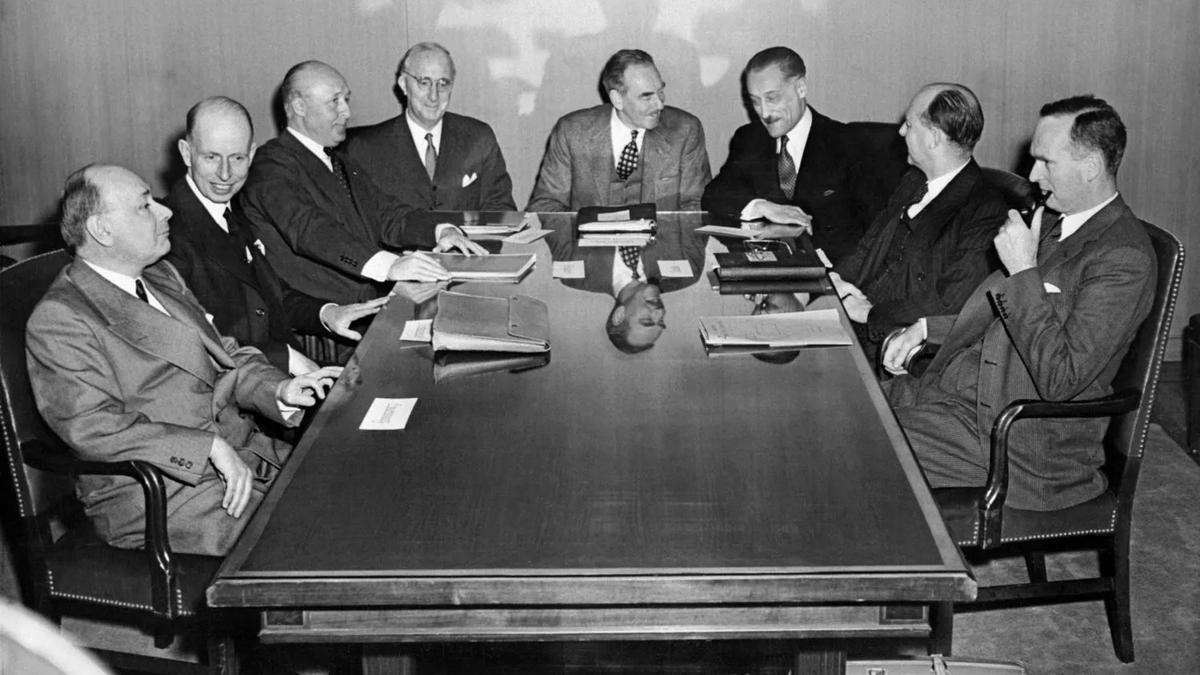
The trans-Atlantic alliance has been a cornerstone of global security and economic cooperation for decades. However, the relationship has been strained in recent years, with the Trump administration's policies exacerbating existing tensions. The notion that trans-Atlanticism is dead is premature, as the alliance is undergoing a necessary transformation.
The trans-Atlantic alliance was never solely a values project. It was, and remains, a convergence of security, economic, and technological interests between two regions that account for roughly 43 percent of global GDP and comprise the world's most capable military alliance. The liberal international order has indeed collapsed, but trans-Atlanticism was never inseparable from it.
The evidence points to the emergence of a more demanding and ultimately more durable partnership that signals Europe's long-delayed emergence as a geopolitically mature entity. European strategic reliance on Washington was long a choice as much as a necessity. Trump's two terms have made explicit that the old trans-Atlantic deal, which was built on asymmetric dependence and assumed U.S. primacy in European security, was never going to survive the 21st century intact.
The future of the trans-Atlantic relationship cannot rest on the emotional attachments of individual leaders. It must rest on structural interdependence, which is deepening. Despite sweeping U.S. tariff increases in 2025, $7.4 trillion in trans-Atlantic investment and nearly $2 trillion in annual trade reflect an unrivaled relationship that shows no sign of abating.
The NATO summit in Ankara, Turkey, is the moment to define what this interdependence looks like in practice. The meeting will test whether European leaders can take the next necessary steps. Four things must happen: Europe must reform its defense procurement architecture, Washington must stop treating European operational autonomy as a threat, the Ankara summit should focus on strategic complementarity, and the alliance must prioritize joint procurement and binding interoperability standards.
The trans-Atlantic alliance is undergoing a transformation, driven by shifting threat perceptions, diverging interests, and a maturing Europe. As the relationship evolves, it's essential to understand the strategic motivations, historical context, and regional implications. The future of the alliance will depend on the ability of European leaders to take the next necessary steps and define what this interdependence looks like in practice.
Editor's Note: The analysis is based on available data and expert opinions, but the future of the trans-Atlantic relationship is inherently uncertain.
Source referenced: FOREIGNPOLICY
This brief was synthesized by our Editorial Engine and reviewed by The Ground Narrative team.


