TRENDING

Friday, 18 September 2026
----------------------
7 Rabi' Al-Thani 1448 AH
Real Madrid president Florentino Pérez traveled to the Spanish enclave of Ceuta to show solidarity amid a wave of irregular crossings from Morocco, sparking a debate over sport’s role in migration politics.
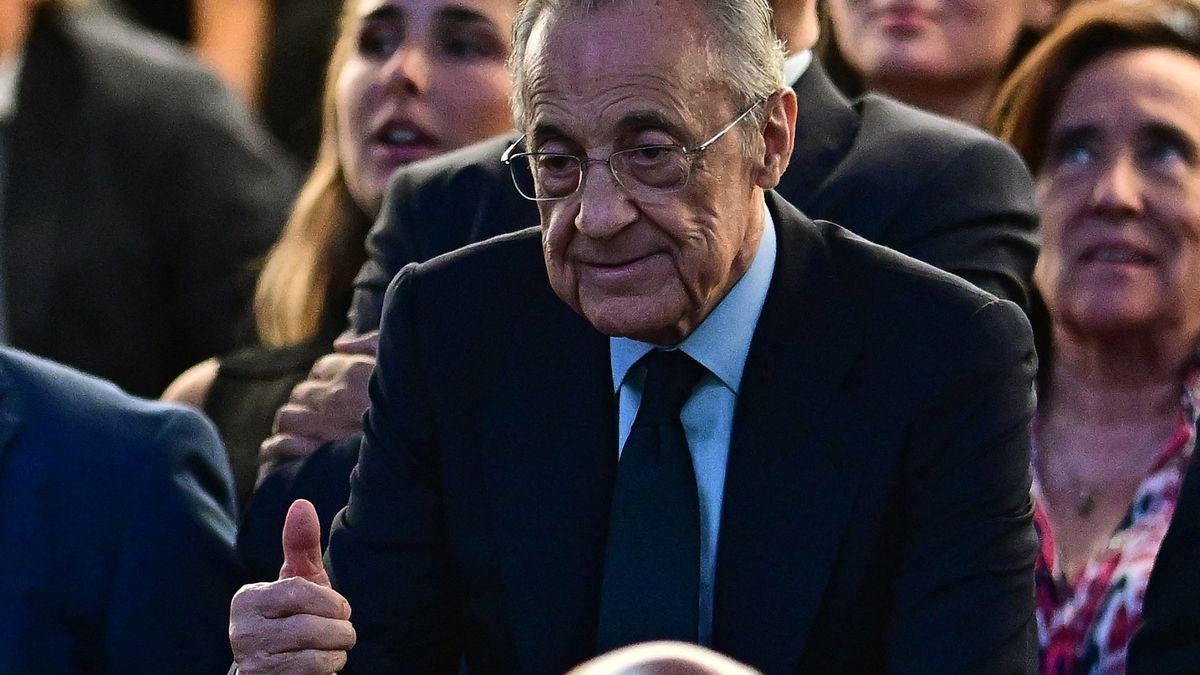
Real Madrid president Florentino Pérez attended an event at Ceuta city hall on 18 September 2026, emphasizing that the visit was planned weeks in advance and unrelated to recent news. The appearance followed a controversial incident in which players Kylian Mbappé, Vinícius Jr and Ibrahima Konaté covered a T‑shirt slogan that read “We are all mackerels,” a nickname for Ceuta residents, during a La Liga match.
The episode sits at the intersection of three structural forces. First, political survival: Spain’s central government and regional authorities face mounting pressure to demonstrate control over Ceuta, a Spanish enclave on the African continent that has become a flashpoint for irregular migration. By inviting a globally recognized club, they aim to project normalcy and garner domestic legitimacy. Second, economic incentives: Ceuta’s economy relies heavily on tourism and cross‑border trade; a high‑profile football endorsement can attract visitors and investment, offsetting the economic shock of the July influx of over 70,000 irregular migrants. Third, soft power of sport: Real Madrid’s brand carries immense cultural weight. Aligning the club with a humanitarian narrative allows the club’s leadership to reinforce its image as a socially responsible institution while subtly deflecting criticism of Spain’s migration policies.
The human cost of the migration surge is borne by Ceuta’s residents, many of whom live in cramped neighborhoods and depend on public services already stretched thin. Local businesses report lost revenue as security checkpoints disrupt daily commerce. Migrants themselves face precarious conditions in makeshift camps, with limited access to healthcare and legal assistance. Meanwhile, families on the Moroccan side endure the trauma of dangerous crossings, often resulting in injury or death. The footballers’ gesture—though symbolic—does little to alleviate the scarcity of shelter, employment, or legal pathways for those seeking a foothold in Europe.
Official statements from Pérez and Spanish officials stress “solidarity” and “normality,” but they downplay the political calculus behind the timing. The visit coincides with a period of heightened scrutiny from the European Union over Spain’s border management, and it serves as a pre‑emptive narrative to frame the crisis as a local humanitarian issue rather than a failure of broader EU migration policy. Moreover, the club’s decision to distance itself from the players’ protest—by highlighting a pre‑planned event—sidesteps a deeper debate about the role of athletes in political discourse, effectively muting dissenting voices within the squad.
Watch for three developments. First, policy responses: Spain may leverage the publicity to justify stricter border controls or, conversely, to push for increased EU funding for Ceuta’s infrastructure. Second, player activism: Mbappé’s earlier refusal to prioritize one group’s suffering could signal a growing willingness among top athletes to engage in migration debates, potentially prompting clubs to adopt clearer stances. Third, public sentiment: The reaction of Ceuta’s residents—whether they view the club’s visit as genuine support or a publicity stunt—will shape local political narratives and could influence upcoming municipal elections. Future media coverage will likely frame the episode as either a successful soft‑power intervention or a missed opportunity to address the structural drivers of irregular migration.
Source referenced: ALJAZEERA
This brief was synthesized by our Editorial Engine and reviewed by The Ground Narrative team.


