TRENDING

Friday, 9 October 2026
----------------------
28 Rabi' Al-Thani 1448 AH
A 96‑year‑old ultra‑Orthodox rabbi sparked a political firestorm weeks before Israel's election by questioning the very idea of a Jewish state. The controversy exposes a hidden tug‑of‑war between religious authority, coalition politics and the lives of soldiers on the front line.
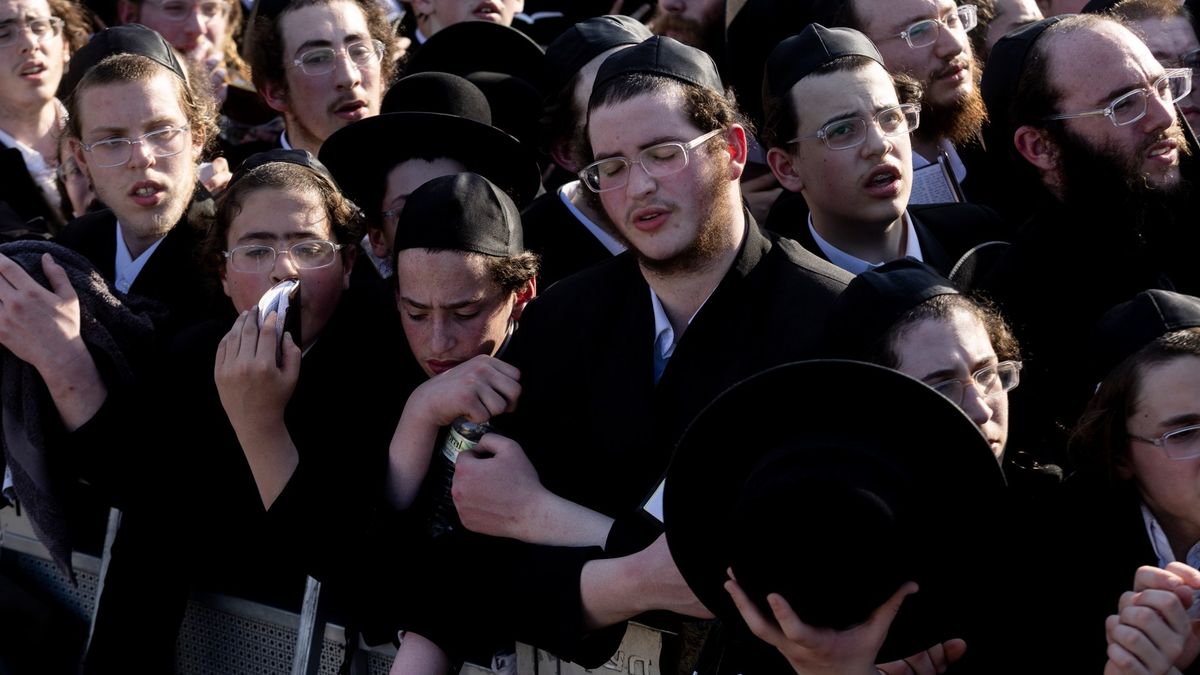
In early October 2026, Rabbi Dov Lando, the senior spiritual leader of the Degel HaTorah faction, repeated remarks first aired in 2025 that Jews might have been better off without a sovereign Israel. Speaking at a private gathering in Bnei Brak, he blamed Religious Zionist teachings for soldiers’ deaths and suggested that living under Arab or international rule could be preferable. The comments resurfaced on Channel 12 just three weeks before the October 27 parliamentary election, igniting a rapid backlash from opposition politicians and reigniting the long‑standing debate over ultra‑Orthodox military exemptions.
The Israeli right‑wing bloc has long depended on the ultra‑Orthodox parties for a parliamentary majority. Netanyahu’s current coalition hinges on the support of the United Torah Judaism (UTJ) alliance, of which Degel HaTorah is a key component. Removing the exemption for yeshiva students would cost the government tens of billions of shekels in budget allocations to Haredi institutions, and more importantly, it would strip the coalition of a reliable voting bloc that can tip the balance in a fragmented Knesset.
In 2024 the Supreme Court declared the long‑standing draft exemption legally baseless, forcing the government to confront a constitutional dilemma. The court’s ruling empowered secular parties and civil‑society groups to demand a universal draft, but the political cost of confronting the Haredi leadership proved too high for successive governments. The court thus became a catalyst that turned a religious‑cultural dispute into a matter of national policy.
Within the Haredi world, rabbis like Lando wield influence that transcends electoral politics. Their pronouncements shape community attitudes toward state institutions, education funding, and even marriage markets. By labeling Religious Zionist teachings as a “distorted Torah,” Lando not only defends the exemption but also signals to his followers that cooperation with the state is a theological compromise. This dual role—spiritual guide and political broker—creates a feedback loop where religious edicts reinforce political leverage, and vice versa.
Since the war in Gaza escalated in 2023, young soldiers from Religious Zionist backgrounds have borne a disproportionate share of casualties. Their families watch daily news of comrades falling, while the same community’s leaders continue to shield their own youth from conscription. The emotional toll on these families is amplified by the perception that another segment of society is exempt from the same sacrifice.
For ultra‑Orthodox households, the draft exemption is more than a legal privilege; it protects a way of life centered on full‑time Torah study. Any erosion of that exemption threatens not only income streams from state subsidies but also the social fabric that binds neighborhoods, schools, and charitable networks. When political debates turn into headlines, the everyday reality for these families is a looming uncertainty about housing, education, and community cohesion.
The broader public faces a hidden price: a stalled defense budget, delayed reforms, and a political climate where policy is negotiated in back‑room corridors rather than through transparent public debate. The constant tug‑of‑war over who fights and who does not fuels social polarization, erodes trust in institutions, and makes it harder to achieve consensus on issues ranging from security to social welfare.
While the media focuses on Lando’s words, few reports detail the financial pipelines that keep the Haredi parties afloat. State allocations to yeshivas, coupled with private donations from diaspora philanthropists who view the exemption as a safeguard for religious study, create a fiscal ecosystem that makes any legislative change politically costly. This financial dimension is rarely mentioned in official statements, yet it underpins the political inertia.
Mainstream outlets have framed the controversy as a clash between “extremist” religious views and democratic norms. What is downplayed is the internal diversity within the ultra‑Orthodox world: many younger Haredi Israelis support limited service or national‑civil roles, but their voices are eclipsed by senior rabbis who dominate the public discourse. The narrative therefore simplifies a nuanced debate into a binary of anti‑state versus pro‑state.
Neighbors and diaspora communities watch the row for clues about Israel’s internal cohesion. Regional allies such as Jordan and Egypt gauge whether the Israeli right can maintain a stable coalition, while Jewish communities abroad assess the risk of rising anti‑Zionist sentiment within Israel itself. These external calculations are rarely acknowledged by Israeli politicians, who prefer to present a united front.
As voting day approaches, pollsters will track whether Lando’s remarks shift the preferences of right‑wing voters who serve in the army. A measurable dip in support for parties allied with the Haredi bloc could force Netanyahu to renegotiate coalition terms or risk a fragmented parliament that may trigger another election.
Any new petitions to the Supreme Court seeking enforcement of universal conscription will test the judiciary’s willingness to confront entrenched political interests. A decisive ruling could accelerate legislative attempts to end the exemption, while a delayed decision may signal a tacit acceptance of the status quo.
Post‑election negotiations will reveal whether the Haredi parties are prepared to trade their exemption for policy concessions in other areas, such as housing or education. Watch for statements from potential coalition partners like Gadi Eisenkot, who has hinted at forming a government without the ultra‑Orthodox bloc if the price becomes too high.
The coming weeks will determine whether a rabbi’s theological critique becomes a footnote in election coverage or a catalyst that reshapes Israel’s social contract. Observers should keep an eye on how the rhetoric translates into concrete policy moves, budget allocations, and ultimately, the lives of those who stand on the front lines and those who study in the yeshivas.
He argued that Zionism caused suffering for Jews, suggested living under Arab or international rule might be better, and blamed Religious Zionist teachings for soldiers’ deaths.
The comments could pressure right‑wing parties that rely on Haredi support, potentially shifting voter sentiment and forcing coalition negotiations to address the draft exemption issue.
Editor's Note: Analysis based on publicly available reports and expert commentary up to October 2026.
Source referenced: ALJAZEERA
This brief was synthesized by our Editorial Engine and reviewed by The Ground Narrative team.


